Exclusive! 'Air Kerala will offer affordable fares without compromising passenger experience'
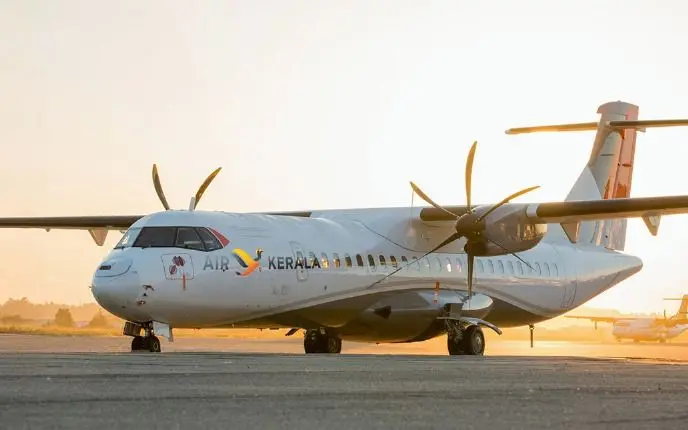
Air Kerala, the new kid on the aviation block is eager to launch its commercial operations from Q1 of 2025. The airline management is working hard to get all necessary permissions and approvals required for a smooth sailing.
India is one of the fastest growing aviation markets and experts feel the country has scope for many more new airline players to grow and flourish. Hence, the news of Air Kerala does not come as a surprise. It is the airline born out of dreams, ambitions, countless sleepless nights and sheer grit and hard work of the founders. So, what propelled founder Afi Ahmed to launch the airline now and how does he plan on running the airline.
In an exclusive interview, Ahmed talks about his new project, dreams and plans to make Air Kerala a success.
Can you tell us about your ambitious project Air Kerala? Given that airlines all over are currently operating on wafer-thin margins, what motivated you to launch a new airline in such a volatile market?
The aviation industry has always been challenging, but the need for connectivity, especially from / to a state like Kerala, is immense. Our decision to start Air Kerala is driven by the untapped potential in this market. We believe there is room for an airline that is laser-focused on quality, customer service, competitive pricing and efficient operations.
While margins may be thin, we are taking a lean, digitally savvy approach that will help us minimize operating costs and maximize customer experience, which we believe will help sustain us even during volatile times.
What prompted you to start the airline business from Kerala?
Kerala is home to one of the largest expatriate populations in the world, with millions of Keralites living and working abroad, especially in the Middle East. This creates a strong demand for reliable and affordable air travel. Additionally, the domestic tourism potential is enormous. Starting from Kerala allows us to cater to these specific needs and tap a loyal customer base right from day one.
How do you plan to tackle challenges like managing operating costs and competing with airlines that have much larger fleets?
Managing operating costs will be key to our strategy. We will focus on modern, fuel-efficient aircraft, optimized route planning, and strong partnerships to keep our cost structure competitive. As for larger competitors, size is not always the deciding factor. We are nimble and agile, which allows us to innovate faster and tailor our services more closely to our passengers' needs. By focusing on customer satisfaction and leveraging technology, we can compete effectively.
Kerala has four airports. What are your plans for local operations?
Kerala’s unique geography and infrastructure make regional connectivity very important. We plan to operate from all four international airports—Thiruvananthapuram, Kochi, Kozhikode and Kannur. Our focus will be on connecting Kerala with key domestic and international destinations while also developing regional routes to smaller cities across South and Central India. This will not only boost local tourism but also provide convenience to those traveling within and from / to Kerala.
What can you tell us about crew uniforms, recruitment process and the ethos of the airline?
The ethos of Air Kerala is to embody the spirit of Kerala’s hospitality, warmth, and excellence in service. Our crew uniforms will reflect Kerala’s rich cultural heritage while maintaining a modern, professional appearance. We are committed to hiring local talent wherever possible, particularly in our cabin crew, ground staff, and operational roles. In terms of ethos, our focus will be on customer-first service with a commitment to safety, comfort, and punctuality.
How competitive will Air Kerala be when it comes to ticket fares?
While we are committed to providing excellent service, we also understand the need to be price competitive. Air Kerala will offer fares that are affordable without compromising on the quality of the passenger experience. Our approach will be to keep costs low through efficient operations, and we will pass those savings on to our customers. We aim to strike a balance between affordability and excellence.
Could you provide details about your connectivity plans and target destinations, as well as the reasons behind selecting these locations as your initial launch routes?
Our initial focus will be on tier-2 and tier-3 airports in South and Central India. Once we secure international route permissions, we’ll prioritize high-demand routes to the Middle East (UAE, Saudi Arabia, Qatar), followed by Thailand, Vietnam, and Malaysia. Domestically, we plan to connect major cities like Delhi, Mumbai, Bangalore, and Hyderabad, along with underserved tier-2 cities, aligning with our goal to serve Kerala’s expat and domestic travellers.
How confident are you of achieving your launch deadline of March 2025 and why?
We are on track and very confident about meeting the March 2025 launch deadline. Our team has been working diligently on all fronts, from regulatory approvals to aircraft procurement and staffing. The timelines have been carefully mapped out, and we are in close coordination with relevant authorities to ensure everything moves forward as planned. With our meticulous approach, I am confident we will meet this deadline.
Can you tell us something about your choice of aircraft and fleet expansion plans going ahead?
We are considering ATR 72-600s for regional connectivity and fuel-efficient narrow-body aircraft for international short- and medium-haul routes. Our fleet will start modestly, expanding in phases based on demand. These aircraft offer operational efficiency, reducing costs and carbon footprint, with fleet growth focused on high-potential routes.
What are your expectations from the government in terms of concessions?
We believe that the government can play a critical role in supporting the aviation industry, especially for new entrants like Air Kerala. We would welcome support in terms of reduced landing and parking fees, tax concessions on aviation fuel, and streamlined regulatory processes. These measures would not only help us but also benefit the wider economy.
The aviation sector is currently grappling with supply chain issues coupled with a pilot and AME (skilled labour) shortage. What are your views?
It’s true that supply chain disruptions and shortages of skilled labour, particularly pilots and aircraft maintenance engineers, are challenging the industry globally. We are proactively addressing these issues by working closely with aircraft manufacturers and training academies to ensure we have the talent pipeline in place before our launch. We are also committed to investing in local talent development programs, which will help mitigate the impact of these shortages in the long run.