Warships came too close: What the India-Pakistan sea encounter means for markets
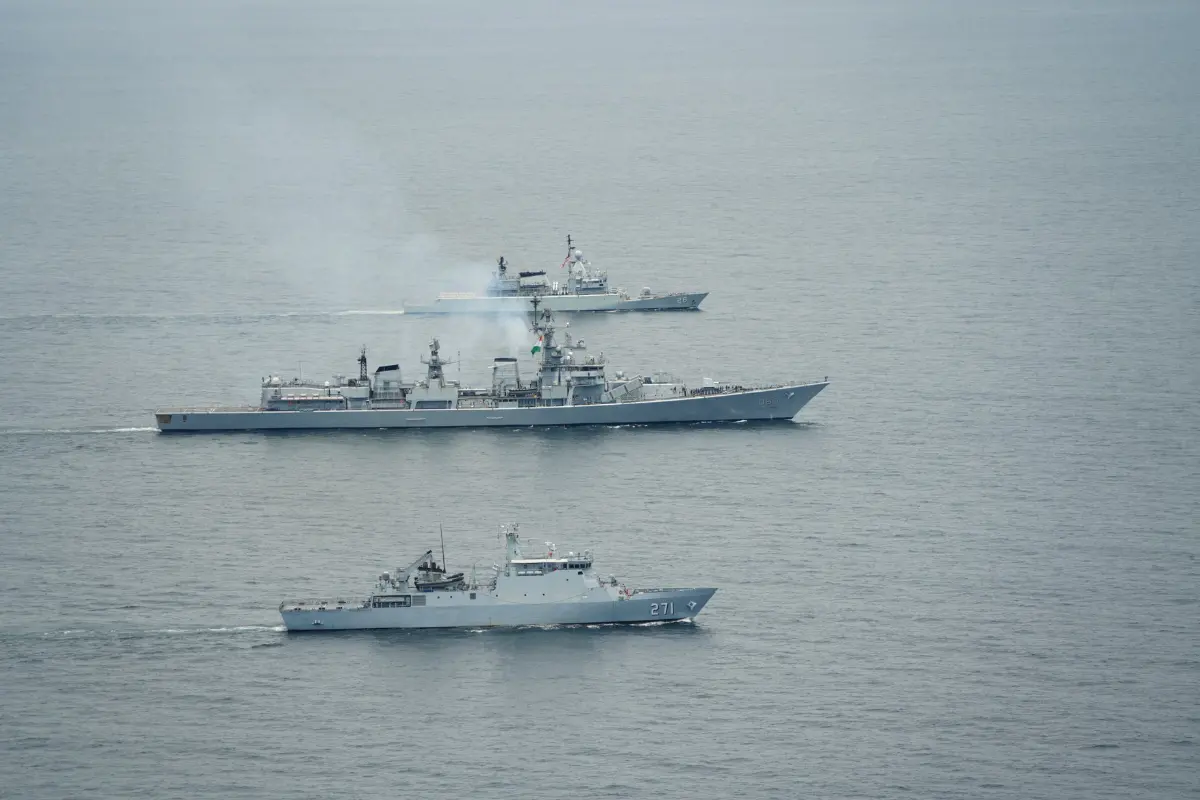
A reported high-speed encounter between an Indian Navy warship and a Pakistani naval vessel in the North Arabian Sea on September 15 has drawn diplomatic attention, with India lodging a protest and no major damage reported.
The high-speed encounter between Indian and Pakistani naval vessels in the North Arabian Sea has raised questions about potential implications for oil, shipping, defence stocks and financial markets.
What happened in the Arabian Sea?
According to the Ministry of External Affairs, a Pakistani naval ship came close to an Indian Navy warship that was conducting a routine surveillance mission in international waters.
Indian sources described the Pakistani vessel’s manoeuvring as “unprofessional and unsafe” and said it was travelling at high speed. No major damage was reported.
India subsequently summoned Pakistan’s Charge d’Affaires in New Delhi and asked Islamabad to ensure that its military units exercised due care and followed relevant bilateral agreements.
The MEA said the incident contravened Article 10 of the 1991 Agreement between India and Pakistan on Advance Notice on Military Exercises, Manoeuvres and Troops Movements.
Could the incident affect oil markets?
The North Arabian Sea is part of the wider maritime network connecting the Arabian Peninsula, the Gulf of Oman and the Strait of Hormuz.
However, there is no evidence in the information provided that the September 15 incident itself caused an oil-supply disruption, a shipping blockade or a market-wide jump in crude prices.
Any immediate market reaction would depend on whether the incident remains isolated or leads to wider restrictions, disruption to commercial shipping or further military escalation.
What about defence stocks?
Geopolitical tensions can lead investors to reassess defence companies and government procurement expectations. Indian defence and shipbuilding companies such as Mazagon Dock Shipbuilders, Cochin Shipyard, Garden Reach Shipbuilders & Engineers and Bharat Electronics could therefore attract market attention.
However, the reported naval incident alone does not establish that these companies will receive additional orders or that their share prices will rise. Any such market movement would depend on actual government procurement decisions and broader market conditions.
Shipping and insurance
A sustained deterioration in maritime security could affect shipping operators through higher risk assessments, insurance costs and freight rates.
At present, the reported incident does not establish that commercial shipping through the North Arabian Sea has been disrupted or that war-risk premiums have increased specifically because of this encounter.
Shipping markets would be more directly affected if vessels were advised to avoid particular areas, if insurers changed coverage conditions or if commercial routes faced actual disruption.
Currency and equity markets
Geopolitical uncertainty can also lead investors to hedge currency and equity exposure. The Indian rupee, Pakistani rupee, equity indices and volatility markets could respond to developments if tensions broaden.
But claims that the incident has already triggered specific moves in USD/INR, USD/PKR, India VIX or Nifty options require verified market data. The supplied report does not provide such data, so those claims should not be presented as established facts.
Analysis
The immediate significance of the September 15 incident is diplomatic and maritime rather than an established market shock. India has formally protested the conduct it says occurred during the encounter, while no major damage was reported.
The potential economic impact depends on what happens next. An isolated naval encounter would have a different market impact from repeated incidents, restrictions on commercial shipping or disruption around major energy routes.
For investors, the distinction between actual market developments and expectations about possible future procurement or supply disruption is important. Defence stocks, crude prices, freight rates and currencies can react to geopolitical headlines, but individual price movements cannot automatically be attributed to this incident without contemporaneous market evidence.