Economic Survey 2026: Nirmala Sitharaman tables data-heavy report ahead of Feb 1 Budget
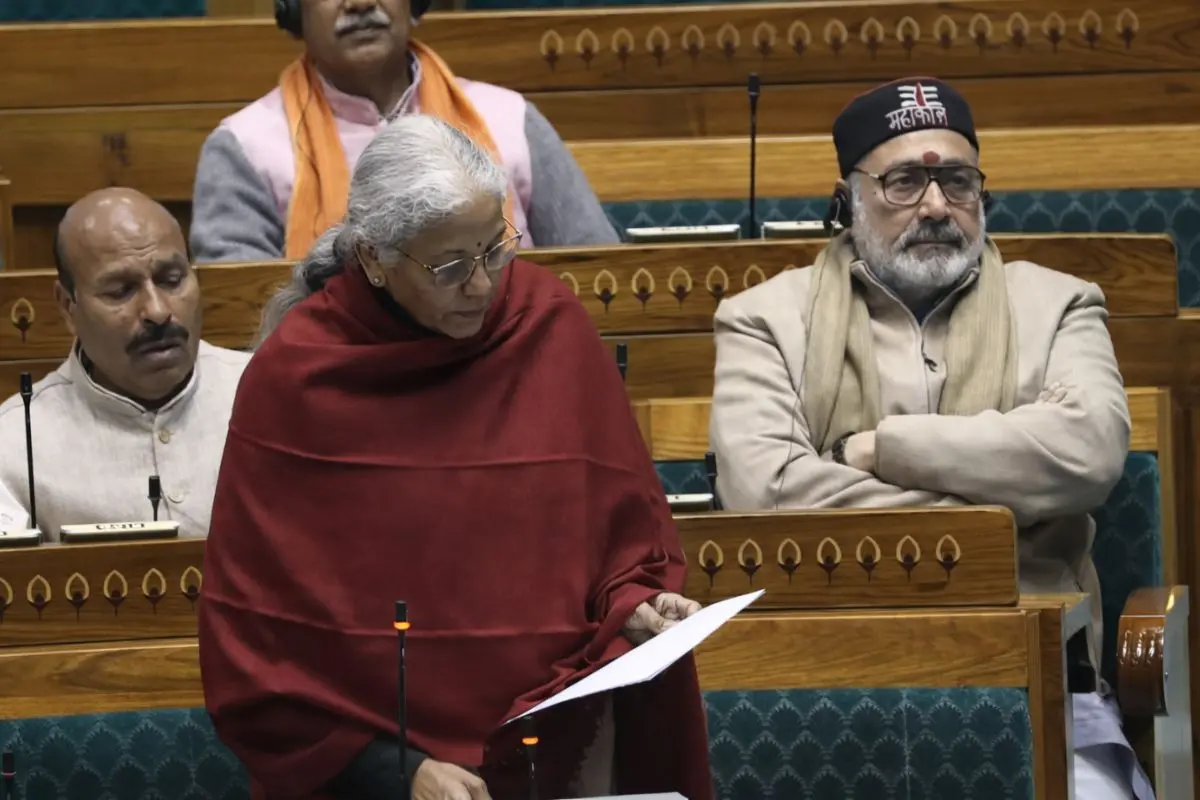
Union Finance Minister Nirmala Sitharaman on Thursday tabled the Economic Survey 2025–26 in the Lok Sabha during the Budget Session of Parliament, offering the government’s most comprehensive assessment of India’s economic performance over the past year and its outlook ahead of the Union Budget on February 1.
Prepared by the Department of Economic Affairs under the Finance Ministry, the Survey acts as an official report card on the state of the economy for the year ending March 31, while also framing the risks, opportunities and policy priorities that could shape Budget decisions and economic messaging in the coming year.
In a key highlight, the Survey’s preface by Chief Economic Adviser (CEA) V Anantha Nageswaran revised India’s potential growth rate upward to 7.0%, from 6.5% estimated three years ago.
The revision reflects structural improvements in the economy, including higher capital formation, a push towards manufacturing, and gains from policy reforms implemented over the last decade.
Shortly after the Survey was tabled, the CEA was scheduled to brief the media, elaborating on major trends in growth, inflation, fiscal consolidation, and the external sector. Lok Sabha Speaker Om Birla also announced that the Economic Survey would be made available to Members of Parliament via WhatsApp, in addition to official digital platforms.
Traditionally, the Economic Survey maps the economy’s key contours—GDP growth and demand patterns, inflation dynamics and monetary policy signals, fiscal health, and external sector performance covering exports, imports, and foreign exchange trends.
It also tracks social indicators such as employment, health, and education, alongside special thematic chapters on emerging policy challenges.
According to reports cited in the run-up to its tabling, the Survey pegs India’s growth potential for the coming year at around 7.4%, higher than last year’s pre-Budget projection range of 6.3% to 6.8%.
Markets and analysts are closely parsing the Survey’s tone on global headwinds, fiscal discipline, and sectoral momentum, as these often influence sentiment across equities, bonds, and the rupee.
On currency stability, the Survey underscores that a “robust and stable currency” can only be sustained through export competitiveness. Drawing on historical experience, it notes that economies with long-term manufacturing export success are more likely to maintain hard currency status, characterised by stability and strength.
Sectorally, the Survey highlights early signs of import substitution in telecom, with exports growing at an average annual rate of 1.5% while imports have declined by 18.5% annually. This shift aligns with the objectives of the Production-Linked Incentive (PLI) scheme, aimed at boosting domestic manufacturing and expanding India’s export footprint.
The electronics sector also features prominently. India has moved from being a net importer to the world’s second-largest mobile phone manufacturer, with more than 300 factories today compared to just two in 2014.
Output value in mobile manufacturing has surged nearly 30-fold—from ₹18,000 crore in FY15 to ₹5.45 lakh crore in FY25—driven by rising domestic production and exports.
While the Economic Survey does not announce policy measures, its analysis and recommendations often set the narrative for the Union Budget and guide assumptions behind fiscal and reform choices.
With Budget day just days away, the Survey provides crucial context for investors, policymakers, and the public on the direction of India’s economic strategy.