Union Budget session: President Murmu to address joint sitting of Parliament
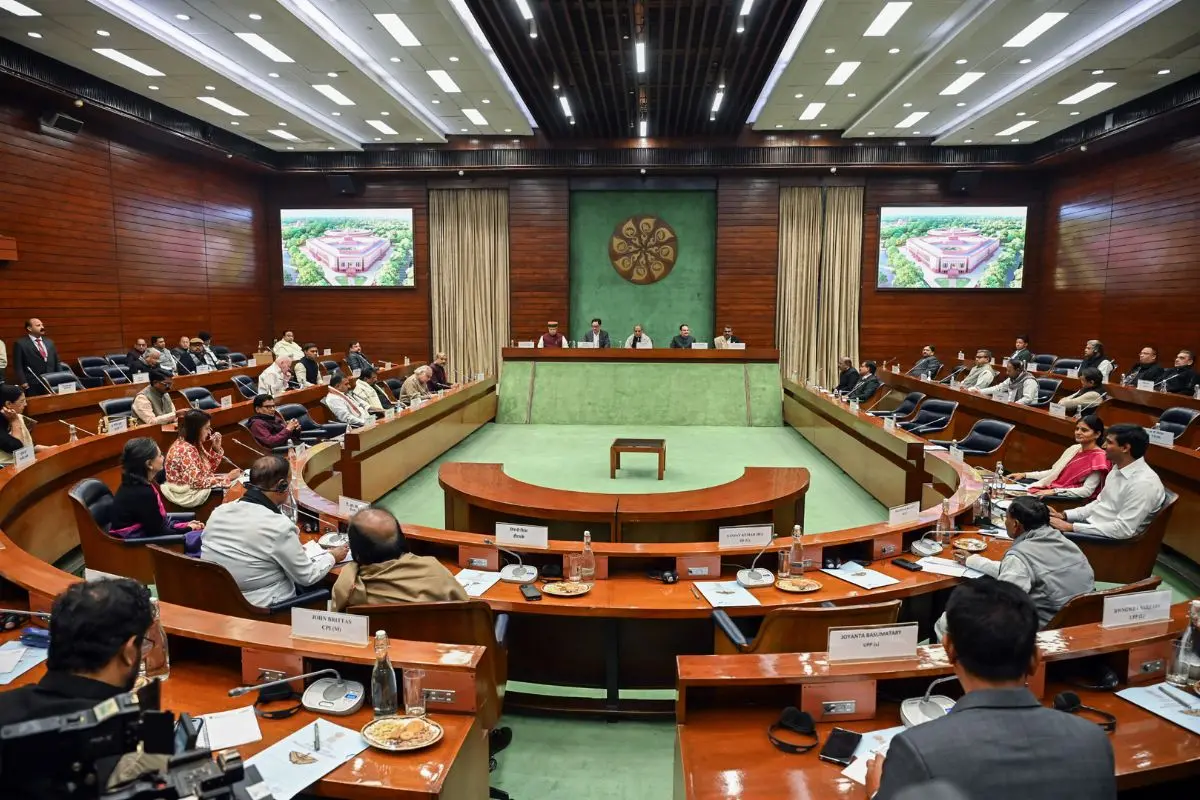
New Delhi: The Budget session of Parliament is set to begin today with an address by President Droupadi Murmu to a joint sitting of the Lok Sabha and Rajya Sabha, marking the start of one of the most important legislative exercises of the year.
The session, which will run till April 2, is scheduled to be held in two phases, with an intersession break to allow parliamentary standing committees to examine the Demands for Grants of various ministries.
The first phase will be held from January 28 to February 13, while the second phase is scheduled from March 9 to April 2, Union parliamentary affairs minister Kiren Rijiju has said.
During the opening day, the President’s address is expected to outline the government’s broad policy vision and legislative priorities. This will be followed by a Motion of Thanks, during which members from both the ruling alliance and the Opposition are expected to debate the issues highlighted in the address.
The session is likely to be dominated by discussions on the Union Budget 2026-27, which Finance Minister Nirmala Sitharaman will present on February 1. The Budget presentation falling on a Sunday is a rare occurrence and has required special logistical and parliamentary planning.
Ahead of the Budget, the Economic Survey — the government’s annual assessment of the economy — is expected to be tabled in Parliament on January 29.
The document will provide an overview of macroeconomic trends, growth prospects and sectoral performance, and will set the context for the fiscal proposals in the Budget.
Key expectations from Union Budget 2026-27
The upcoming Budget is expected to focus on structural reforms and fiscal consolidation, amid global economic uncertainty and domestic growth priorities.
- One of the key expectations is a rationalisation of customs duties, possibly on the lines of the Goods and Services Tax (GST) framework, to simplify rates and improve ease of doing business.
- The Budget is also expected to outline a medium-term roadmap for reducing India’s debt-to-GDP ratio, signalling a shift in fiscal strategy from deficit management to debt reduction.
- With the new Income Tax Act, 2025, set to come into effect from April 1, 2026, stakeholders expect the Budget to spell out transition provisions, operational rules and frequently asked questions to ensure clarity and smoother implementation.
- There is also anticipation of a streamlining of Tax Deducted at Source (TDS) provisions by reducing the number of rates and slabs. Additionally, a higher allocation for defence is expected amid rising geopolitical tensions and increased focus on national security.
- The Budget may also make provisions linked to the 8th Pay Commission, which came into effect from January 1, 2026, and take steps towards tax devolution to states in line with the recommendations of the 16th Finance Commission.
All-party meeting and halwa ceremony
Ahead of the session, Defence Minister Rajnath Singh chaired an all-party meeting, where the government outlined the agenda for the Budget session. Kiren Rijiju said the Centre remains open to suggestions from all parties but stressed that discussions must adhere strictly to parliamentary rules.
Meanwhile, Finance Minister Sitharaman on Tuesday participated in the traditional halwa ceremony, marking the final stage of Budget preparations. The ceremony symbolises the beginning of the “lock-in” period for officials involved in drafting the Budget.