Gold and silver prices today, November 19: Check 22K, 24K rates in Kochi, Delhi, Mumbai and other cities
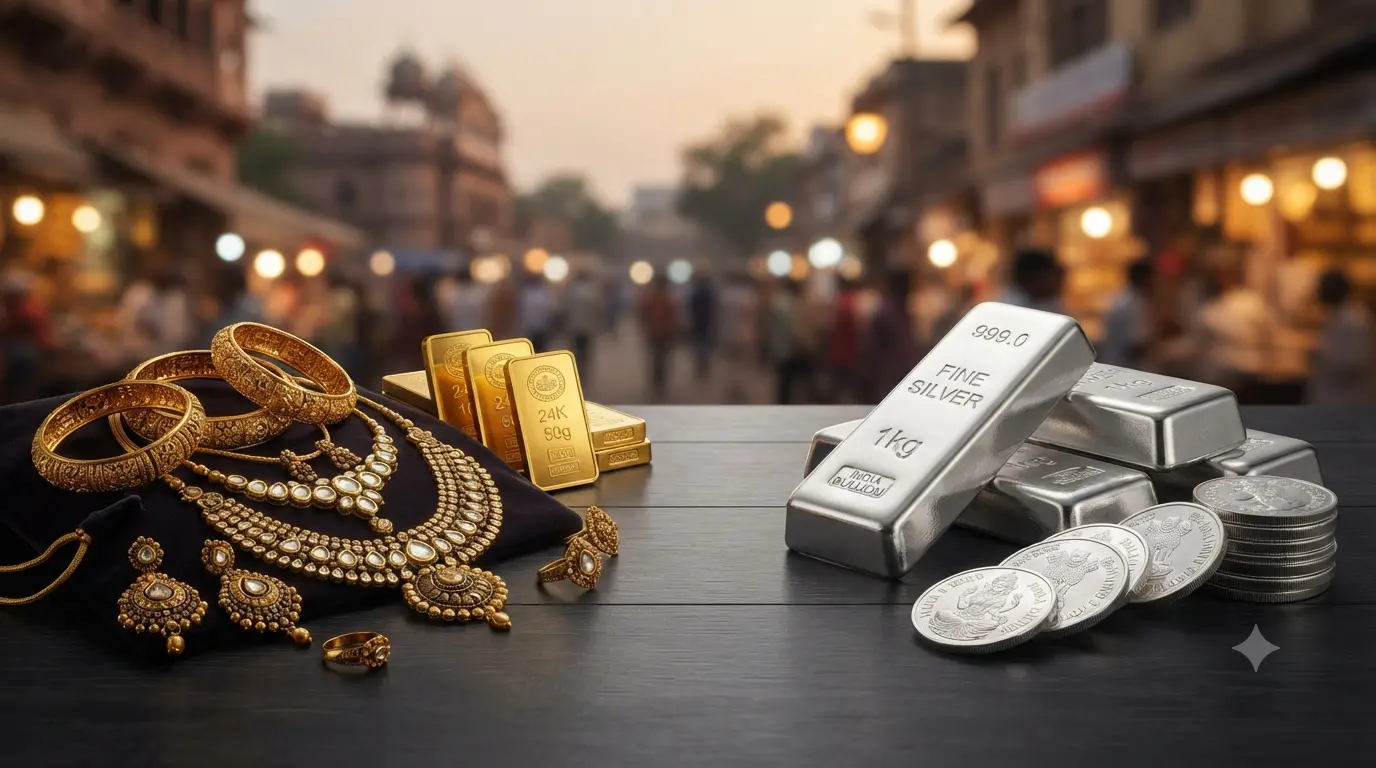
Mumbai: Gold and silver prices were relatively steady in early trading on November 19, even as precious metals continued to face pressure following a sharp decline in the previous session. A stronger US dollar, rising Treasury yields and expectations of tighter monetary policy in the United States have weighed on bullion prices.
In Kerala, 22-carat gold was trading at approximately Rs 12,215-12,216 per gram, while 24-carat gold was quoted at around Rs 13,326 per gram. Retail prices vary across cities and jewellers and may change during the day.
Kerala gold rates today, November 19
The indicative gold prices in Kerala are as follows:
Gold purity | Price per gram | Price per 10 grams |
|---|---|---|
24K gold | Rs 13,326 | Rs 1,33,260 |
22K gold | Rs 12,215-12,216 | Rs 1,22,150-1,22,160 |
18K gold | Rs 9,995 | Rs 99,950 |
For Kerala buyers, one sovereign of 22-carat gold (8 grams) costs approximately Rs 97,720-97,728.
These are indicative rates and exclude GST, making charges and other applicable jewellery costs.
Gold and silver rates in major Indian cities
The reported city-wise gold and silver prices on November 19 are:
City | 22K gold (10g) | 24K gold (10g) | Silver (1kg) |
|---|---|---|---|
Delhi | Rs 1,25,300 | Rs 1,36,790 | Rs 1,69,460 |
Mumbai | Rs 1,25,120 | Rs 1,36,590 | Rs 1,69,385 |
Bengaluru | Rs 1,25,290 | Rs 1,36,780 | Rs 1,69,545 |
Hyderabad | Rs 1,25,350 | Rs 1,36,840 | Rs 1,69,420 |
Chennai | Rs 1,25,380 | Rs 1,36,880 | Rs 1,69,485 |
Kolkata | Rs 1,24,940 | Rs 1,36,390 | Rs 1,69,485 |
Kochi | Rs 1,22,140 | Rs 1,33,250 | Rs 1,84,900 |
Retail rates can differ depending on local bullion markets, jewellers and pricing benchmarks.
Why did gold and silver prices decline?
Precious metals experienced a sharp correction on November 18, with investors responding to developments in the US economy and monetary policy.
The December 4 gold futures contract on the Multi Commodity Exchange (MCX) closed Wednesday's session 3.24% lower at Rs 1,29,880 per 10 grams.
Silver futures declined 5.26% to Rs 1,60,775 per kg.
Other reported MCX spot benchmarks stood at Rs 1,30,921 per 10 grams for gold and Rs 1,69,016 per kg for silver.
Three major factors influenced the decline:
1. Stronger US dollar: A stronger dollar makes gold and silver more expensive for holders of other currencies, potentially reducing international demand.
2. Rising Treasury yields: Higher returns on US government bonds make non-interest-bearing assets such as gold comparatively less attractive.
3. Federal Reserve expectations: Higher-than-expected US inflation and hawkish commentary from Federal Reserve officials strengthened expectations of tighter monetary policy.
However, geopolitical tensions in the Middle East could continue to support demand for gold as a safe-haven asset.
Gold-silver ratio crosses 82: What does it mean?
The gold-silver ratio crossed 82 on November 19, reaching approximately 82.26, according to TradingView data cited in the supplied report.
The ratio measures how many ounces of silver are required to purchase one ounce of gold.
At a ratio of 82, approximately 82 ounces of silver have the same market value as one ounce of gold.
The increase indicates that silver has become relatively cheaper compared with gold following a sharper correction in silver prices.
According to the reported market analysis, the ratio was around 45 in January 2026 before rising above 80 in November.
However, a higher ratio does not automatically mean silver prices will recover. It indicates relative valuation rather than the future direction of either metal.
Gold or silver ETFs: Where should investors look in 2027?
The sharp correction in precious metals and the rise in the gold-silver ratio have prompted investors to reconsider their exposure to gold and silver exchange-traded funds (ETFs).
Several financial experts quoted in the supplied report have suggested maintaining a larger allocation to gold while treating silver as a relatively higher-risk investment.
Their views include:
- Mohit Bagdi, MIRA Money: Suggested an 85:15 or 90:10 allocation between gold and silver ETFs, with total precious metals exposure limited to 5-10% of the portfolio.
- Shauryam Gupta, Rupeezy: Suggested a 60:40 allocation between gold and silver ETFs, depending on investors' risk appetite.
- Gaurav Garg, Lemonn: Recommended allocating 65-70% to gold ETFs and 30-35% to silver ETFs.
- Akshat Garg, Choice Wealth: Suggested a 70-75% allocation to gold and 25-30% to silver.
- Harsh Vardhan Dawar, Wealth Cafe: Advised retail investors to wait for prices to stabilise before taking fresh positions.
Gold's demand is supported by central bank purchases and its role as a safe-haven asset. Silver, meanwhile, has significant industrial demand from sectors such as solar energy, electronics and electric vehicles.
Its industrial exposure can also make silver more vulnerable to changes in global economic activity.
Investors considering ETFs should examine expense ratios, tracking errors, liquidity and bid-ask spreads before making decisions.
What should gold and silver buyers watch next?
The November 19 correction highlights how quickly precious metal prices can change in response to global economic developments.
For jewellery buyers: Kerala's indicative 22-carat rate remains an important reference point, but the final purchase price will be higher after GST and making charges. Buyers should compare the final bill rather than just the advertised gold rate.
For short-term investors: The stronger dollar and higher Treasury yields remain important headwinds. Further movements in US inflation data and Federal Reserve commentary could influence bullion prices.
For silver investors: The gold-silver ratio crossing 82 indicates that silver has underperformed gold. However, relative undervaluation does not guarantee an immediate recovery.
For long-term investors: Gold and silver have different demand drivers and risk profiles. Portfolio allocation should depend on investment objectives, time horizon and ability to withstand price volatility.
The next major indicators for bullion markets include US Federal Reserve commentary, Treasury yields, dollar movements and geopolitical developments in the Middle East.
(Disclaimer: Gold and silver prices mentioned in this article are indicative and may vary across cities, jewellers and market benchmarks. Retail prices may change during the day and exclude GST, making charges and other applicable costs. Investment views and ETF allocation suggestions are those of the individual experts quoted and do not constitute financial advice. Readers should consult a certified financial adviser before making investment decisions.)