Budget Session 2026: PM Modi says Prez’s address reflects aspirations as Economic Survey due today
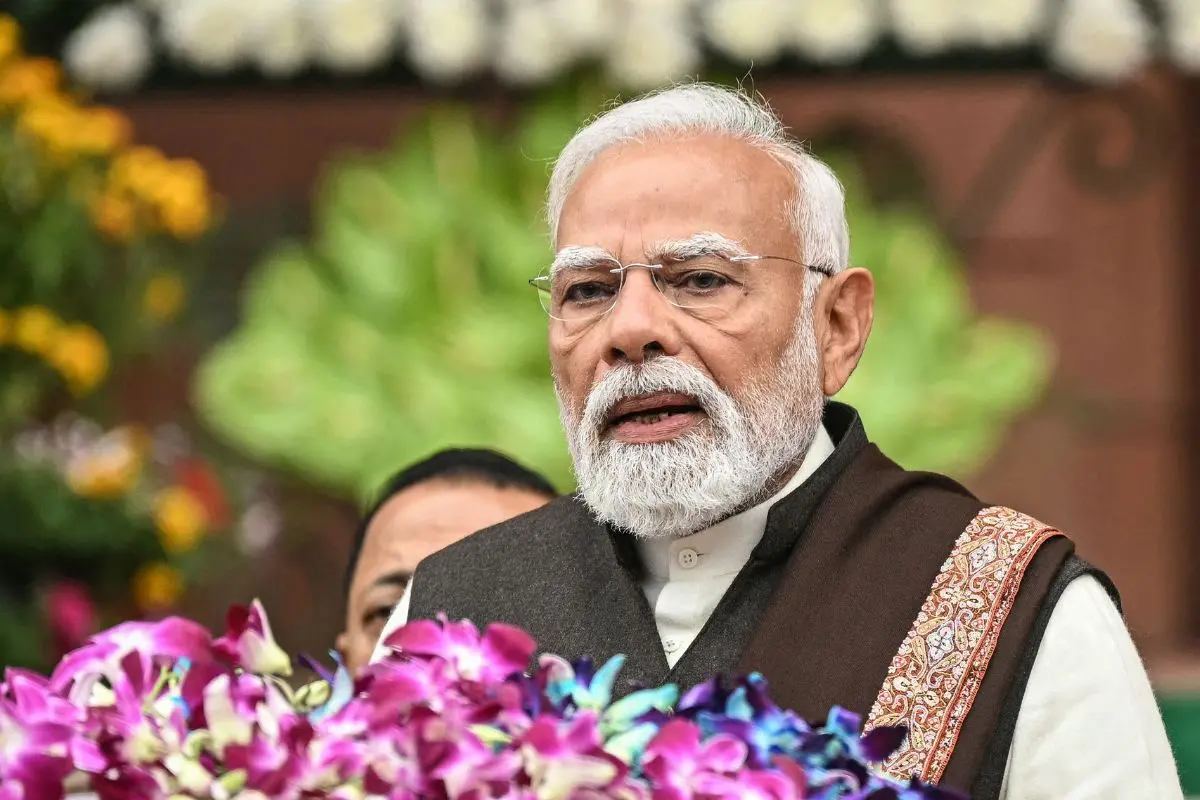
The Budget Session of Parliament entered a crucial phase on Thursday, with Prime Minister Narendra Modi underlining the significance of President Droupadi Murmu’s address and Finance Minister Nirmala Sitharaman preparing to table the Economic Survey 2026, a key document that sets the tone for the Union Budget to be presented on February 1.
Speaking at the start of the session, Prime Minister Modi said the President’s address delivered on Wednesday was an expression of the trust of 140 crore Indians and a reflection of the nation’s collective capability and aspirations.
He noted that the address placed special emphasis on the expectations of the youth and served as guidance for Members of Parliament at the beginning of both the new session and the year 2026.
“I am confident that all MPs have taken the expectations expressed by the President seriously,” the Prime Minister said, calling for constructive deliberations during the session.
The Budget Session formally began on Wednesday with President Murmu addressing a joint sitting of the Lok Sabha and Rajya Sabha.
Her speech outlined the government’s broad policy vision, economic priorities, and governance roadmap, even as it drew protests from opposition benches over contentious issues such as the VB–G RAM-G Bill.
Despite the disruptions, the President continued her address, laying emphasis on economic reforms, inclusive growth, and India’s long-term development goals.
A major focus of Thursday’s proceedings is the presentation of the Economic Survey 2026 by Chief Economic Advisor V Anantha Nageswaran at around 11 am.
Tabled by Finance Minister Sitharaman, the Survey provides a comprehensive assessment of the state of the Indian economy and offers insights into growth trends, fiscal challenges, and policy priorities ahead of the Budget.
According to a PTI report, India is expected to record economic growth of 7.4 per cent, significantly higher than the 6.3–6.8 per cent projection made in last year’s pre-Budget Economic Survey.
If confirmed, the figures would underscore the resilience of the Indian economy amid global uncertainties, including geopolitical tensions, inflationary pressures, and slowing growth in major economies.
Finance Minister Sitharaman is scheduled to present the Union Budget 2026 in the Lok Sabha on February 1, marking her ninth consecutive Budget — a record in itself.
Expectations are high that the Budget will focus on sustaining growth momentum, boosting capital expenditure, supporting employment generation, and addressing concerns related to inflation and global headwinds.
There is also anticipation that the government may factor in recommendations of the 16th Finance Commission while shaping its fiscal strategy.
The Finance Commission, a constitutional body, plays a key role in determining the formula for the devolution of taxes between the Centre and the states.
While cesses and surcharges levied by the Centre are excluded from the divisible pool, the Commission’s recommendations significantly influence Centre-state financial relations. The 16th Finance Commission, chaired by former NITI Aayog Vice Chairman Arvind Panagariya, was constituted on December 31, 2023.
Meanwhile, opposition parties have been pressing for discussions on issues such as the VB–G RAM-G Bill and the Special Intensive Revision (SIR). However, Union Parliamentary Affairs Minister Kiren Rijiju has ruled out fresh debates on these matters, stating that they were already taken up during the Winter Session.
As Parliament continues its Budget Session, attention remains firmly on the Economic Survey and the signals it sends ahead of February 1, when the Modi government is expected to outline its economic roadmap for 2026 and beyond.