Air India posts ₹10,859 Crore loss in FY25 despite revenue growth and market share gains
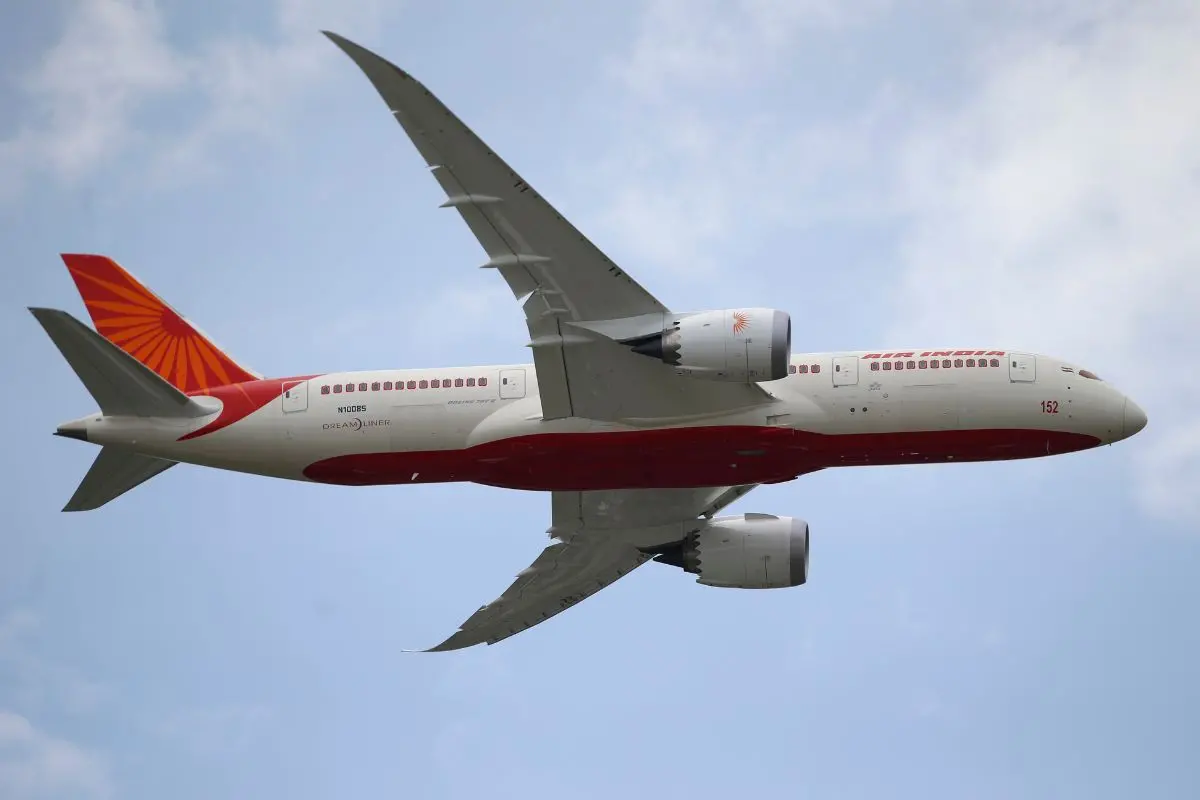
Air India reported a significant surge in its consolidated net loss for the financial year 2024–25, rising by 48% year-on-year to ₹10,859 crore. This comes despite the airline registering higher passenger traffic, increased capacity, and improved seat occupancy across its network.
According to Tata Sons’ financial disclosures, revenues for the airline group which includes Air India Express grew 18% during the same period to ₹78,636 crore. While Air India emerged as the top revenue-generating unlisted business in Tata’s portfolio for FY25, it also became the largest loss-making entity across both Tata's listed and unlisted companies.
Loss exceeds industry estimates
Notably, Air India’s losses alone exceeded the estimated total losses for India’s entire aviation industry in FY25, which had been projected at $400–600 million (roughly ₹3,300–₹5,000 crore) by aviation consultancy CAPA India. In stark contrast, market leader IndiGo recorded a healthy profit of ₹7,258 crore during the same period.
Capital infusion and mergers reshape the group
To support its massive transformation and expansion plan, Tata Sons and Singapore Airlines together infused ₹9,558 crore into Air India during FY25. Tata Sons contributed ₹3,225 crore, while Singapore Airlines invested ₹6,333 crore, underscoring their long-term commitment to turning around the legacy carrier.
The airline underwent structural consolidation during the year, completing the merger of Vistara, a joint venture between Tata Sons and Singapore Airlines into Air India. Additionally, AirAsia India was merged with Air India Express, resulting in a simplified dual-brand structure: Air India as the full-service airline, and Air India Express as the low-cost carrier.
Market share and fleet expansion
With the operational synergies from the mergers and the continued induction of new aircraft, the Air India Group now boasts a combined fleet of over 300 aircraft. Its domestic market share rose from 24% in September 2022 to 26.5% by May 2025, according to data from the Directorate General of Civil Aviation (DGCA). The group aims to increase this figure to 30% by 2027.
As part of its ambitious transformation roadmap, Vihaan.AI, Air India has placed orders for 470 aircraft from Boeing and Airbus, one of the largest such orders in commercial aviation history.
Corporate restructuring and NCLT approval
In FY25, the National Company Law Tribunal (NCLT) approved the composite scheme of arrangement between Air India, Talace (the Tata entity that acquired Air India in January 2022), and Tata SIA Airlines. As part of the corporate restructuring:
- Tata Sons received 34.38 billion fully paid equity shares in Air India in exchange for its equity and preference shares in Talace.
- An additional 13.02 billion shares were allotted for Tata’s equity in Tata SIA Airlines.
- Subsequently, the equity and preference shares of Talace and Tata SIA Airlines were derecognised, and new Air India equity shares were recorded at the historical cost of the earlier holdings.
- At Tata Sons’ request, preference shares of Air India were also converted into 14.44 billion equity shares as per agreed terms.
While Air India continues to face significant financial pressure, the Tata Group appears committed to its long-term revival through deep investments in aircraft, technology, workforce, and service quality. Analysts believe the full impact of these efforts may take a few years to reflect in profitability.
The airline is betting big on global standards, network expansion, and digital transformation to reclaim its status as a leading international carrier from India, a goal that remains at the heart of the Tata Group’s aviation vision.