8th Pay Commission update: Why salary revision may be delayed in 2026 and what employees should know
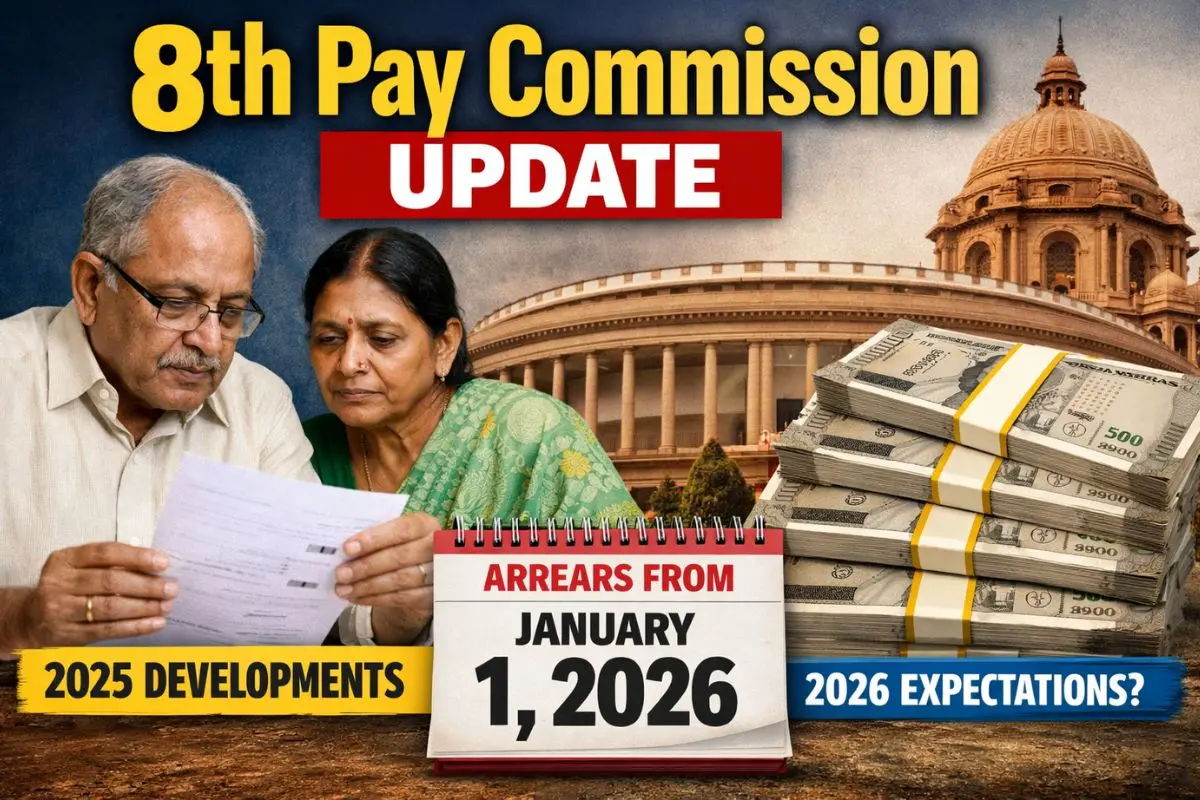
As 2025 draws to a close, speculation around the 8th Central Pay Commission (CPC) has intensified, with social media claims suggesting that revised salaries and pensions will kick in from January 1, 2026. However, the ground reality is more nuanced.
While central government employees and pensioners are unlikely to see an immediate pay or pension revision at the start of 2026, they can reasonably expect arrears from January 1, 2026, whenever the 8th Pay Commission’s recommendations are eventually implemented.
What the Government Did in 2025
During 2025, the Centre took three significant steps towards setting the stage for the 8th Pay Commission:
It announced the decision to constitute the 8th CPC to review salaries, pensions and allowances of eligible central government employees and pensioners.
The government formally constituted the commission and appointed its chairperson and members.
It notified the Terms of Reference (ToR), outlining the scope and objectives of the pay panel.
Before finalising the ToR, consultations were held with multiple stakeholders, including departments and staff bodies such as the NC-JCM Staff Side, which submitted several suggestions both before and after the ToR notification.
What to Expect in 2026
The tenure of the 7th Pay Commission ends on December 31, 2025, but the government has not confirmed whether the 8th CPC will be implemented immediately from January 1, 2026.
In a recent reply in Parliament, the Centre indicated that the implementation date will be decided only after the 8th CPC submits its recommendations. This makes it clear that employees and pensioners will continue under existing pay and pension structures at the beginning of 2026.
Why Arrears Are Still Likely
Despite the delay, arrears are widely expected once the new pay structure is approved, for two key reasons:
Pay commissions are traditionally implemented from the date the previous commission’s tenure ends — in this case, January 1, 2026.
The government has historically paid arrears when pay revisions are notified after their effective date.
That said, the final call on arrears and implementation remains entirely with the government.
Will the 8th CPC Submit Its Report in 2026?
The chances appear slim. The 8th Pay Commission was constituted recently and has been given up to 18 months to submit its recommendations. If it uses the full timeline, the report is likely to be submitted in 2027, with implementation following only after Cabinet approval.
Until then, employees and pensioners can expect periodic Dearness Allowance (DA) and Dearness Relief (DR) hikes under the existing 7th Pay Commission framework.