VS versus Others: A journey of tussles, confrontations and struggles
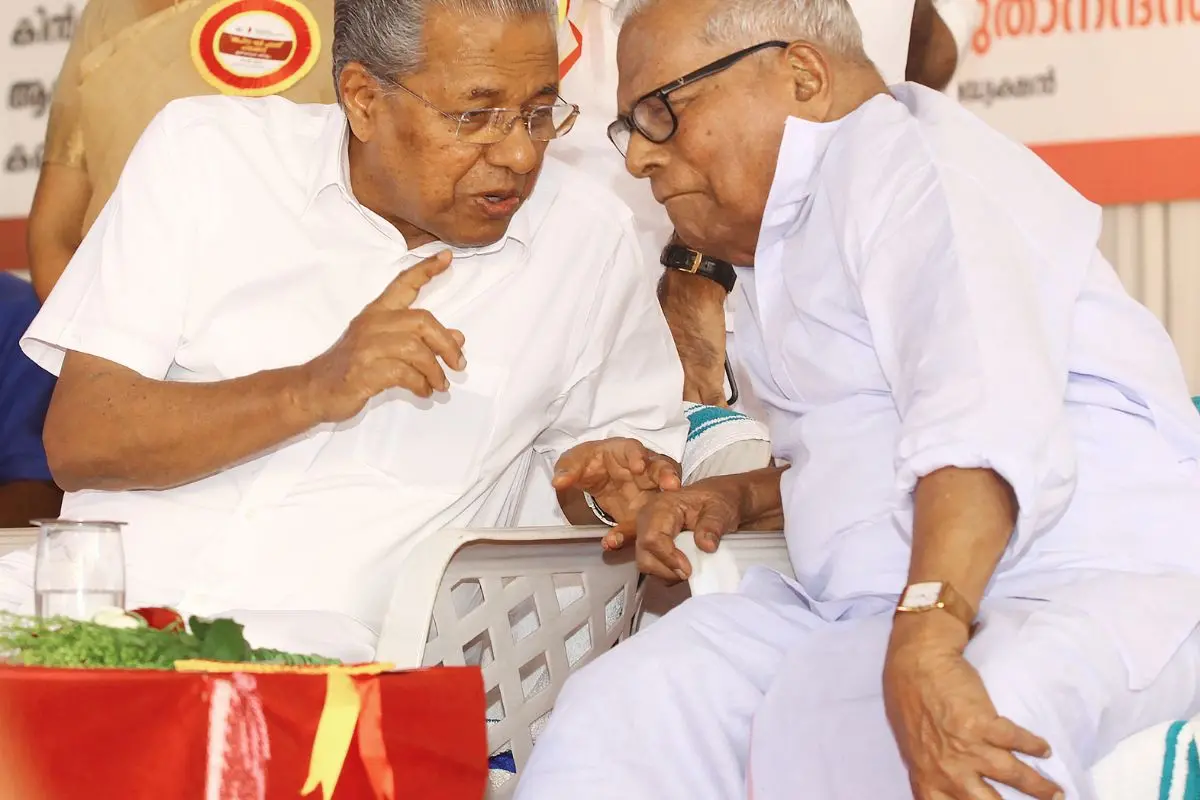
Thiruvananthapuram: Former Kerala Chief Minister and communist stalwart V. S. Achuthanandan passed away at a private hospital in the city on Monday. He had been on life support for several days after being hospitalized following a cardiac arrest.
Achuthanandan was the last surviving member of the group that founded the Communist Party of India (Marxist) in 1964, following the split within the undivided Communist Party. He last served as Kerala’s Chief Minister from 2006 to 2011.
In this article, we reflect on the rivalries and political battles that shaped his long and eventful political career.
VS vs Pinarayi
The political dynamics and rivalries surrounding V. S. Achuthanandan’s career were often complex and deeply entrenched, both within his party and from outside opposition. Throughout his political journey, he faced challenges from individuals and factions, many of whom held differing ideologies or personal disagreements with him.
One of the most widely discussed rivalries was between V. S. Achuthanandan and Pinarayi Vijayan. The two senior CPM leaders had a long-standing feud marked by ideological clashes and personal friction. Pinarayi Vijayan eventually succeeded Achuthanandan as the Chief Minister of Kerala in 2016. Key flashpoints between them included the SNC-Lavalin corruption case, Kannur violence, the 2007 Kozhikode Party Congress, the Sabarimala temple issue, and the 2021 Kodakara black money scandal.
Another internal critic was Kodiyeri Balakrishnan, a fellow CPM leader, who frequently voiced opposition to Achuthanandan’s policy decisions. His alignment with Pinarayi Vijayan is believed to have played a role in reducing Achuthanandan’s influence within the party.
Outside the CPM, Achuthanandan had high-profile confrontations with Congress leader Oommen Chandy, particularly during the 2013 Solar Scam case. VS accused Chandy’s office of direct involvement with the accused, while Chandy countered with allegations of a politically motivated smear campaign. Both leaders pursued legal action against each other during this period.
Other Congress figures such as Ramesh Chennithala, P. K. Kunhalikutty, and E. Ahamed were vocal critics of Achuthanandan's governance. Shashi Tharoor, then a UN Under-Secretary-General, also clashed publicly with VS, especially when VS accused him of interference and later targeted him in connection with the Sunanda Pushkar death case.
VS also faced opposition from BJP leaders like Kummanam Rajasekharan and K. Surendran, often over issues such as law and order, religious conversions, and minority appeasement policies.
Relations with bureaucrats were sometimes tense as well. Senior IAS officers like T. O. Sooraj and K. Jayakumar reportedly had strained interactions with Achuthanandan, stemming from differences in administrative approaches. His no-nonsense governance style and insistence on accountability made working with him challenging for some officials.
In the media space, VS was not immune to criticism. Journalists and commentators such as G. Prabhakaran, R. Balashankar, Swapan Dasgupta, and T. P. Sreenivasan often expressed views opposing his policies and leadership style—criticisms that he rarely shied away from confronting.
As Kerala mourns the loss of V. S. Achuthanandan, his political battles remain a defining feature of a legacy rooted in uncompromising convictions and public accountability.