'VS and Oommen Chandy were open to dialogue': Medha Patkar seeks people-first politics in Kerala
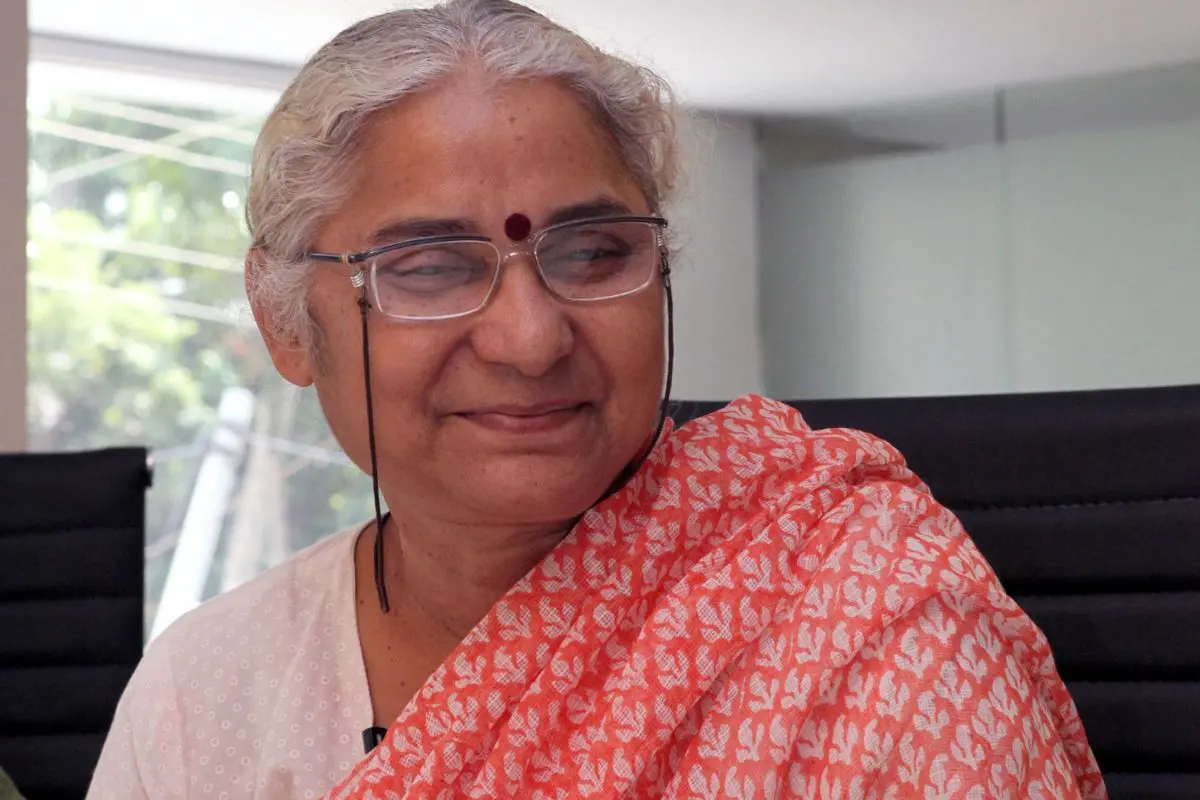
Veteran social activist Medha Patkar, best known for leading the Narmada Bachao Andolan, has called on Kerala's political leadership to uphold the spirit of people-centric governance. Speaking exclusively to Mathrubhumi English on the sidelines of an event in Kozhikode, Patkar recalled how V S Achuthanandan or Oommen Chandy -- as chief ministers -- were open to dialogue.
Expressing concern over a growing disconnect between elected leaders and grassroots voices, Patkar urged current leaders to listen, engage, and prioritise justice over development at any cost. Patkar reflected on her decades-long journey in public life -- defending the rights of displaced communities, fighting ecological degradation, and challenging the dominant model of development that she says is pushing millions to the margins.
You have been associated with the struggles of marginalised people across India. Struggles are a form of dissent. Do you think dissent is being criminalised more aggressively today?
It is not just the government -- it is the entire political system. They call us anti-nationals, anti-development, urban Naxals. But we know we must walk the path of conscience. We have to be courageous. We should not fear false allegations -- and we must never resort to violence.
Although political parties may differ in detail, many say a development consensus prevails. As a Gandhian activist, do you believe Gandhi's philosophy still has the power to influence policy today?
We don't work with foreign funds. We are not NGOs -- we are people's movements. Our support comes from society. In fact, it is the government that depends on foreign funds and loans. They are making the country more and more indebted.
We must continue to believe in Gandhi's philosophy. Our focus should return to the grassroots -- the village and the urban communities. Real decentralisation must empower the powerless. Only then will democracy be meaningful.
How do you view Gandhian environmentalism as a model to counter the neo-liberal development paradigm?
It is the alternative. Of course, it is not easy to reverse what is happening globally. But everywhere, people are suffering because of unregulated development. Just look at the Himalayas -- the Char Dham project is a clear warning. Now people there are beginning to realise what is being done in the name of development. They are starting to define their own paths.
You have said much of the political consensus on development is corporate-driven. Could you expand on that?
Not all parties, but yes, most of them operate on corporate terms: commodification, liberalisation, globalisation. But we must ask: who is this liberalisation for? Are they being liberal towards the real, exploited communities — the nature-based communities? We must think in terms of people’s development. We need a strong force of women, and a youth movement committed to justice — not just GDP numbers.
Your life has been one of dissent, fighting against big capital and powerful political forces. What keeps you going?
It is the faces of those who suffer -- the displaced, the landless, those earning less than ₹200 a day, while some corporates earn crores daily. These are people forced to migrate for survival. We saw it during the pandemic. Not all calamities are natural. Many are man-made -- even state-made. When I see this injustice, how can I keep silent?
My parents were also involved in workers' and women's struggles. When such a large part of our population is suffering, we have to rise above our personal lives and do what is right.
How do you view the current political leadership in Kerala?
I do not want to name anyone. But when leaders like VS Achuthanandan or Oommen Chandy were in office, they were open to dialogue. Today, I appeal to the politicians in Kerala -- especially those in power -- to be truly pro-people, and genuinely walk the Nava Keralam path. That would be the best thing they can do for this state.
Patkar also fondly remembered the late MP Veerendrakumar, who stood firmly with the people during the Plachimada struggle against Coca-Cola.