The art of serving Onasadya: What goes where on the leaf and how to do it right
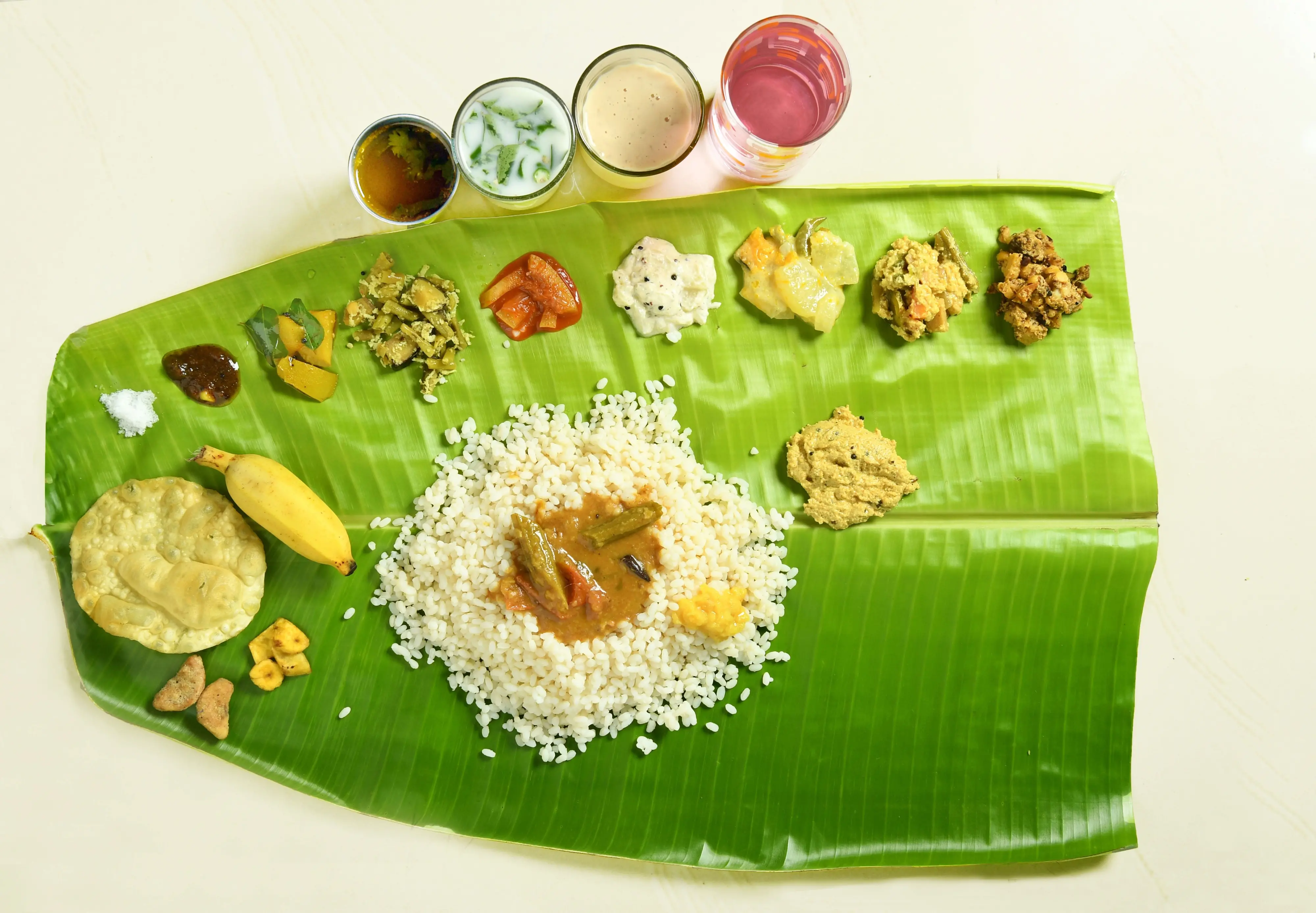
Serving an authentic Onasadya is an art form governed by precise traditional rules. A truly memorable feast relies as much on etiquette and timing as it does on culinary skill. According to customary practice, the meal must achieve a harmonious balance of flavours, blending dishes that embody sattva (purity) and rajas (passion) with delicate touches of sweetness.
The ritual begins before any guest sits down. A lit nilavilakku (brass lamp) and burning incense are placed in the kannimoola (south-west corner) of the home. The first serving is offered upon a plantain leaf to Lord Ganesha and King Mahabali, or dedicated to ancestors, before the family gathers to dine together.
Every Sadya is served on a thooshanila - the pointed tip of a plantain leaf. The leaf must be placed so that its slender tip points to the diner's left, with the wider, cut end to the right. While regional variations exist in dish selection, the placement follows traditional alignment.
Left to right: The precise layout
The left wing (sides and condiments): Crunchy kaya upperi (banana chips ) and sarkara upperi (jaggery-coated plantain bits) take their place at the bottom-left corner. Depending on the district, salt, fried tapioca, sesame balls or rice laddoos may join them, along with crispy pappadam. Fresh banana – preferably the njalippoovan variety favoured in the south- is placed alongside. The top-left edge holds tangy ginger-tamarind chutney (puli inji), pickles, kichadi, pachadi, avial, thoran, koottukari, erissery and olan.
The right wing (main dishes): Kalan occupies the far right side of the leaf.
The centre (rice and curries): Rice is served at the bottom centre. Ghee and cooked parippu (lentils) are ladled over the right side of the rice, traditionally crushed with pappadam for the opening courses. Rich sambar follows, succeeded by pulissery.
The sweet finale
Once the main savouries are enjoyed, payasam (payesh) is served. Ada pradhaman leads the dessert course; in southern regions, it is customary to mash ripe banana directly into the ada payasam. Subsequent rounds may feature palada, milk payasam or vermicelli payasam, often paired with sweet boli or laddu. To settle the stomach after the heavy feast, a final light serving of rice is taken with moru (spiced buttermilk) and rasam.