Sabarimala gold plating moved without court nod, sparks fresh controversy
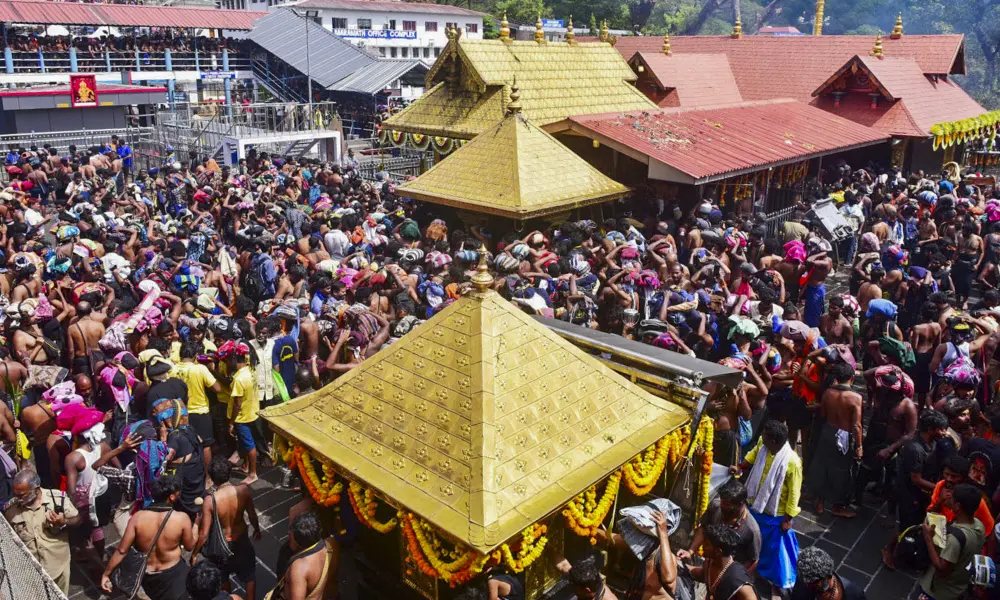
Thiruvananthapuram: A fresh controversy has erupted at the Sabarimala temple after the Special Commissioner of the Kerala High Court reported that gold plating from the Dwarapalaka sculptures, the guardian figures flanking the sanctum sanctorum, was removed and transported to Chennai without obtaining prior judicial approval.
In a report submitted to the High Court, the Commissioner highlighted that a previous directive clearly mandated that all gold-related works at the shrine must be carried out within the Sannidhanam (temple premises), strictly under court-appointed supervision. The unsanctioned transportation of gold, the report noted, represents a serious breach of protocol.
Devaswom Board defends action
Responding to the controversy, Travancore Devaswom Board President PS Prasanth defended the decision, stating that the gold sheets were removed due to visible wear and tear on the sculptures.
“There was tarnish, scratches, and even cracks in the legs. It was necessary to repair them before the Mandalam season. The removal was done in the presence of the Thiruvabharanam Commissioner and Vigilance officials,” he explained.
However, the Commissioner’s report stressed that Thantri approval does not supersede court orders, especially when it comes to the handling of valuable temple assets like gold.
The incident has reignited long-standing concerns over the economic implications of aged gold. Experts and devotees alike argue that gold exposed to the elements over time may undergo chemical changes that could potentially enhance its market value.
Some allege that even if the removed sheets are replaced with the same weight of new gold, financial discrepancies could still arise, especially if the original metal carries higher value or historical significance.
This is not the first time Sabarimala has come under scrutiny for gold-related procedures. In previous years, the re-plating of the temple roof also drew criticism over a perceived lack of transparency.
Timing and secrecy raise eyebrows
The current removal took place quietly after the Onam pujas, during the period when the temple was closed to the public, further fuelling suspicion among devotees. Observers argue that such activity, conducted outside of public view and without judicial oversight, undermines trust in temple administration.
Court scrutiny likely to intensify
With the matter now before the High Court, greater scrutiny of the Travancore Devaswom Board’s handling of temple assets is expected in the coming weeks. The court is likely to seek detailed explanations on the decision-making process and accountability measures.