Malayalam actor regrets ‘nauseating male deformity’ jibe on Thrissur Pulikali after strong criticism
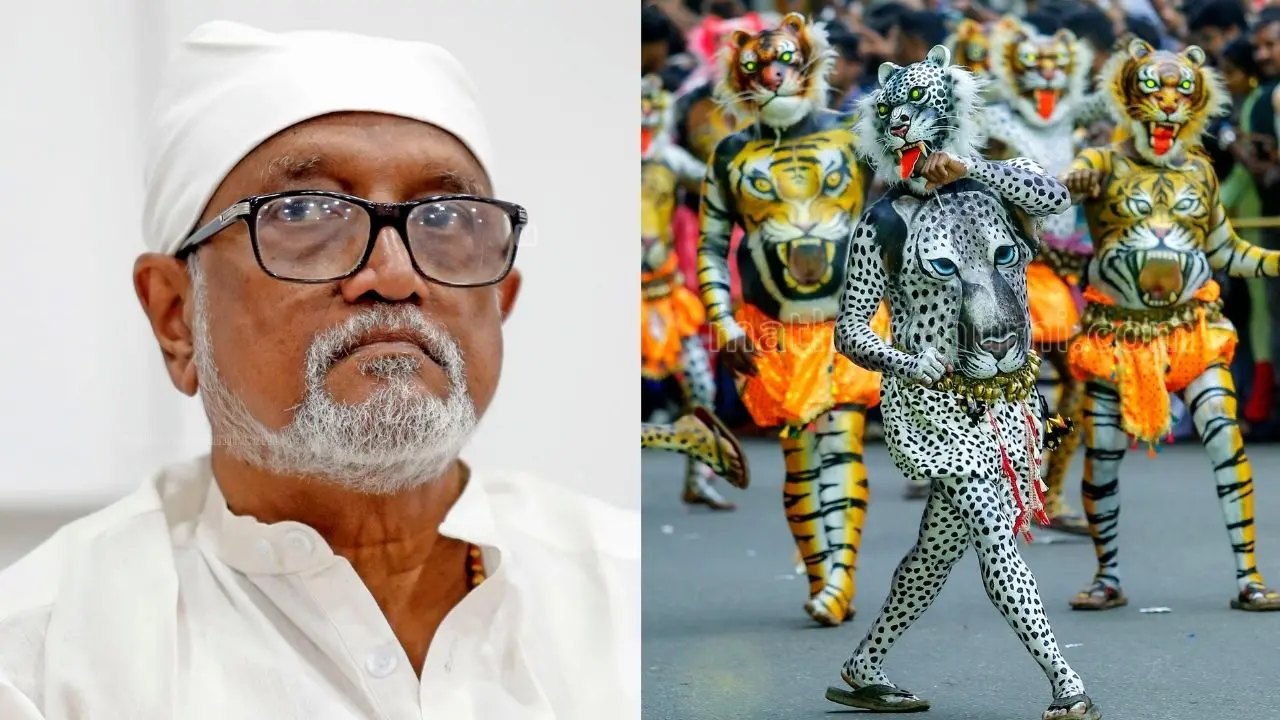
Actor and writer VK Sreeraman has expressed regret over his remarks criticising Thrissur’s traditional Pulikali (Tiger dance), after the comments triggered strong protests from Pulikali groups and artists.
Sreeraman said he understood that his comments and the words he used had caused distress to Pulikali artists and others associated with the traditional performance. He also said he hoped artists and organisers would work towards making the dance form more aesthetically appealing.
Controversial Facebook post
Sreeraman had earlier criticised Pulikali in a Facebook post, describing the use of men’s protruding stomachs as a form of physical deformity being used for art.
He had also described Pulikali as an artistic distortion that could cause nausea and questioned its aesthetic value. The remarks drew criticism from Pulikali groups, who accused him of insulting the bodies and hard work of the performers.
The criticism came as Pulikali groups highlighted the physical effort involved in the performance. Artists traditionally spend hours getting their bodies painted before performing for several hours, often wearing heavy anklets around their waists.
Representatives of the nine organising committees associated with Pulikali had rejected Sreeraman’s remarks and demanded that he apologise publicly and withdraw the post.
Manoj Vellanad backs call for apology
Amid the controversy, doctor and writer Manoj Vellanad had also responded to the issue in a Facebook post, which Sreeraman later shared.
Vellanad said he supported the demand for an apology, but argued that Sreeraman’s broader point about the health risks associated with abdominal obesity should also be discussed.
He said visceral fat around internal organs can be associated with several health problems, including high blood pressure, heart disease, stroke, insulin resistance, fatty liver disease and sleep-related disorders.
Vellanad also referred to the difficulties obesity can sometimes create during surgery and anaesthesia, while stressing that people whose weight is affected by hormonal or genetic factors should be treated with sensitivity and respect.
He argued that Pulikali should continue as an art form while performers should also be encouraged to maintain their long-term health.
Sreeraman says his earlier view lacked maturity
In his latest Facebook post, Sreeraman referred to the different reactions to his earlier remarks, including an observation comparing Thrissur’s Pulikali with a single-theme carnival.
The observation said Kasaragod’s Pulikali was closer to a martial art form, combining physical training and agility, while Thrissur’s version was more focused on creating a visual spectacle.
Sreeraman said he had come to understand that this observation was valid and accepted that his own earlier expression of opinion had not been mature.
“I understand that my opinion and the inappropriate words I used caused distress to Pulikali artists and those associated with it,” he said in his post.
He expressed regret over this.
Sreeraman also said he hoped artists and organisers would make efforts to make the traditional dance form more aesthetically appealing.
The controversy had followed his original Facebook post, which attracted criticism from various quarters. The post has been deleted.