Local Self-Government Day 2026: Sreekrishnapuram leads way with trailblazing women’s safety audit
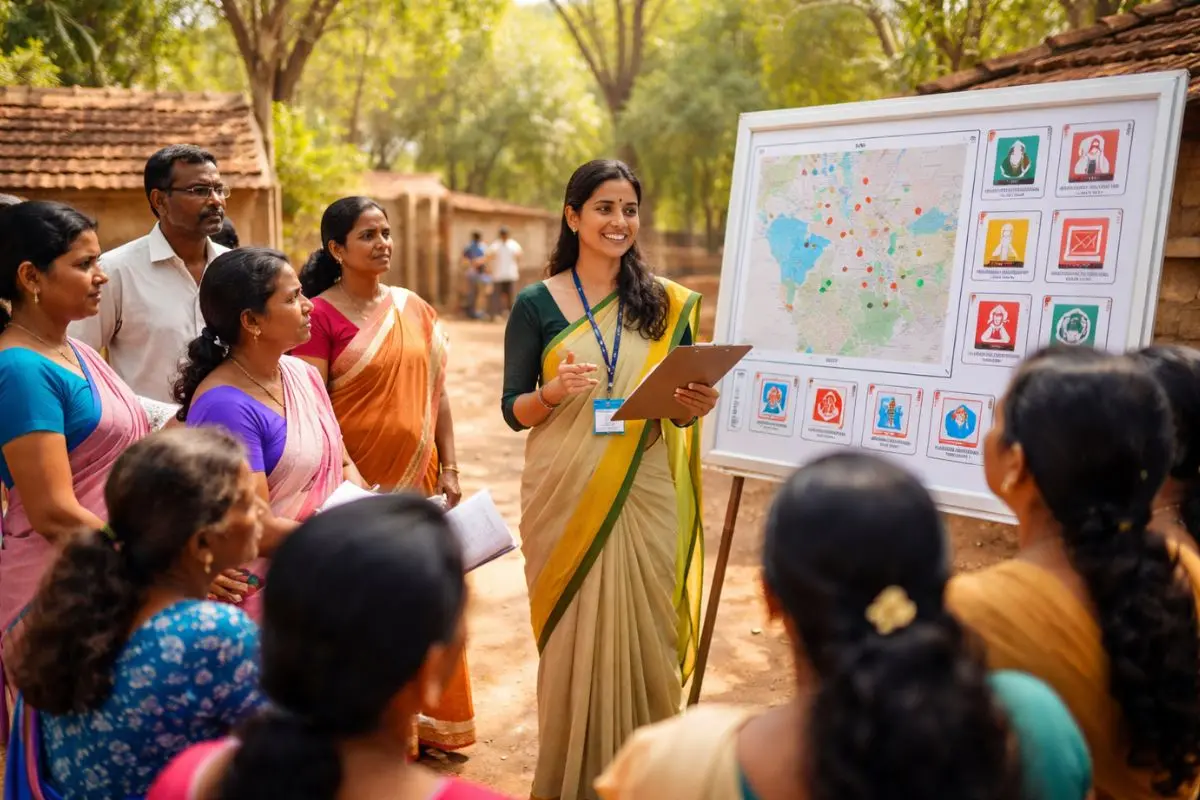
Marking Local Self-Government Day (Thadadesha Dinaghosham) 2026, Sreekrishnapuram grama panchayat in Palakkad has introduced an innovative programme titled ‘Balaja’, a structured women’s safety audit designed to evaluate everyday safety, dignity, and mobility for women within the panchayat.
Conceived as a grassroots, evidence-based intervention, the initiative seeks to build a clearer understanding of challenges women face at home, at work, and in public spaces.
Panchayat authorities say the audit will generate actionable insights to shape development priorities and social support systems.
The programme is being implemented through a collaborative framework involving the Kerala Institute of Local Administration (KILA), the Gender Resource Centre, Kudumbashree Community Development Society (CDS), and the Integrated Child Development Services (ICDS). Together, these institutions will guide training, survey design, and analysis. As part of the first phase, five volunteers from each of the panchayat’s 16 wards will undergo specialised training.
Equipped with awareness and technical tools, the volunteers will conduct a comprehensive survey covering themes such as domestic safety, workplace conditions, and the usability of shared public spaces like roads, markets and transit points.
The audit also aims to capture less visible concerns, including underreporting of abuse, constraints on women’s independence, and the role of economic dependence in limiting choices.
Safety during night travel, instances of harassment, and location-specific vulnerabilities will receive focused attention.
Panchayat leaders emphasise that the exercise is intended not merely to document problems but to trigger tangible improvements. Infrastructure upgrades such as enhanced street lighting, safer sanitation facilities, improved transport access and better surveillance will be considered based on findings.
Alongside physical measures, the programme incorporates counselling, legal guidance, awareness sessions, and community campaigns to strengthen prevention and response mechanisms. \
Officials describe Balaja as part of a broader push towards gender-responsive local governance, building on earlier gender budgeting efforts.
The volunteer training was inaugurated at the Government Engineering College, Sreekrishnapuram, with around 80 participants expected in the initial cycle.
Calling it a long-term commitment rather than a one-time survey, panchayat representatives expressed hope that the Balaja model will encourage other local bodies to embed women’s safety and empowerment at the heart of planning and service delivery.
About Local Self-Government Day:
Local Self-Government Day 2026 celebrates the pivotal role of grassroots democracy in shaping everyday governance across Kerala.
Observed as Thadadesha Dinaghosham, the day highlights how panchayats, municipalities and corporations serve as the closest link between citizens and the state, delivering essential services, driving development, and strengthening participatory decision-making.
It is also a moment to recognise innovations emerging from local bodies that address community-specific needs with agility and accountability.
Beyond ceremonial events, the day underscores Kerala’s long-standing commitment to decentralisation and people-centric planning.
From infrastructure and public health to gender-responsive budgeting and social welfare, Local Self-Government Day reflects how empowered local institutions can design solutions rooted in lived realities.
Initiatives launched on this occasion often signal forward-looking governance — blending data, inclusivity and citizen engagement to build resilient, equitable communities.