KSRTC: The Rs 21,000 crore hole in Kerala's pocket
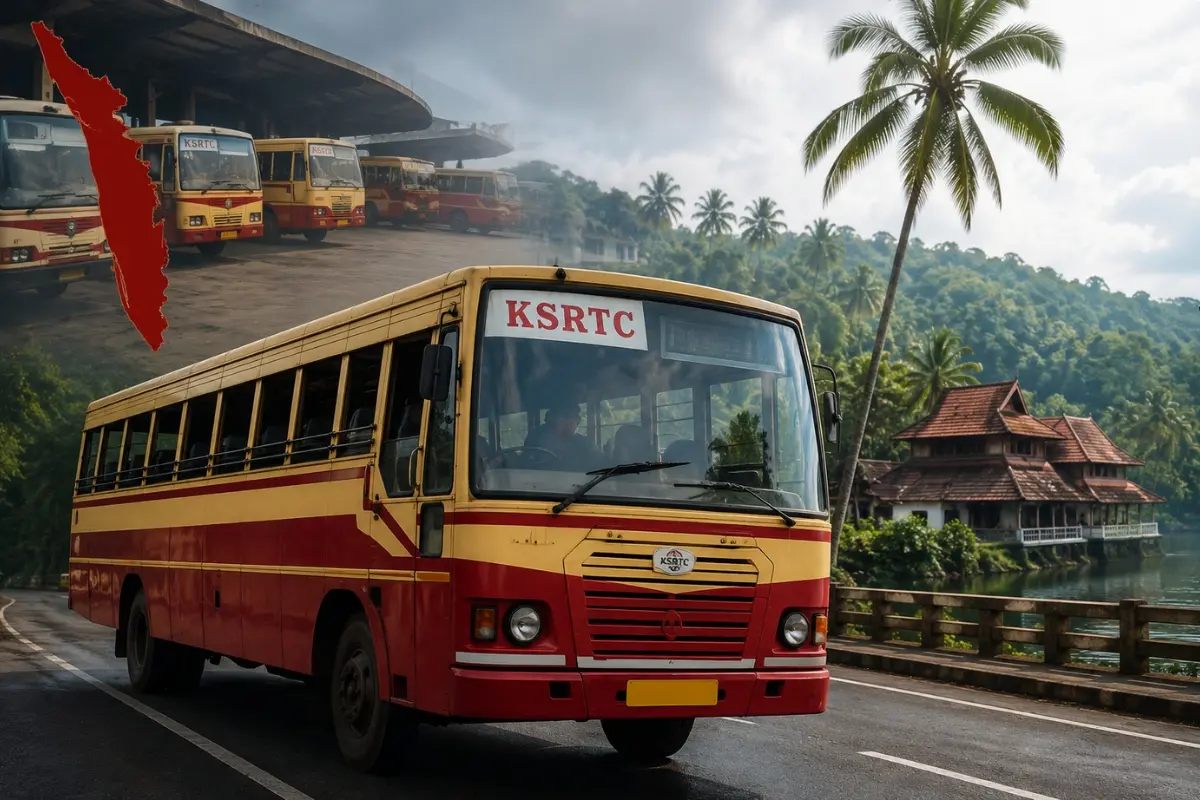
The newly-released status report on Kerala's fiscal health has identified the Kerala State Road Transport Corporation (KSRTC) as a primary driver of the state's "structural stress," labeling the utility a significant "dead weight" on the public exchequer.
The report reveals a staggering financial collapse, with the corporation's accumulated losses reaching ₹20,961.36 crore by the end of the 2024-25 fiscal year.
A mountain of debt
According to the findings, KSRTC has incurred losses in every single year under review. This chronic underperformance has completely eroded the corporation's net worth, which stood at a negative ₹19,820.63 crore in 2024-25. The sheer scale of this crisis is underscored by the fact that KSRTC alone accounted for 44.2% of the total net loss recorded by all 132 active public sector enterprises (PSEs) in the state last year.
The report further highlights KSRTC’s role as the state's largest debtor. As of March 31, 2025, the corporation owed the government ₹11,678.64 crore in principal and interest arrears. This figure represents a staggering 46.38% of the total loan arrears owed to the state by all PSEs, municipal corporations, and cooperatives combined.
The 'production subsidy' trap
The Committee argues that KSRTC's survival is currently dependent on "continuous budgetary resources," including subsidies and grants that far exceed its fiscal contribution. A major criticism in the report is that "social responsibilities" are often used as a mask to hide operational inefficiencies and financial mismanagement.
The report notes that the current model of "production-based subsidies" -- where the government simply absorbs the utility's losses -- has failed to incentivize efficiency. Instead, KSRTC has become a drain that limits the state's capacity to invest in modernizing sustainable mobility and climate-resilient transport.
The path to recovery
To prevent further bleeding, the report suggests a radical shift in how the state supports the transport sector. The most significant recommendation is to move toward "consumption-based subsidies".
Under this system, subsidies would be paid directly to deserving beneficiaries via Aadhaar-linked Direct Benefit Transfer (DBT), allowing the corporation to operate on more transparent commercial principles.
Other key recommendations for a KSRTC "revamp" include:
* Management Stability: Appointing professional chairpersons through a selection process with a fixed tenure of three to five years to end the trend of short-term official appointments.
* The Tamil Nadu Model: Commissioning a study based on the Tamil Nadu transport organization, which was successfully restructured and rendered efficient through similar reforms.
* Asset Monetization: Exploring the monetization of underutilized land and assets held by the corporation to redeploy resources toward more productive economic activities.
The report concludes that while KSRTC remains an essential public utility, its current trajectory is unsustainable. Without "hard political decisions" and a shift toward commercial viability, KSRTC will continue to jeopardize the state's overall financial stability.