Traffic trouble in Kochi? Police identify 15 junctions for a three-month monitoring drive
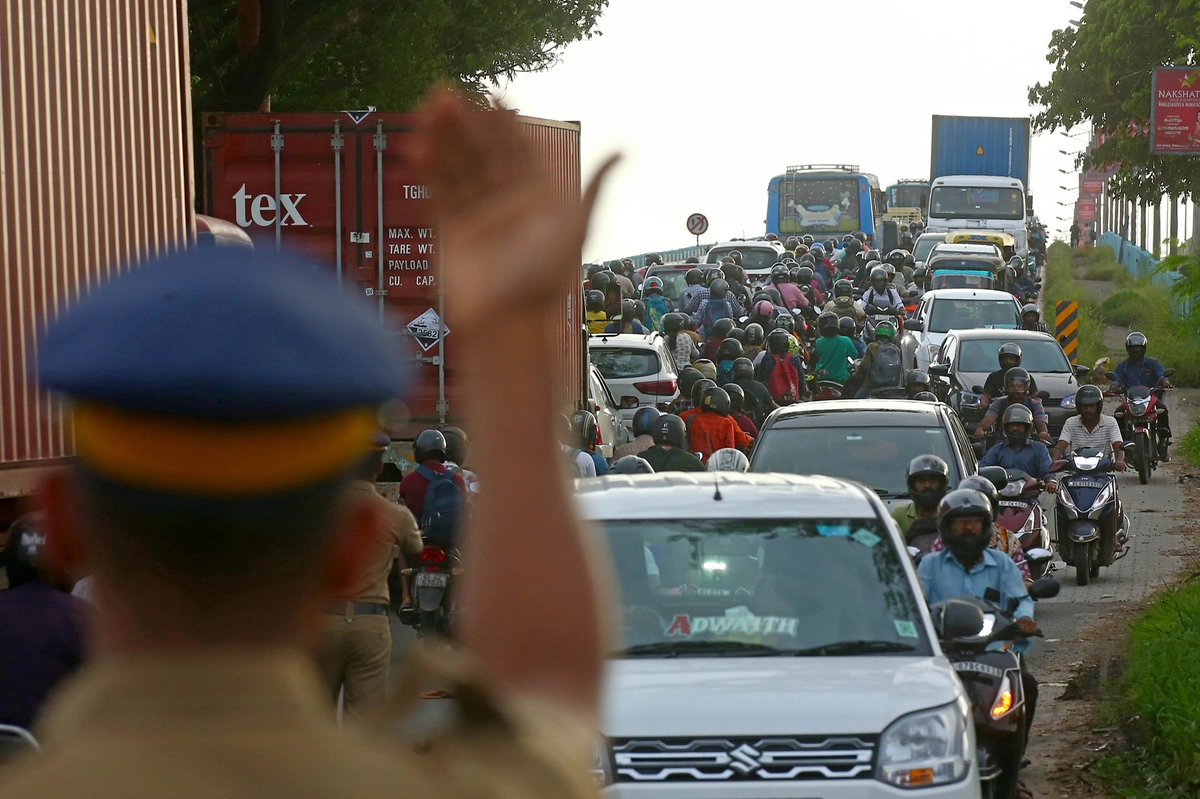
Kochi City Police have identified 15 traffic junctions across the city for a three-month monitoring exercise aimed at reducing congestion and improving traffic movement through targeted interventions.
Assistant Commissioner-rank officers will be assigned to the selected junctions to identify location-specific problems and recommend practical solutions. The measures could include marking pedestrian crossings, installing traffic signals and removing signboards or other obstacles that obstruct motorists' visibility.
Kaloor, Vyttila, Edappally, Jos Junction and Tripunithura are among the locations selected for the exercise, Kochi City Police Commissioner R Nishanthini said at a meet-the-press programme organised by the Ernakulam Press Club on Friday.
The findings will also help the police prepare proposals for larger traffic management projects requiring coordination between multiple government departments.
Nishanthini identified traffic management as her foremost priority, followed by action against drug-related offences and cybercrime.
Kochi police step up night-time monitoring
Clarifying the police department's position on nightlife in the city, Nishanthini said the police were not opposed to nightlife activities. However, additional personnel would be deployed during night hours to prevent criminal activities.
Random inspections at night, including vehicle checks, are also being conducted to deter drug peddling and illegal racing.
Private bus employees to get identity cards
On the proposed identity cards for private bus employees, Nishanthini said 1,800 workers had submitted their details so far, while verification had been completed for 760.
The design and format of the identity cards have been finalised, and distribution is expected to begin soon. The cards will initially be valid for six months, although the renewal procedure is yet to be decided.
A meeting with stakeholders next week is expected to finalise the rollout schedule and validity conditions. The police have not announced a specific deadline but intend to complete the process at the earliest.
Asked about allegations that some private bus owners were related to police personnel or their families, Nishanthini said no such matter had been brought to her attention. She added that the issue should not automatically be linked to problems involving private buses.
Police acknowledge staff shortage amid rising cases
Responding to concerns about the availability of police personnel, Nishanthini acknowledged that the force might not be sufficient to match the growing number of cases. However, she maintained that police presence was being ensured across the city.
Cheating, cybercrime and drug-related offences are among the most frequently reported crimes in Kochi, she said.
What the three-month traffic exercise means for Kochi
The monitoring exercise focuses on addressing traffic problems at individual junctions rather than relying only on city-wide traffic plans. This approach could help identify practical issues that contribute to congestion, including poorly marked pedestrian crossings, inadequate traffic signals and obstructions affecting visibility.
The involvement of Assistant Commissioner-rank officers also places responsibility on senior police officials to assess conditions on the ground and recommend solutions.
However, some improvements may require coordination with civic authorities and other government departments, particularly where road design, infrastructure or public utilities are involved. The findings from the three-month exercise are expected to help the police prepare proposals for such larger interventions.
The announcement also outlines other policing priorities. Additional night-time deployment is intended to address concerns about drug-related offences and illegal racing without restricting nightlife activities. Meanwhile, the proposed identity cards for private bus employees are aimed at improving identification and verification, although the renewal process and final rollout schedule remain pending.
The effectiveness of these measures will depend on how quickly the identified traffic problems are addressed and whether the proposed changes are sustained beyond the monitoring period.