Kerala's river sand mining remains stalled despite flood risks and projected ₹200 crore revenue
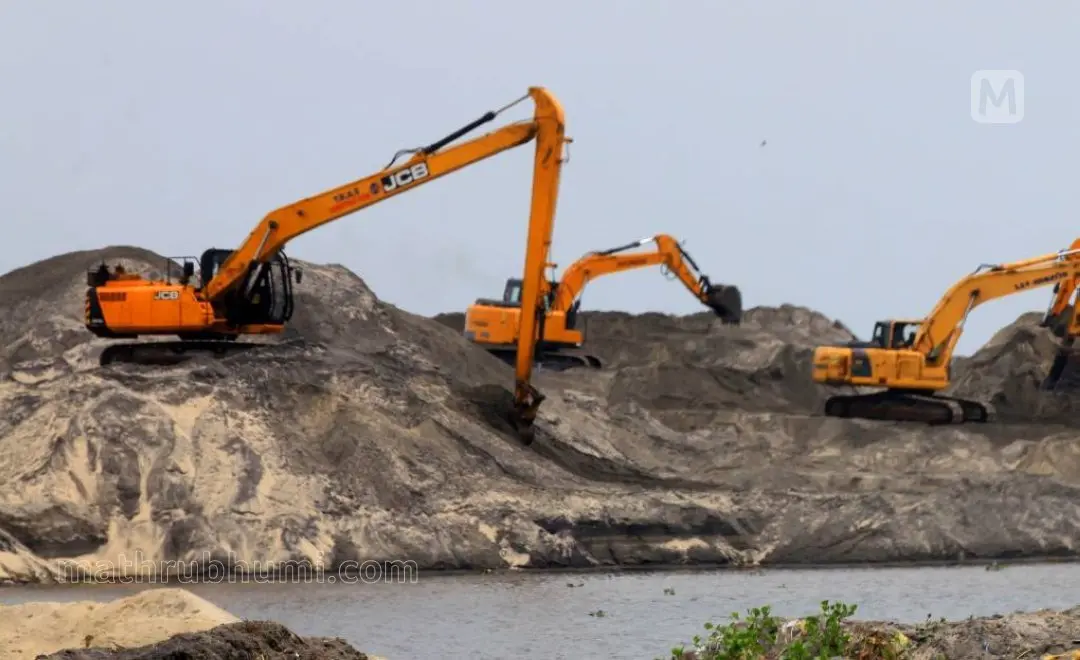
The vast quantity of sand that has accumulated in Kerala's rivers since two major floods is increasingly being cited as one of the factors behind recent flooding in several parts of the state. Yet, nearly a decade after river sand mining was banned, efforts to restart regulated extraction remain stuck because of an unresolved dispute between two government departments.
A proposal prepared during the previous Left government's tenure to resume river sand mining never took off after differences emerged between the Revenue Department and the Department of Mining and Geology over how the process should be carried out.
Departments locked in procedural dispute
The Revenue Department maintained that river sand should be auctioned through kadavu (riverbank) committees in line with the River Bank Protection Act. It proposed implementing a joint sand mining project with the Local Self-Government Department under this framework.
However, the plan came to a standstill when it reached its final stage. The Department of Mining and Geology declined to issue the mandatory Letter of Intent required for the project to proceed.
The department argued that the Kerala Minor Mineral Concession Rules do not provide for issuing a Letter of Intent for river sand mining. Citing this technical reason, it withdrew from the proposed arrangement.
Instead, it suggested auctioning kadavu sites on the lines of quarry leases, after which it could grant permission for sand extraction. The disagreement over the procedure soon developed into a prolonged dispute, and no serious attempt was made to bridge the differences.
Crores worth of sand remains untouched
Before the proposal stalled, a sand audit had identified 464 lakh cubic metres of sand across 17 rivers, with 141 lakh cubic metres assessed as suitable for extraction.
There were also suspicions that some large business groups were interested in these sand reserves, estimated to be worth several crores of rupees. According to available information, such interests may have contributed to attempts to derail the project on technical grounds.
Officials had estimated that the project could have generated around ₹200 crore in revenue for the state exchequer.
River sand mining has remained banned since 2016. Since then, sand deposited during two major floods has not been removed. According to assessments, the continued accumulation of these deposits is considered one of the major factors contributing to the recent flooding witnessed in several parts of Kerala.