Kerala University campus politics ban move: What is the draft code controversy all about?
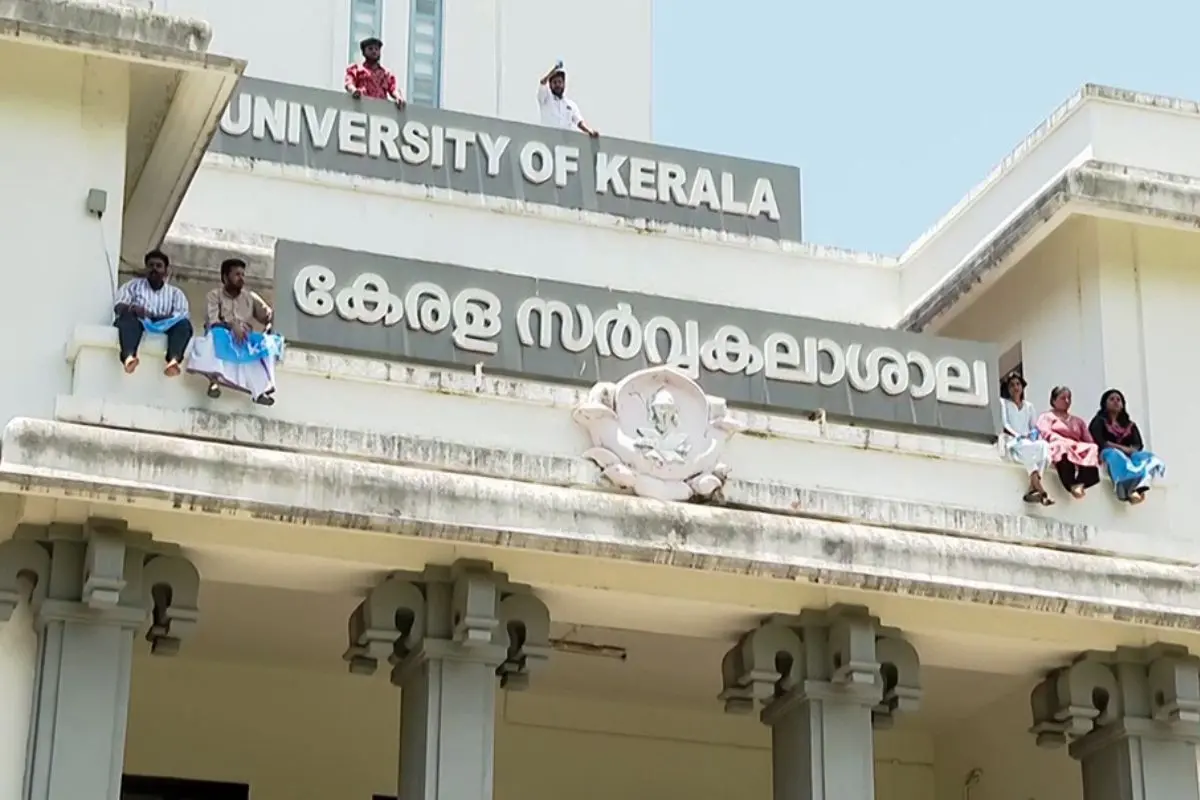
A major political controversy has erupted over higher education in Kerala following reports of a proposed ban on campus politics at Kerala University.
The debate centers on a leaked preliminary draft titled the ‘Students' Code of Conduct Regulations, 2026’, which outlines sweeping restrictions on organised student activism across university campuses and affiliated colleges.
Here is a comprehensive breakdown of the draft proposals, the judicial background, the ensuing political backlash and the official stance of the government and university authorities.
What are the key restrictions in the leaked draft?
The draft document prepared for the university syndicate proposed stringent curbs on student political mobilisation
- Prohibition of on-campus agitations: A blanket ban on strikes, rallies, dharnas, gheraos and classroom sloganeering.
- Property and digital restrictions: Prohibitions on wall graffiti, political posters and digital or social media political campaigns targeting campus affairs.
- Financial and organisational curbs: Restrictions on political fundraising within educational institutions.
- Strict penalties: Provisions for disciplinary action, including financial fines and academic suspensions for non-compliant students and student bodies.
Origin of the draft: Judicial mandates and historic precedents
The draft initiative originates from past legal directives rather than a fresh administrative policy.
Following high-profile incidents of campus violence in Keralam, most notably the 2018 murder of student leader Abhimanyu at Maharaja's College, Kochi, several Public Interest Litigations (PILs) were filed before the High Court of Kerala.
In response, the High Court directed state universities to formulate clear regulations governing campus politics. The court observed that guidelines formulated by Mahatma Gandhi (MG) University in 2005 could serve as a reference model. Following repeated judicial reminders, Kerala University tasked a syndicate sub-committee to draft an initial framework, which drew heavily from the 2005 MG University document.
Opposition and widespread political backlash
The emergence of the draft triggered immediate pushback across the political spectrum.
- Student and employee unions: Student organisations, including the Students' Federation of India (SFI) and the Kerala Students Union (KSU), alongside Left-aligned university employee associations, voiced strong opposition, arguing that the draft undermines democratic rights and suppresses political awareness among youth.
- Opposition response: Leader of the Opposition Pinarayi Vijayan and senior CPM leaders publicly criticised the proposed restrictions, characterising them as anti-democratic.
Government clarification: ‘No move to ban student politics’
In response to growing public concern, Keralam Higher Education Minister Roji M John dismissed reports of an impending ban as factually incorrect and misleading.
Key points clarified by the Minister
- Preliminary nature: The document forwarded by the university's legal department was merely a discussion paper based on old 2005 guidelines, not an approved policy.
- Firm stance on campus democracy: Minister Roji John affirmed that the government's policy is to encourage student politics, highlighting his own political journey from KSU activist and college union chairman to national president before entering public office.
- Democratic rights at 18: The Minister emphasised that if 18-year-old students have the constitutional right to vote for MLAs, MPs and Prime Ministers, they inherently possess the right to participate in campus democracy and elect union representatives.
“Beyond that, no action to ban student politics will ever happen during the tenure of this government,” Minister Roji M John stated, assuring that the government would not compromise on campus political rights.
University Syndicate's official procedure and next steps
Ajay Juel Kuriakose, convenor of the eight-member syndicate sub-committee overseeing the draft, clarified the multi-stage approval process required before any policy can be implemented.
The decision-making process begins with the university's legal department forwarding a preliminary draft for initial consideration. This draft undergoes a thorough review and revision by a dedicated syndicate sub-committee, after which it is sent via registered post to all recognised student organisations to invite their written feedback and concerns.
Upon receiving these inputs, the sub-committee re-evaluates the draft to incorporate necessary amendments before submitting it to the Affiliation and Student Services Standing Committee for further review. Once vetted by the standing committee, the proposal is placed before a full syndicate meeting chaired by the Vice-Chancellor for detailed deliberation and final approval, ultimately leading to its official notification by the university.
Kuriakose confirmed that the sub-committee, which includes members affiliated with the Congress, CPM and BJP, unanimously agreed that no regulation denying students a platform to voice their views would be approved. The revised draft will be sent via registered post to all recognised student organisations for written feedback before any final proposal goes to the syndicate for deliberation.
(with PTI inputs)