Kerala to enforce 6–10 PM power cuts amid demand surge, advisory issued
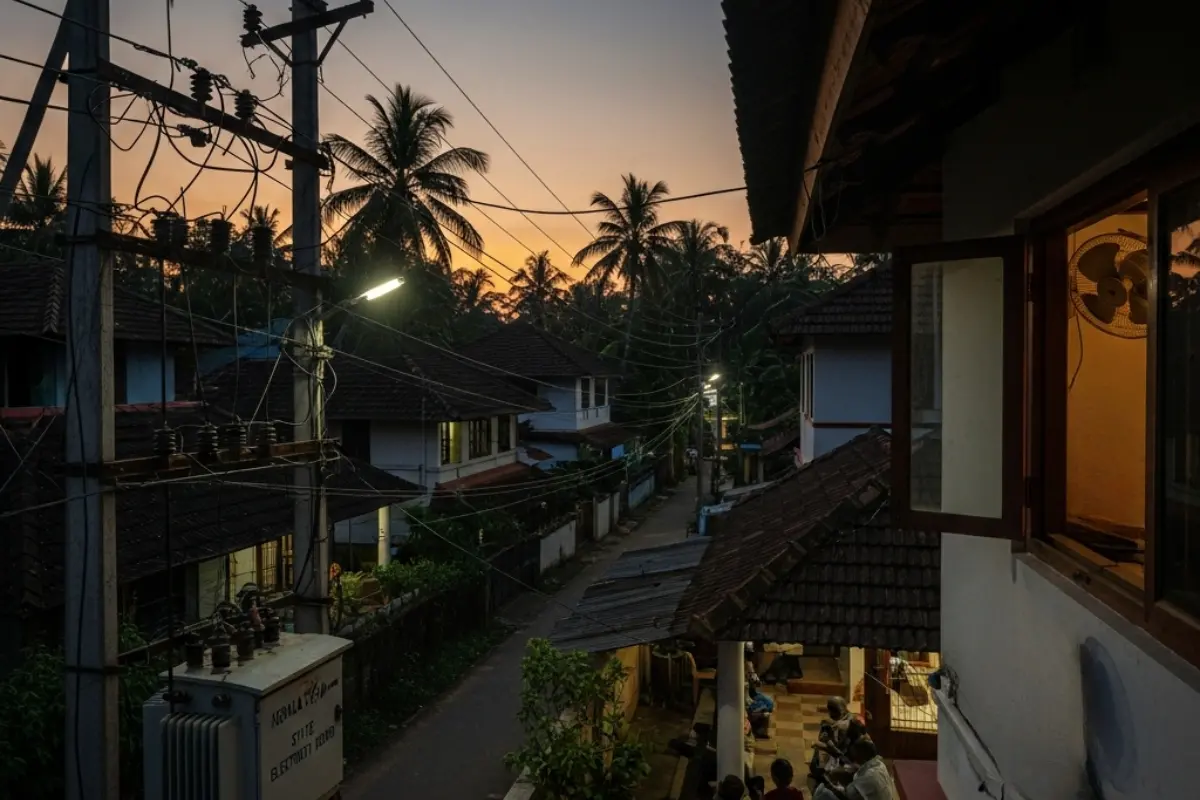
The Kerala State Electricity Board (KSEB) has announced state-wide power restrictions of up to 30 minutes during evening peak hours, citing a sharp rise in electricity demand driven by intense summer heat.
The curbs will be enforced between 6 PM and 12 AM under a framework termed “peak load management”, rather than formal load shedding. Power outages are expected to last between 15 and 30 minutes in different areas, depending on local demand and grid conditions.
How the restriction system will work
Authorities have authorised the State Load Dispatch Centre to impose short-duration outages to stabilise the grid and prevent overloading of transmission and distribution networks.
Unlike scheduled load shedding, these restrictions are dynamic and may vary by location and time. Officials have clarified that the approach is aimed at maintaining system safety and does not require prior regulatory approval as it falls under operational grid management.
The decision follows a high-level review amid mounting pressure on the state’s power infrastructure. Temperatures reaching up to 38°C across Kerala have significantly increased the use of cooling appliances such as air conditioners and fans.
This surge in consumption has pushed peak load levels higher, forcing authorities to adopt immediate demand-control measures to avoid large-scale disruptions.
Supply constraints worsen the situation
The power crisis has been compounded by supply-side challenges. Kerala is currently facing a shortfall of around 200 MW in its share of electricity from the central pool.
In addition, declining water levels in key hydroelectric sources, including the Idukki Dam, have reduced the state’s generation capacity, limiting its ability to meet rising demand internally.
Kudankulam outage adds to pressure
External disruptions have further strained supply. A technical fault at the Kudankulam Nuclear Power Plant has affected power generation from one of its reactors, reducing electricity availability for states including Kerala.
Although the second reactor remains operational, the outage has tightened supply margins during a period of already high demand.
Advisory issued for consumers
KSEB has urged the public to cooperate in managing the crisis by reducing electricity usage during peak hours. Key advisories include:
- Avoid charging electric vehicles between 6 PM and 12 AM
- Set air conditioners between 24°C and 26°C
- Limit use of high-power appliances such as induction cookers, washing machines, heaters, and irons
These measures are intended to ease pressure on the grid and minimise the need for extended outages.
Power purchase efforts and uncertainty
To bridge the demand-supply gap, KSEB is exploring short-term power purchases from exchanges. The state regulatory commission has allowed procurement at rates up to ₹10 per unit.
However, availability of additional power remains uncertain, with early assessments indicating that the required supply may not be fully secured.
What to expect in the coming days
Officials have indicated that restrictions may continue, particularly between 10 PM and midnight, depending on real-time load conditions at substations. Not all areas may experience outages at the same time, as the system is designed to distribute the load dynamically.
A core committee meeting is expected to review whether advance schedules can be communicated more transparently to the public, amid criticism over recent unannounced outages.
Bigger picture: strain on Kerala’s power system
The current situation highlights the growing stress on Kerala’s power infrastructure during extreme summer conditions. Rising consumption, coupled with supply disruptions and limited reserves, has made short-term demand management necessary.
The episode underscores the broader challenge of balancing increasing electricity needs with reliable supply, particularly during peak weather-driven demand periods.