Kerala LPST protest: After Valarmathi, Jayakrishnan too shaves head; asks if CM will cry again
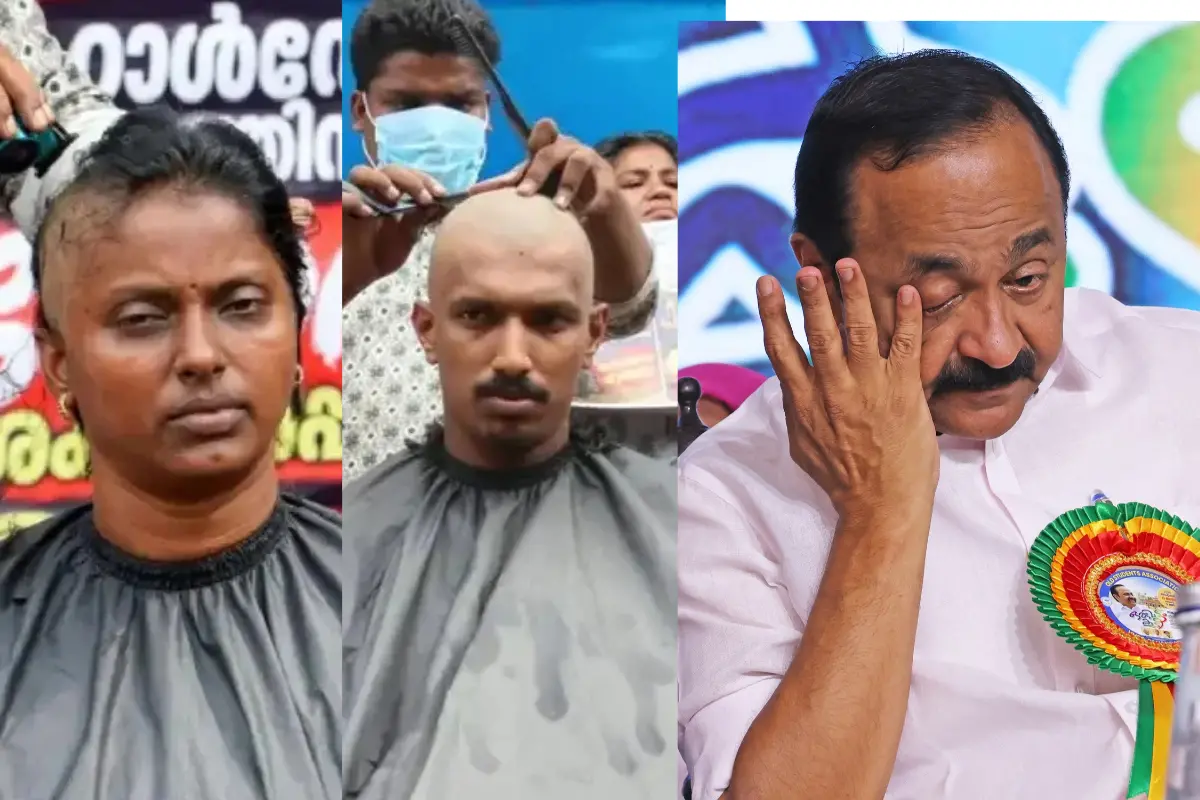
In a major development in the months-long protest by Lower Primary School Teacher (LPST) rank-holders in Kerala, hunger striker M. Jayakrishnan ended his indefinite fast on Friday (November 20), after tonsuring his head, while sharply criticising the government's handling of the agitation and questioning Chief Minister V.D. Satheesan's earlier emotional response to protesters shaving their heads.
Jayakrishnan, who had taken over the hunger strike after the police removed and hospitalised the original protest leader S. Valarmathi on November 11, said he was being forced to withdraw the fast because of deteriorating health. He accused the government of delaying a decision despite the protesters' prolonged agitation and said his life could be at risk if he continued.
His decision to tonsure his head before ending the fast brought renewed attention to the protesters' earlier criticism of the Chief Minister's remarks about shedding tears after seeing women protesters shave their heads.
'Will the Chief Minister cry today?'
Taking a dig at Satheesan's earlier emotional response, Jayakrishnan questioned whether the Chief Minister would react similarly to his decision to tonsure his head.
"When a woman cut her hair, the Chief Minister cried with great sadness. I don't know whether the Chief Minister will cry today. Although the government is causing us considerable hardship, we do not want to make the Chief Minister cry. We are being pushed towards death. It would be upsetting if he cried again," he said.
The remarks referred to the Chief Minister's earlier statement that his eyes had filled with tears after seeing women rank-holders shave their heads during the agitation.
Valarmathi, secretary of the All Kerala LPST Rank-holders' Association, had tonsured her head outside the Secretariat on October 26 to protest delays in appointments. She was later hospitalised after developing health complications during her indefinite hunger strike.
Jayakrishnan began his fast after the police forcibly removed Valarmathi from the protest site late on November 11 and shifted her to hospital.
Rank-list uncertainty and government assurances
Jayakrishnan also questioned the government's assurances, particularly its claim that the validity of the existing PSC rank list would be extended.
"The government said the rank list had been extended, but the PSC has not approved it. We are not sure how the promises made to us will be implemented," he said.
He alleged that the four assurances given by the government would not adequately address the protesters' concerns. He also criticised the authorities for seeking more time when the protesters believed their demands required urgent attention.
The government had agreed in principle to extend the validity of the current rank list, postpone a fresh recruitment notification and report certain head teacher and retirement vacancies to the PSC.
Teacher-student ratio remains contentious
The central unresolved demand is the reduction of the student-teacher ratio in lower primary schools from 1:30 to 1:25. The government has cited financial implications and the possibility of similar demands from other school sections as reasons for further discussions.
General Education Minister N. Samsudheen had said the proposed reduction could involve substantial additional expenditure. The government had also indicated that implementing the change would have implications for aided schools.
The rank-holders, meanwhile, have demanded that head teacher vacancies be reported to the PSC if the government cannot immediately reduce the ratio, particularly in schools facing the possibility of division fall.
The agitation began over delays in appointments from the PSC rank list, vacancy reporting, protection of teaching posts and recruitment to head teacher positions. Although the protesters had temporarily called off their agitation in August following discussions with the government, they resumed it over unresolved demands.
Jayakrishnan said the government's response, including its request for more time, was unacceptable given the health risks faced by those on hunger strike. He maintained that the government must take an immediate decision.