Kerala High Court quashes Centre’s FCRA renewal denial for Vizhinjam agitation-linked NGOs
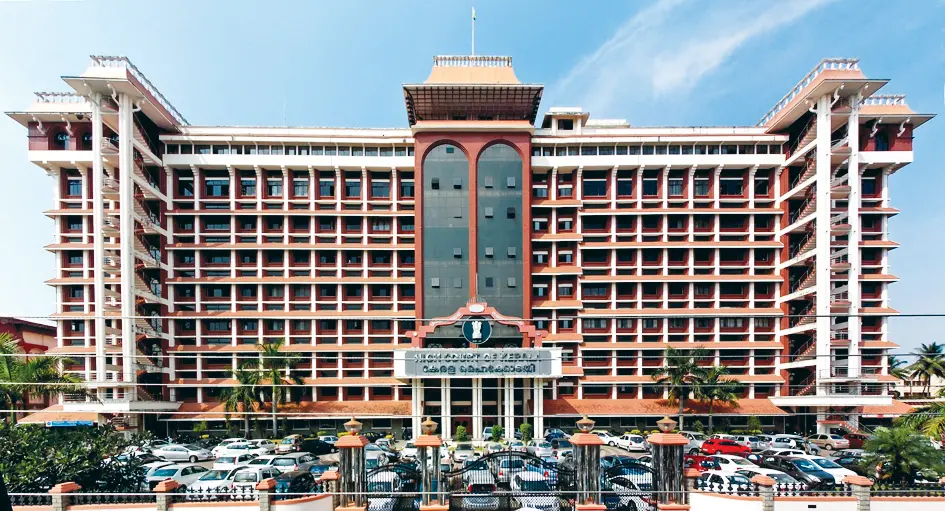
In a major ruling, the Kerala High Court has overturned the Central Government's decision to deny Foreign Contribution Regulation Act (FCRA) certificate renewals to two non-governmental organisations. Central agencies had accused the NGOs of misusing foreign donations to finance local demonstrations against the Vizhinjam seaport project. However, the court ruled that providing financial backing to a constitutionally protected protest does not constitute an illegal diversion of foreign funds.
Constitutional Right to Protest vs. Political Disapproval
In its August 11 order, the High Court emphasized that fundamental rights protected by the Constitution cannot be branded as unlawful simply because they face administrative pushback:
"When the right to protest is constitutionally guaranteed, exercise of such rights cannot be labelled as an undesirable purpose' or against public interest. The term undesirable purpose' in section 12(4)(a)(ii) of the FCRA cannot be interpreted to mean undesirable to the Government or undesirable to the political will."
The court elaborated that "executive or administrative distaste" for dissent cannot transform a lawful right into an "undesirable purpose" or an act against public interest.
"A peaceful protest against a project by persons who have a grievance or who apprehend injury to them, cannot be viewed as an undesirable purpose' due to a political disapproval," the bench stated.
It further noted that classifying an activity as "undesirable" must be anchored strictly in legal prohibitions or public harm:
"Thus, even if it is assumed that some financial support was provided to the protestors, it cannot be treated as diversion of foreign contribution for an undesirable purpose or against public interest, tantamounting to violation of any provision in the FCRA."
Lack of Evidence and Flawed Basis for Rejection
Addressing the specifics of the case, the High Court pointed out that central authorities failed to establish any direct financial link between the petitioning NGOs and the demonstrators.
"Thus, action of the respondents in denying the renewal is illegal and liable to be interfered with. Irrelevant considerations have been made the basis for rejecting renewal of FCRA status after ignoring the relevant considerations," the court observed.
According to intelligence reports submitted in the case, the 2022 agitation led by the Latin Catholic Archdiocese of Trivandrum (LCAT) involved 29 organizations, nine of which were FCRA-registered and five of which held active FCRA status. Remarkably, the two petitioner NGOs were not listed among the 29 participating entities nor the five active FCRA organizations.
Calling out this discrepancy, the court remarked:
"It is a travesty of justice that despite not being part of any protest, the petitioners' application for renewal of the FCRA certificate has been rejected," noting that no serious violation or financial misuse was reflected in the official records.
Court Directive
Determining that authorities should have evaluated the renewal applications with an open mind, the High Court ruled the non-renewal decision as ungrounded and directive:
"Thus, the refusal to renew the certificate of the petitioners under FCRA is arbitrary and illegal. The petitioners are entitled to have their certificates renewed."
"Hence, the orders refusing to renew the certificate of registration of the petitioners under FCRA are set aside and the competent amongst the respondents is directed to pass fresh orders in the light of the observations made above, in a time bound manner, at any rate within three months from the date of receipt of this judgement," the order concluded.
Context of the Vizhinjam Seaport Protests
The dispute traces back to 2022, when coastal fisherfolk staged a four-month protest outside the entrance of the multi-crore Vizhinjam multi-purpose seaport in Thiruvananthapuram. Demonstrators put forward a seven-point demand list, calling for an immediate halt to construction and a comprehensive study on coastal erosion, alleging that unscientific groynes (artificial seawalls) built for the port were destroying their coastlines. The agitation was called off in December 2022 following talks with Kerala Chief Minister Pinarayi Vijayan. (PTI)