Kalolsavam 2025: Passion takes flight as Duffmuttu tutor Vinshad leaves aviation for tradition
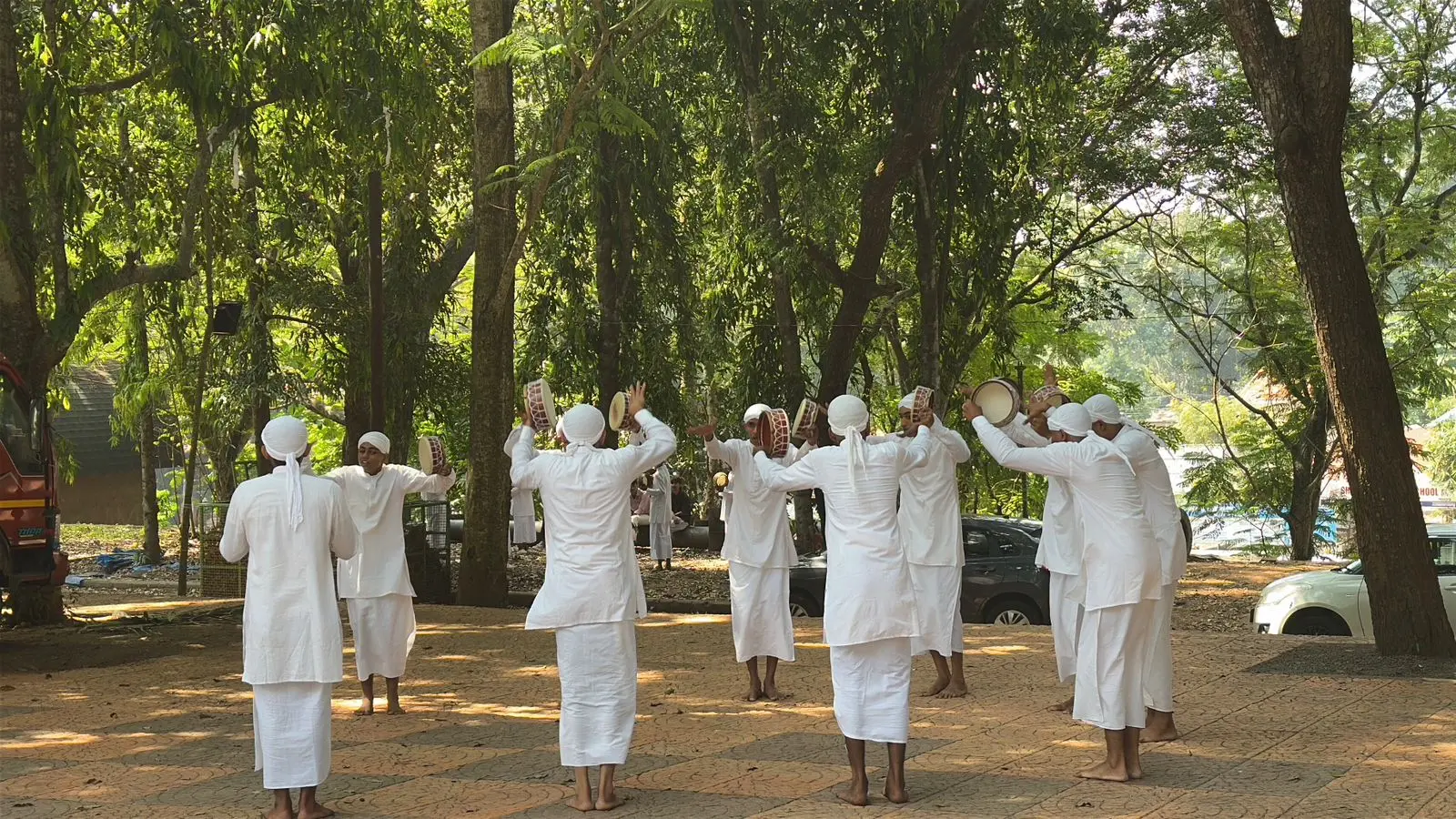
In the small town of Kaipamangalam in Thrissur, a unique art form is not just practiced, but passed down from generation to generation. It’s called Duffmuttu, a vibrant, rhythmic performance that has become a vital part of Kerala's cultural landscape. For Vinshad Vahid, a dedicated trainer and practitioner, this art form has been more than just a passion—it’s been a calling, something deeply ingrained in his roots from a young age.
Vinshad, now in his 19th year of training, reflects on his journey with fondness and conviction. “I’ve been a trainer for 18 years now. This is my 19th year. I used to come to Kalolsavam as a child. I first did Duffmuttu when I was in 5th standard,” he recalls with a warm smile at the 63rd Kerala State Kalolsavam.
Kalolsavam, a prestigious cultural festival held in Kerala, often serves as a platform for students to showcase their artistic talents, and it was here that Vinshad’s journey with Duffmuttu truly began.
Born and raised in Kaipamangalam, a region renowned for its deep-rooted connection to traditional Kerala art forms, particularly Mappila (refers to Muslim community) art forms, Vinshad’s love for Duffmuttu was never a coincidence. “My entire area is infused with passion for this art form,” he says. His community, steeped in the cultural traditions of Kerala, had shaped his very identity, and it was only fitting that he would carry that legacy forward.
Vinshad’s path to becoming a trainer was not a deliberate one, but rather something that developed organically. “I started teaching this art form to juniors even when I was still in school,” he explains. What started as a simple passion soon grew into a calling, and as Vinshad continued to teach and mentor younger students, his love for Duffmuttu only deepened.
Duffmuttu, the rhythmic art form, which involves drumming and synchronized movements, is often performed in celebration or as part of cultural festivals. The art form derives its name from the word "duff," of Arabic origin, which refers to a percussion instrument made of wood and ox skin.
Vinshad, a teacher deeply passionate about this art form, once had a brief encounter with an entirely different career.
“I had done a flight aviation course. I even got called for placement interviews. But I never told this at home. By then, I was already fully involved in the art. I couldn’t imagine leaving this. The certificates from my aviation course are still at home, gathering dust,” he admits.
Although his friends from that period now work for prestigious airlines like Emirates and Qatar Airways, Vinshad has no regrets. “They often call to tell me that my decision was right. They say they are proud of me. I would have been confined to a room or an airport if I had chosen that path. My world would have been limited,” he says with a sense of fulfillment.
Vinshad’s work extends beyond just teaching. He has recently coordinated a "Mega Duffmuttu" program, bringing together the youth from across his region to celebrate and showcase their talents. He also coordinated young Mappila art students from all across Kerala and conducted a cricket match like the Premier League.
“These are the kinds of things that we are able to do because of our passion and interest in the art. These kinds of happiness I can never derive from an aviation job,” he adds.
The student who is now a master
Vinshad then went on to introduce Haris Basheer, University professor and an Oppana tutor who had accompanied him to Kalolsavam. “He is my student and friend. I taught him Duffmuttu in 2015. The funny story is, that Haris completed his graduation in 2014. But he chose to go back for post-graduation just so he could play Duffmuttu. Such is his passion for this art form,” says Vinshad.
Inspired by his tutor, Haris is currently pursuing a PhD at Kerala University on the topic ‘The aesthetics of Mappila art forms- Manifestations in Kerala with special reference on ‘Oppana’’. He also trains students in Oppana, Duffmuttu, Maapilapaatu, and Vattapaatu—art forms that are all linked through their rhythmic and celebratory nature.
The impact of this cultural revival is significant with more and more children exposed to the relevance of these art forms. “There are nearly 15-20 teams of ours that are participating in Kalolsavam. Students these days can sometimes be lazy to learn art forms such as these, but most of them are flexible. We just need to be aware that we are not just teaching art; we are passing on our culture to them,” says Vinshad.
As the new generation of students continues to embrace these traditional art forms, the legacy of Duffmuttu remains strong, thanks to the tireless efforts of individuals like Vinshad and Haris. Their dedication and passion ensure that the rhythm of Duffmuttu will continue to echo through Kerala for many years to come