Is Kerala truly free from extreme poverty? Here’s what experts have to say
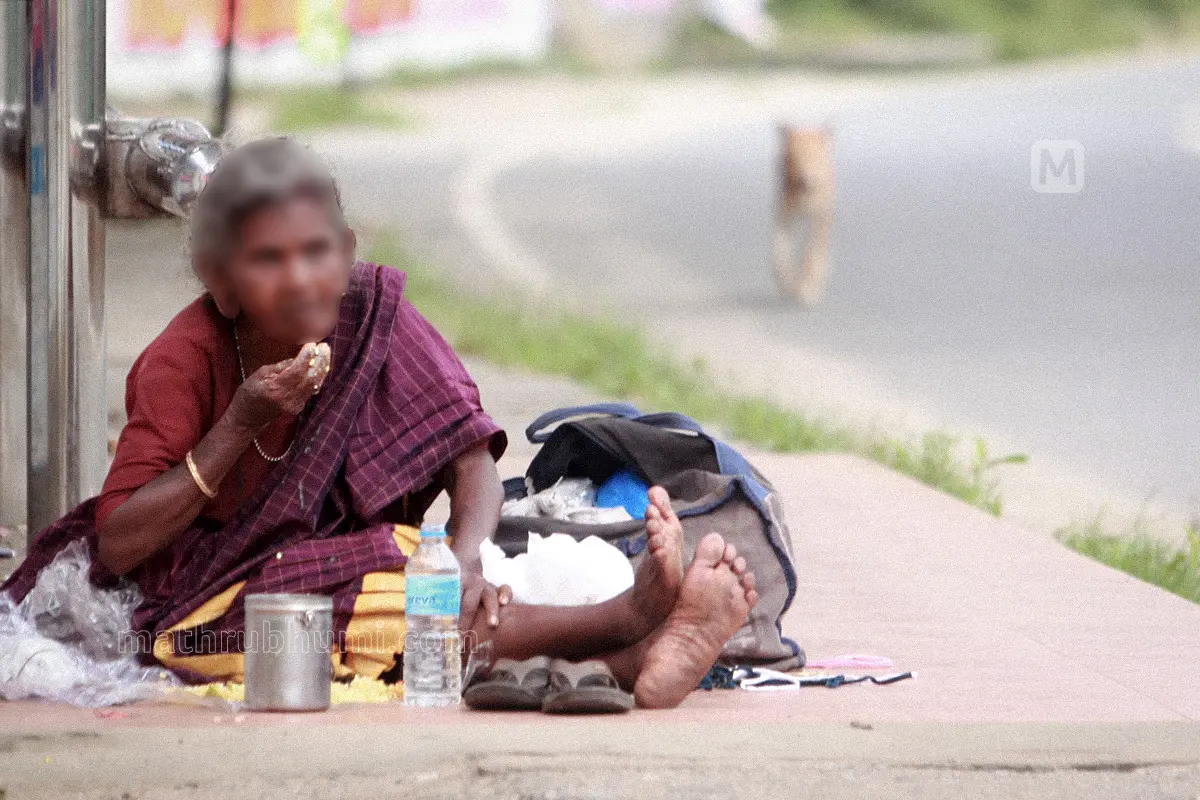
Kerala has long been praised as one of India’s most developed states, with high literacy, strong healthcare and impressive social indicators. And now, the state has even been declared as being “free from extreme poverty”. But how much of that stands up to scrutiny?
‘Kerala Model’ of development
Kerala’s success story is often called the “Kerala Model”. Decades of investment in education, public health and social welfare have helped lift millions out of deprivation. According to government reports, the state’s poverty rate is among the lowest in India. Many families enjoy better housing, access to schools and healthcare than in other parts of the country.
How Kerala reached this milestone
The Kerala government credits a combination of targeted welfare schemes and local-level planning for achieving this milestone. Supporting the state’s claim, Minister for Local Self-Government M B Rajesh referred to the NITI Aayog’s 2022–23 Multi-Dimensional Poverty Index (MPI), which ranks Kerala as having the lowest poverty rate in India—just 0.7 percent of its population.
According to the government, following detailed field surveys, officials identified 64,006 families still facing conditions of extreme poverty, based on factors such as nutrition, healthcare access, livelihood and housing.
“The extremely poor are those who lack access to basic needs such as food, healthcare, safe housing and income. These are people who have never been beneficiaries of any government welfare scheme and often do not possess documents like ration cards or Aadhaar cards. The state government had provided direct assistance to ensure their survival,” Rajesh told the media.
The Minister also noted that many of these people had previously remained invisible to the system—without voter IDs, ration cards or Aadhaar cards. For each identified family, the government prepared individual micro plans outlining both immediate relief and long-term measures to ensure sustainable improvement in their living standards.
The other side of story
However, a group of prominent economists and social activists has voiced serious concerns about the reliability of the data and methods used to substantiate the government’s recent poverty-related claims.
In an open letter to the state government on Thursday, 24 signatories — including social activist R V G Menon and economists M A Oommen and K P Kannan, urged the authorities to release a credible and comprehensive study that clearly identifies the extremely poor, and evaluates the poverty eradication efforts.
The letter pointed out that the government’s announcement, which cited the public participation survey identifying 64,006 families as “extremely poor”, lacked clarity about how the data were gathered and what standards were used.
The signatories also questioned the authenticity of the process and sought details on which expert committee had overseen the survey, reportedly launched in July 2021 and assessed families based on four key indicators: food security, safe housing, minimum income and health conditions.
Renowned development economist Dr K P Kannan, also former director of Centre for Development Studies, said while speaking to Mathrubhumi English that the government should publish the comprehensive report including the methodology used for the survey and its findings.
“Then only one can understand how objective the survey was. The listed ones are those without any form of revenue, those who cannot prepare food even if they get ration, bedridden patients and the homeless. And 60 percent of the notified families are single member families. So naturally a question arises that are they not destitutes rather than extremely poor ones…”
He also pointed out that not every extremely poor person should necessarily be a destitute. So it should be clearly demarcated if the person is extremely poor or destitute.
“On September 30, our Food Minister announced that the State there are 5.92 lakh families under the Antyodaya Anna Yojana (AAY) – the poorest category under the National Food Security Act, 2013. They are receiving free rice and wheat from the state government, with the Centre supplying grains at subsidised rates,” he pointed out.
“So if Kerala has only 64,006 extremely poor families, does that imply the AAY category will be discontinued? And will the Centre’s support under this scheme also come to an end?” he sought to know. “The government has not said a word on whether these yellow ration cards will then cease to exist,” he added.
Citing Ashraya Scheme, introduced in 2002 by the A K Antony government, which is still on to support the most vulnerable households, he said, “There are 1.5 lakh destitute families previously identified under the scheme.”
“So there are clear discrepancies in these numbers which the government has to explain. This is what some of us have raised,” Dr Kannan added.
Persistent hardships amid economic strain
Rising unemployment, migration for jobs and the impact of inflation make life difficult for certain groups—especially informal workers like ASHA workers, elderly people without pensions and tribal communities in remote areas.
Describing the government’s claim as “false propaganda”, S Mini, state vice-president of the Kerala ASHA Health Workers Association (KAHWA), expressed strong disagreement. Speaking to Mathrubhumi English, she said, “Kerala still has people living in extreme poverty. In fact, many ASHA workers themselves belong to this category. Their daily wage is just ₹233, and even that is often delayed.”
Mini also questioned the criteria used by the government to define extreme poverty, asking what basic income level was considered while declaring the state free of it.
The Association had issued an open letter to actors Mohanlal, Mammootty and Kamal Haasan, urging them to skip the state government’s November 1 event that will declare Kerala as “extreme-poverty-free”.
Tribal poverty figures questioned
Concerns have also been raised about inconsistencies in the government’s data on tribal communities. According to the 2011 Census, Kerala had approximately 4.85 lakh tribal residents, many of whom lived in severe poverty. Yet, the latest assessment identifies only 6,400 individuals as “extremely poor”.
Activist and Adivasi Vanitha Prasthanam president Dr Ammini K Wayanad speaking to Mathrubhumi English, expressed disbelief over how such a survey could have been conducted without officials even visiting the tribal regions of Wayanad.
“It is quite evident that the survey was not conducted among the poorest of the poor,” said Ammini.
“In places like the Kommancherry forest area, people neither have proper housing nor employment. Not a single government official has ever visited these regions with any form of assistance. If someone had come for a survey or any official purpose, we would have known. The only visitors are ST promoters or ASHA workers, and even they come only occasionally.”
Dr Ammini further questioned the credibility of the government’s figures. “How can they claim there are only 64,006 extremely poor people in Kerala? Many families, with five to seven members, run out of food once their ration supply is over—shouldn’t they fall under the ‘extremely poor’ category? What worries us most is that even this ration support may eventually stop. These are our genuine fears,” she added.
Challenges after the pandemic and floods
Natural disasters like the 2018 floods and the COVID-19 pandemic pushed many households back into financial stress. Small businesses, daily wage earners and return migrants faced uncertainty and debt. Though state welfare schemes helped many survive, recovery has been uneven.
Looking ahead
Kerala continues to stand out for its human development and welfare policies, but the journey to complete economic security for all is ongoing. True freedom from poverty means not just surviving, but living with dignity, opportunity and stability.
Kerala may have largely overcome extreme poverty in statistical terms, but economic vulnerability remains a challenge. The state’s success is real—but so are its inequalities.