Kerala among top flood-prone states in India: IIT research
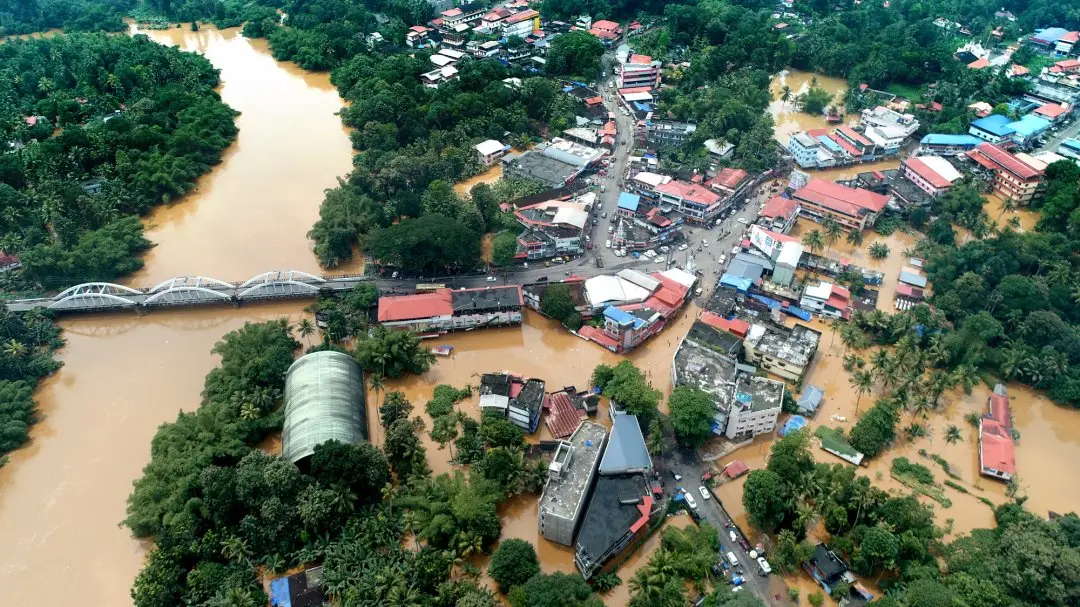
New Delhi: According to recent research conducted jointly by scholars at IIT-Delhi and IIT-Roorkee, Kerala has emerged as one of India's most flood-prone states. The study introduces a district-level flood severity index (DFSI), considering historical flood severity based on factors such as the number of affected people and flood duration.
Assam leads with the highest number of floods in India, having encountered over 800 flood events in 56 years. The other flood-prone states, in descending order of flood events, include Kerala, Karnataka, Uttar Pradesh, and Maharashtra.
Thiruvananthapuram, Kerala's capital, notably records over 231 flood events between 1967 and 2023, averaging more than four occurrences annually. This places it among the districts at high risk of flooding. Moreover, five districts in India, including Thiruvananthapuram, are categorised as "severely flood-prone," experiencing an average of over 178 floods per year.
As per the DFSI, Patna district witnessed the most severe floods in India, followed by Murshidabad in West Bengal and Thane in Maharashtra.
The top 10 districts facing the highest flood severity include: Patna, Murshidabad, Thane, North 24 Parganas (West Bengal), Guntur (Andhra Pradesh), Nagpur (Maharashtra), Gorakhpur (Uttar Pradesh), Ballia (Uttar Pradesh), East Champaran (Bihar), and East Medinipur (West Bengal).
Following closely are Muzaffarnagar (Bihar), Lakhimpur (Assam), Kota (Rajasthan), Aurangabad (Maharashtra), Malda (West Bengal), Rajkot (Gujarat), Prayagraj (Uttar Pradesh), Aurangabad (Bihar), Bahraich (Uttar Pradesh), Ahmedabad (Gujarat), Jalpaiguri (West Bengal), Darjeeling (West Bengal), Dibrugarh (Assam), Azamgarh (Uttar Pradesh), Chamoli (Uttarakhand), West Champaran (Bihar), Amravati (Maharashtra), Medinipur West (West Bengal), and Samastipur (Bihar).
Chamoli in Uttarakhand, although not experiencing frequent floods, is included due to a few isolated yet highly damaging flood events.
Of the 30 districts facing the highest flood risk, 17 are situated in the Ganga basin, with three in the Brahmaputra basin.
The researchers, including Manabendra Saharia, an assistant professor at IIT-Delhi, expressed concern over the high flood proneness of the Ganga basin, which hosts the largest population among all Indian river basins.
The researchers anticipate an increase in localised intense rainfall events due to climate change, leading to more flash floods in the future.
As the climate warms, the frequency of cyclones is expected to rise, resulting in heightened instances of intense rainfall and floods along coastal and nearby inland areas. Areas currently not prone to flooding may also start experiencing such events.
Despite an increase in India's population, human fatalities due to floods have remained relatively stable or decreased in recent years, attributed to improved management practices. The data indicate an average of around 1,000 flood-related deaths annually since 2015.
With PTI inputs