How did Govindachamy with one functional arm escape ‘high-security’ jail by cutting bars and scaling a 7.5-m wall? Mystery deepens
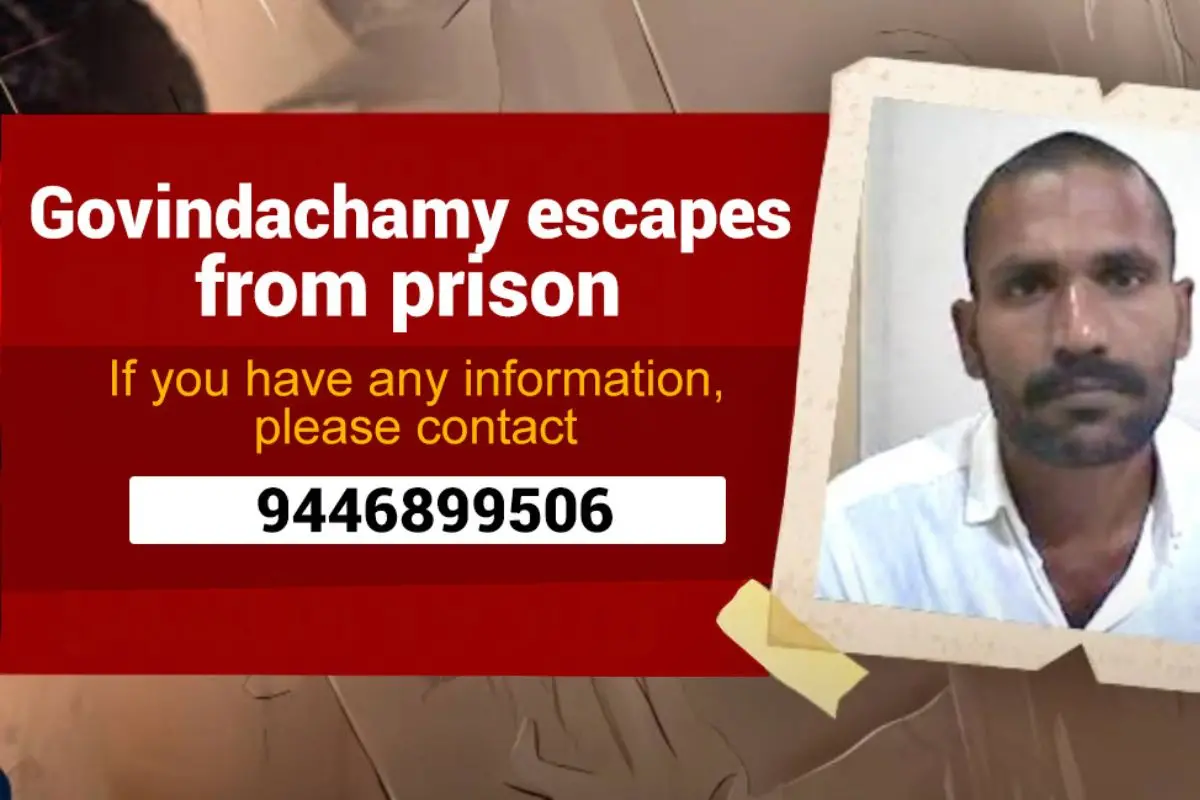
Thalassery: With Govindachamy’s escape from Kannur Central Prison confirmed, serious questions are now being raised over how a convict with one functional arm managed to break out of a high-security facility. Housed in Cell No 10, he allegedly cut through iron bars and scaled a 7.5-metre-high wall topped with electric fencing — an escape that has baffled both officials and the public.
Initial police suspicion arose on Thursday evening when the cell was locked at 6 pm, but Govindachamy was not found inside. CCTV footage shows him exiting the cell, sparking concerns over how he, despite having only one functional arm, managed to climb over the prison’s nearly 7.5-metre-high compound wall, which is topped with electric fencing.
The mother of the deceased woman, Soumya, expressed suspicion that external help was involved in the escape. Currently, more than 1,000 inmates are housed at the Kannur Central Jail.
According to prison officials, Govindachamy’s escape was the result of careful planning over several days. He reportedly used a sharp, chisel-like tool to cut through the cast iron bars of his cell. A massive manhunt is underway in Kannur, with police focusing search efforts around railway stations and bus stands.
The crime dates back to February 1, 2011, when Soumya, a 23-year-old employee at a private firm in Kochi, was travelling on the Ernakulam–Shoranur passenger train. She was sexually assaulted by Govindachamy brutally inside the train. During the incident, she fell from the moving train and suffered serious head injuries. She died on February 6 at Thrissur Government Medical College Hospital.
In 2016, the Supreme Court overturned Govindachamy’s death sentence, ruling that the murder charge could not be established beyond reasonable doubt. The apex court observed that it could not be confirmed whether the woman had jumped or had been pushed from the train. Citing the benefit of doubt, the court removed the murder conviction and the accompanying death penalty.
However, the court upheld the conviction for rape, along with the life imprisonment sentence and other penalties imposed under different Sections. The Thrissur Fast Track Court had originally sentenced him to death, along with life imprisonment and a fine of ₹1 lakh. This was later upheld by the Kerala High Court.
The Supreme Court verdict came in response to an appeal filed by Govindachamy against the Fast Track Court’s death sentence. The bench, headed by then Chief Justice Ranjan Gogoi, had raised questions during the hearings on whether a man with a single functioning arm could have physically pushed the victim off the train.