Kerala HC’s review of Ayyappa Meet finances sparks political uproar
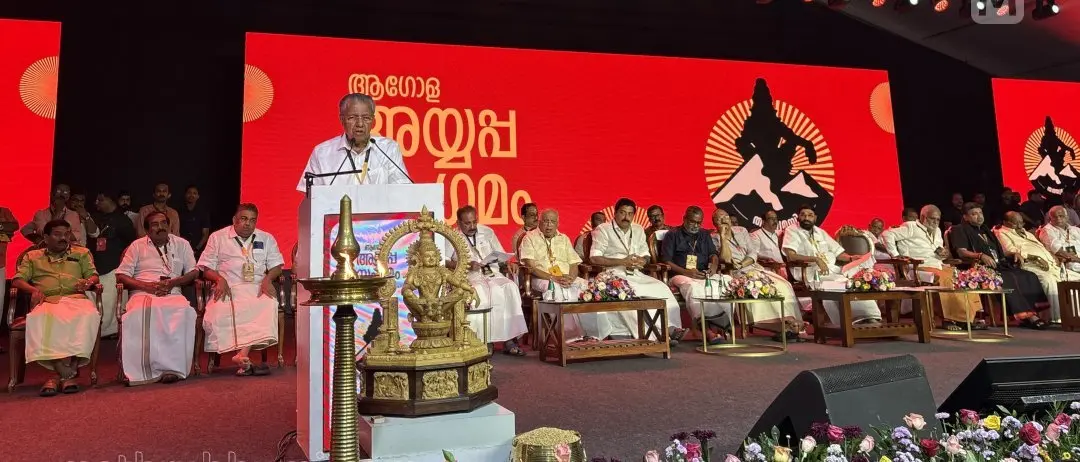
The Kerala High Court’s scrutiny of financial irregularities linked to last year’s Global Ayyappa Meet has triggered a fresh political storm. The court highlighted discrepancies in expenditure accounts and has asked the Travancore Devaswom Board (TDB) and the state audit department for detailed clarifications, putting the state government on the defensive.
Former TDB president defends spending
Former TDB president P.S. Prasanth, who oversaw the event, defended the board’s financial handling, insisting only ₹3 crore was spent and entirely covered through sponsorship. An additional ₹1 crore was raised later.
“An advance of ₹3 crore drawn under ‘Religious Conferences and Discourses’ was fully repaid once sponsorship funds arrived. Not a single rupee has been spent from the Devaswom Board’s funds to date,” Prasanth said.
He added that the interim court report submitted on 4 November 2025 recorded total expenditure at ₹4.5 crore plus GST, insisting the figures are verifiable. The new Devaswom Board is expected to convene soon to provide further clarifications on the ongoing dispute.
Ruling CPM’s state secretary M.V. Govindan stressed that the party bears no responsibility for the alleged lapses. “The costs of the event must be clearly accounted for by those who organised it. The party has no liability in financial matters, and any mistakes should be corrected. The party will not justify the controversy; those responsible must answer,” he said.
Opposition demands transparency
Senior Congress leaders Ramesh Chennithala and Thiruvanchoor Radhakrishnan seized on the court’s observations, intensifying criticism of Devaswom Minister V.N. Vasavan. Chennithala termed the event a “massive fraud” and announced plans to move a breach of privilege notice in the Kerala Assembly for allegedly misleading the House.
“The government told the court that the event would not be conducted at government expense. But a different version was presented in the Assembly. Why are there two sets of figures before the Assembly and the High Court?” he asked, demanding clarification from both the government and the TDB.
Radhakrishnan echoed the concerns, calling the meet a “liability” for the government and questioning why the Assembly record, considered authoritative, was inaccurate. Both leaders demanded full public disclosure of accounts, expenditure details, and logistical records.
Chennithala further alleged organisational lapses, inflated claims, and bills for programmes that were never conducted, insisting that citizens “have the right to know the truth.”