Guruvayur Devaswom prepares for a solar revolution
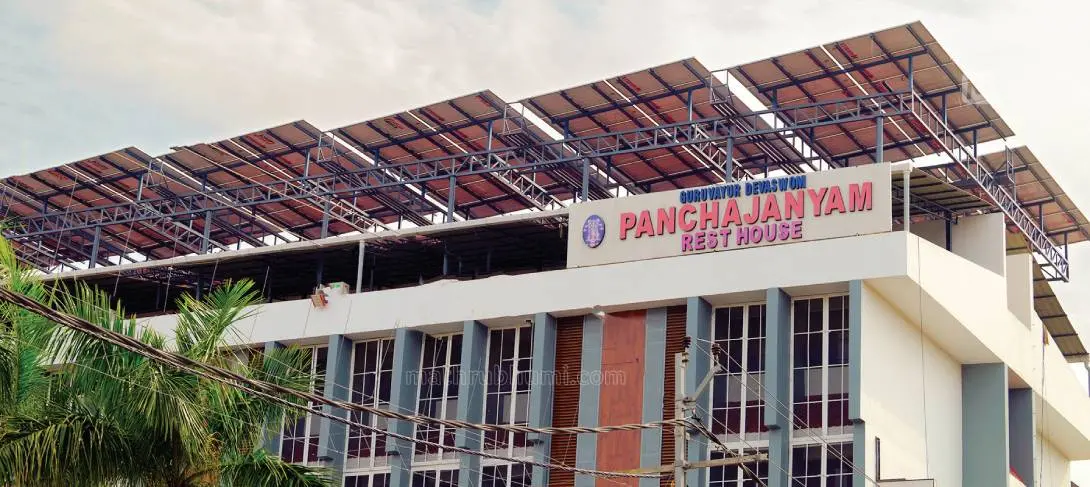
Guruvayur: Guruvayur Devaswom has switched to a full solar mode with all institutions under it, including the Sree Krishna temple adopting solar power. Solar panels with a capacity of 275 kilowatts have been installed at a cost of Rs 1 crore.
The panels have been placed above the Panchajanyam guest house building. Devaswom chairman V.K Vijayan said that Gruruvayur Devaswom will produce its own electricity within two months and create a solar revolution.
Currently, the electricity bill of Guruvayur Devaswom, which requires 90 kilowatts of electricity a day, comes to Rs 10 lakhs. The electricity is supplied by KSEB to the HT powerhouse under Devaswom. This is then supplied to the institution by reducing the voltage through Devaswom’s own transformer.
The Devaswom powerhouse has a capacity of 500 kilowatts. There will be no power interruption in the temple or other institutions as there are two generator systems. The generated solar electricity will be connected to the powerhouse and distributed to the Devaswom institutions. After consuming 90-100 watts of electricity per day, the remaining electricity will be supplied to KSEB’s grid. KSEB will pay the equivalent amount to Devaswom for the same. There will be no loss for Devaswom, executive engineer P Jayarajan said.
Solar panels are placed where they get maximum sunlight. 90 percent of the work has been completed. Apart from the Guruvayur temple, the Devaswom office, Sreevalsam-Panchajanyam-Kausthubham guest houses, Devaswom medical centre, library and other institutions within a hundred metre radius will be powered by solar power.
With the rise in heat, there has also been an increase in electricity consumption. There are a total of 100 fans in the temple corridors. The plant that cleans the water in the temple pool and the motor that dispels the smoke from the temple are high power consumers. All the old halogen and sodium lights were replaced with LEDs to reduce the amount of electricity consumed.