‘Elephant Woman’ who tamed killer tusker Ashokan is no more
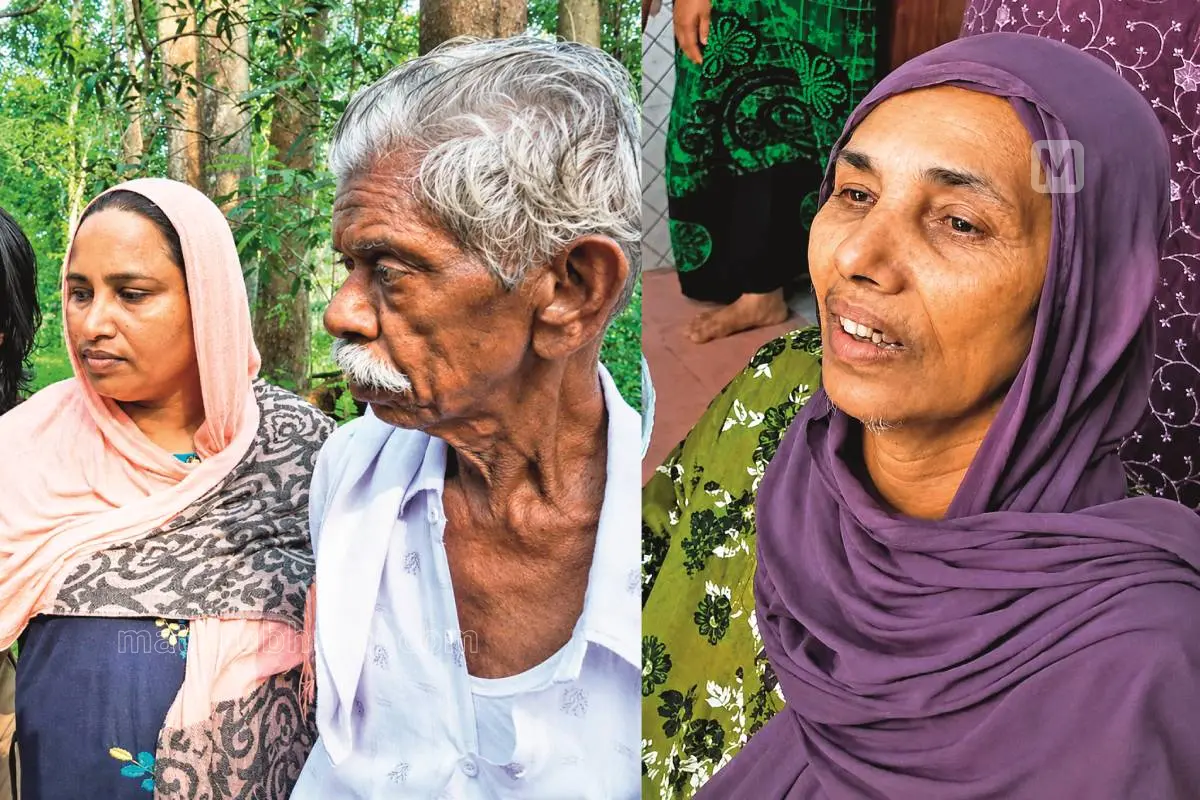
Chithara (Kollam): Sulaikha Beevi, the ‘elephant woman’ who once kept a killer tusker that had claimed six lives under control with nothing but an elephant goad, is no more. Sulaikha, of Pananvila in Venkolla, Chithara, Kollam, passed away recently.
The life of Sulaikha and her husband Ismail, a celebrated mahout couple whose story fascinated generations of elephant enthusiasts, was filled with suspense and conflict worthy of a film.
Ismail, a native of Cheruthoni in Idukki, had come to Kulathupuzha Anakkulam to work as a mahout. It was there, in 1977, that he met Sulaikha, who had come to the same forest camp for work, and became his life partner.
At the time, Ashokan, an elephant belonging to the Paravur Puthiyidam Siva Temple, had been brought to the Rose Mala Mamoodu forest camp to haul timber. The tusker, which had killed six people, had become hostile towards its mahout and escaped into the forest.
Ismail, an expert in the traditional ‘thirukku’ technique — a method of bringing an elephant under control by pressing pressure points with the foot — was summoned to pacify Ashokan. After calming the tusker and bringing it back from the forest, Ismail was asked by the temple administration, which owned the elephant, to take over as its mahout.
They offered him a deal: “You need to bring the elephant only for eight days of temple processions a year. On the other days, you can look after it and earn from it.”
Ismail accepted the offer and brought Ashokan to the Arippa forests near his wife’s home. He made the elephant work at the forest camp only enough to earn money for its food and medicines. On the remaining days, Ashokan was tethered on the courtyard of their house.
Gradually, Sulaikha became friendly with Ashokan. She would talk affectionately to him, and Ashokan would respond by swaying his trunk and playing with her. Initially helping Ismail, Sulaikha eventually grew very close to the elephant.
One morning, Ismail was stunned to see his wife untethering the killer tusker and taking him out to feed. For the next 14 years, people in and around Arippa and Venkolla witnessed this remarkable sight.
At the Puthiyidam Siva Temple in Paravur, Kollam, and at a few nearby temples, Sulaikha would lead Ashokan in processions, holding on to his tusk. Under her command, Ashokan behaved like an obedient child. Sulaikha became one of Kerala’s earliest women mahouts.
The woman who had stood fearlessly before killer elephants, however, was left trembling by another elephant tragedy.
It happened in 2007. At Theekkoy in Erattupetta, another elephant caught Ismail with its tusks and gored him.
“An elephant has gored your husband to death,” someone told Sulaikha.
She rushed to Kottayam Medical College, but lost consciousness amid the shock. When she reached the hospital, her husband had undergone surgery. As he was brought out, wrapped in bandages that she could not tell whether he was alive or dead, she heard someone ask, “Has anyone from Ismail’s family come?”
“I’m here, Kakkachi,” Sulaikha cried, beating her chest as she rushed forward.
She never returned to her old life after that.
Ismail recovered after spending 15 days in hospital and returned to his work, once again taking up the elephant goad. But Sulaikha never held a goad or stick again for the rest of her life. Yet, until her final breath, she lived surrounded by memories of elephants.
Her life thereafter revolved between mental health hospitals and home. She had been bedridden for two months. Her daughters, Shahida Beevi and Shanifa Muneer, said their mother would tell them from her hospital bed: “Buy me an elephant. I’ll look after it.”
“It was an extraordinary life. It was only after Sulaikha began taking care of Ashokan that the bad reputation associated with the elephant disappeared,” Ismail said, wiping his eyes.
Meanwhile, Ashokan died at Paravur. As though ordained by fate, the elephant was buried in the Arippa forest next to Sulaikha’s house.
And recently, Ashokan’s ‘elephant woman’ was laid to rest at the Kochukalunk Juma Masjid cemetery, adjoining the same forest.
A couple who became mahouts
Maithin and Amina had moved from Kuttippuram in Malappuram to Cheruthoni in Idukki in search of a livelihood. They came during the construction of the Idukki dam and settled at Kandathinkara in Cheruthoni. They built their lives through work at the forest camps.
Their eldest son, Ismail, also found his livelihood in the forest camps. But unlike his parents, he did not take up timber work. He became a mahout.
It was not merely his fascination with elephants that attracted Ismail to the profession. Whenever gruel was served at the forest camp, elephant mahouts were given priority.
Ismail was just 16 when he took up the goad as an assistant to mahout Mani Mala Ramakrishnan Asan. He eventually became one of southern Kerala’s most renowned mahouts after taming with affection the notorious killer tusker ‘Chendakuthi’ Murali, which had become infamous for killing percussionists at temple festivals.
A turning point in Ismail’s life came when he arrived with an elephant in the Aryankavu, Kulathupuzha and Rose Mala areas. Sulaikha, who had come to the forest camp to clear undergrowth, addressed Ismail as “Anna” (elder brother). Ismail responded by calling her “Penne” (girl), and expressed his affection.
Their love culminated in marriage. Deeply in love with her ‘Anna’, Sulaikha too became a mahout.
Even after she suffered memory loss, she never forgot elephants. Her passion for them remained alive until her death.
Sulaikha is survived by three children — Saleena Beevi, Shahida Beevi and Shanifa Muneer. Saleena lives in Cheruthoni. Her other two daughters live on the opposite side of the Arippa and Shankili forest areas, where their mother once led elephants.
Carrying the memories of his beloved wife, Ismail continues to live in Arippa with his second daughter.