After 40-year struggle, Elambra residents secure SC order for starting LP school
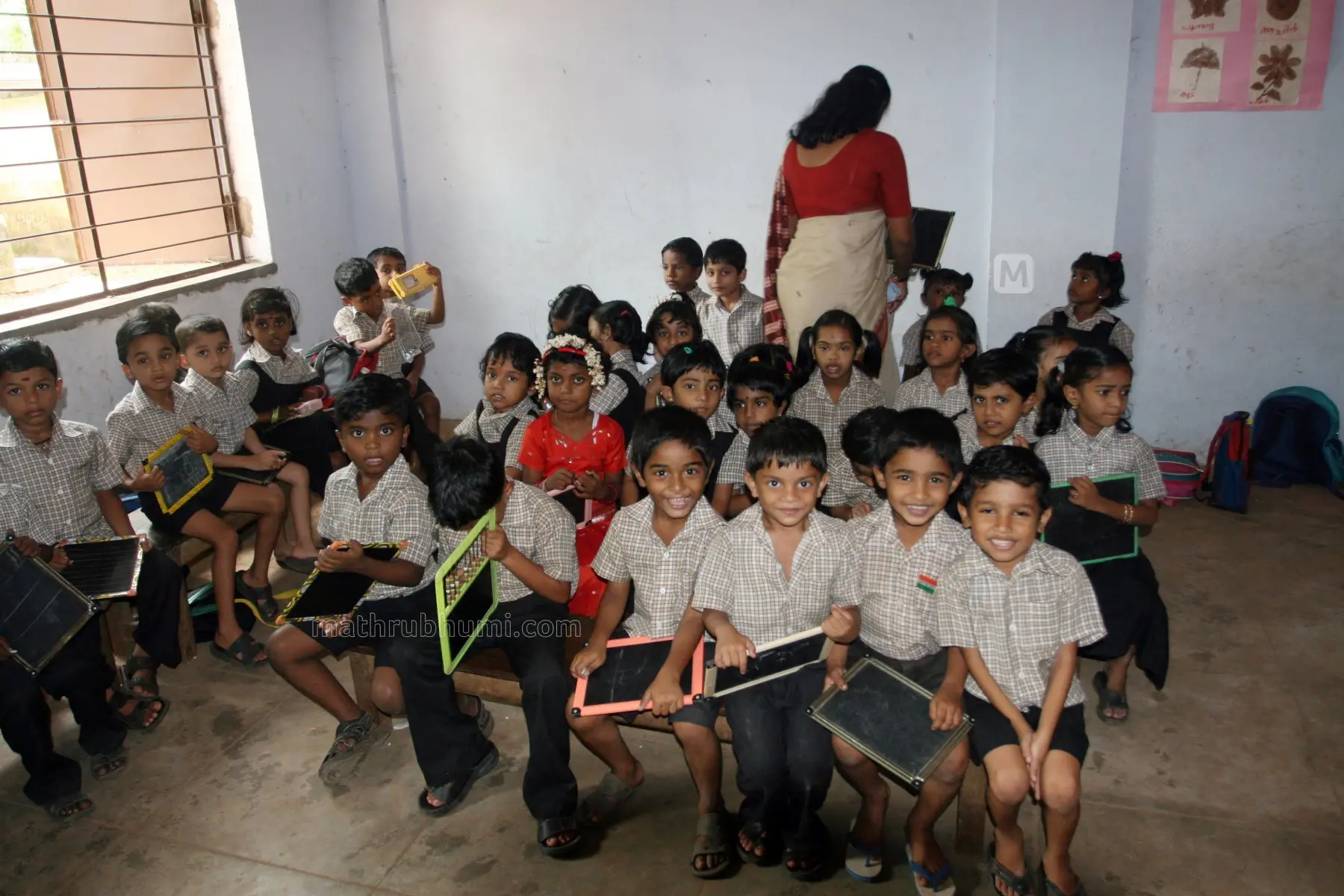
Malappuram, Kerala: After a legal battle spanning four decades, residents of Elambra near Manjeri have finally won their fight for a Lower Primary (LP) school, with the Supreme Court directing the Kerala government to establish the institution in the locality within three months.
The land that remained idle
For nearly 40 years, around 400 families in Elambra, which falls under Manjeri Municipality and Trikkalangode Grama Panchayat, had been demanding a primary school so their children would not have to travel long distances for basic education. With no primary schools within a radius of 3.5 km, even small children have been travelling kilometres every day in private buses and auto-rickshaws.
Responding to repeated requests, the municipality had assured residents that a school building would be constructed if land were provided. In 1982, local people pooled money and purchased one acre for the purpose. However, successive governments did not grant permission for the school.
The neglected feasibility study
A feasibility study conducted by the District Education Officer in 2015 supported the demand, finding that a primary school in the area was justified and could be run without additional financial burden by employing teachers from the teacher bank who had lost their posts. School Action Committee convener Thenath Muhammad Faizi continued to pursue the matter, but in 2018, the government stated that it had not taken a policy decision to permit new schools. When the matter was raised in the state assembly, the then Education Minister cited school mapping and said there was no requirement for an additional school in the area.
The legal battle
Despite favourable opinions from the Human Rights Commission and the Commission for Protection of Child Rights, the General Education Department and the government refused to grant approval. Faizi subsequently filed a public interest litigation (PIL) in the Kerala High Court, which directed the government to act within three months. When the order remained unimplemented even after a year, a contempt petition was filed. The state then moved to the Supreme Court, which granted a stay.
In 2021, a working committee led by Faizi petitioned the Supreme Court to lift the stay. It was during the consideration of that petition that the court finally ruled in favour of the residents, paving the way for the LP school.
Truth will prevail..
“What sustained this long legal battle was the belief that the truth would prevail one day, no matter who opposed it,” Faizi said, describing the judgment as a message that the Supreme Court stands with marginalised communities even when governments ignore them.
The SC verdict
The Supreme Court on Tuesday directed the Kerala government to take a “holistic decision” and establish government lower and upper primary schools in all areas where none currently exist.
Emphasising that every child must have access to neighbourhood schooling as mandated under the Right of Children to Free and Compulsory Education (RTE) Act, a bench comprising Chief Justice of India Surya Kant and Justice Joymalya Bagchi issued a series of directions to the state.
The court upheld a Kerala High Court order directing the government to open a school in an area without an educational facility within a 3–4 km radius.
“The state of Kerala must take a holistic decision to establish government primary schools in all areas where none are functioning under the 2009 Act,” the court said, adding that in regions with difficult geographical terrain, schools must be established without delay.
Two-phase plan
The bench set out a two-phase approach:
• Phase one: The state must identify all regions where no lower or upper primary school is functioning.
• Phase two: Schools must then be established in every locality lacking a lower primary school within a radius of one kilometre, or an upper primary school within 3–4 kilometres.
“We are conscious that the state government may not have funds for wholesome construction of required schools. In this regard, let some private buildings be identified where schools can be established as a makeshift arrangement. But such arrangements cannot continue indefinitely, and the necessary budgetary allocation needs to be made for the same.”
Teachers, land and private involvement
To avoid delays in starting classes, the court allowed the engagement of retired teachers on a contractual basis for six months, extendable up to one year, until regular appointments are made.
Gram panchayats have been directed to provide details of available land for schools, preferably free of cost.
The government has also been permitted to create a policy inviting charitable organisations to set up schools in underserved areas, provided they comply with strict conditions, including transparency in admissions, prohibition of capitation fees, adequate infrastructure and adherence to all RTE norms.
“No private individual shall be allowed to take benefit of the above directions,” the bench clarified.
The court further criticised the practice of using public funds to upgrade private institutions in locations where government schools are absent, stating: “Public money cannot be wasted on upgradation of private schools.”
Standing Counsel CK Sasi appeared for the state government, while Senior Advocate PV Dinesh and Advocate Zulfikar Ali represented Muhammad Faizi.
Responding to the ruling, General Education Minister V Sivankutty said there are many schools in Kerala, and the verdict will be examined before taking further action.