Captive elephants’ head-bobbing is a sign of boredom, says expert
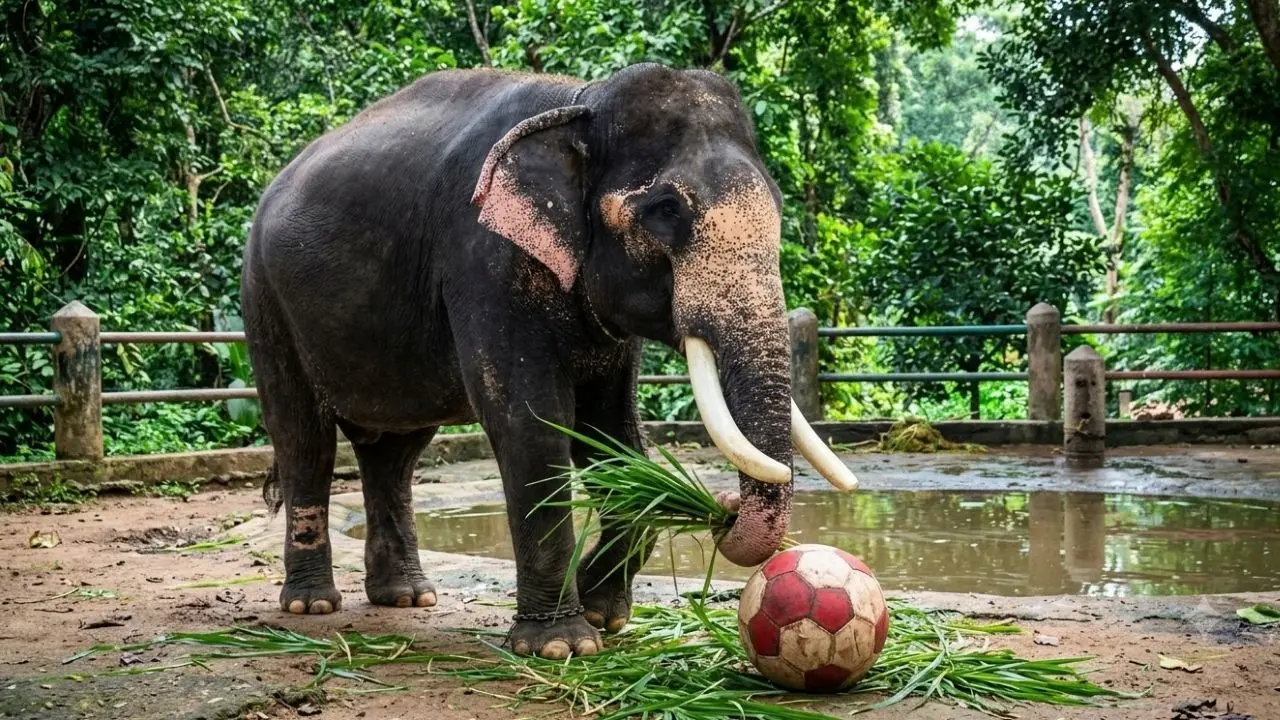
Thrissur, Kerala: Captive elephants that repeatedly sway or bob their heads are often suffering from boredom rather than displaying normal behaviour, a leading elephant researcher has said, urging mahouts to provide them toys and other forms of enrichment.
Addressing a workshop organised by the Kerala Forest Department's Social Forestry wing for mahouts, renowned wildlife biologist and elephant researcher Dr PS Easa said simple objects that elephants can kick or interact with using their feet can help keep them engaged.
"They keep swaying their heads because of severe boredom. Giving them something like a toy to play with is enough to keep them occupied," he said.
Dr Easa said elephants consume 118 species of plants, playing a vital ecological role by dispersing seeds through their dung, which they excrete about 30 times a day.
He also noted that elephants have a strong instinct to return to their native habitats, explaining why captive elephants allowed to graze near forests often wander back into the wild.
Recalling an old incident, he said an elephant being transported by ship from the Andaman Islands to Kerala reportedly jumped into the sea near Kolkata and attempted to swim back, illustrating the animal's strong homing instinct.
Dr Easa also dismissed the popular belief that elephants harbour grudges.
"The idea of 'elephant revenge' is a myth and has no scientific basis," he said.
He added that female elephants leading herds possess remarkable spatial memory, enabling them to remember locations of food sources, and are capable of producing a wider range of vocalisations than male elephants.
Speaking at the workshop, Assistant Forest Veterinary Officer Dr Mithun OV said many captive elephants that died prematurely had complications related to musth, the periodic condition associated with heightened testosterone levels in male elephants.
He said elephants are often forced to work instead of being allowed to complete their musth cycle naturally.
"In 2025, we conducted post-mortems on 10 elephants, and in most cases, the animals had not completed their musth period," he said.
Dr Mithun also advised mahouts against feeding elephants excessive quantities of cooked rice, recommending a diet consisting primarily of a variety of grasses.
The workshop was inaugurated by S. Vaishak, Conservator of Forests (Social Forestry), Ernakulam Region. Assistant Forest Veterinary Officer Dr David Abraham and retired Divisional Forest Officer Dr MI Varghese also addressed the workshop.