20 suspicious circumstances; CBI's decision: Kerala HC finds flaws in probe into Balabhaskar's death
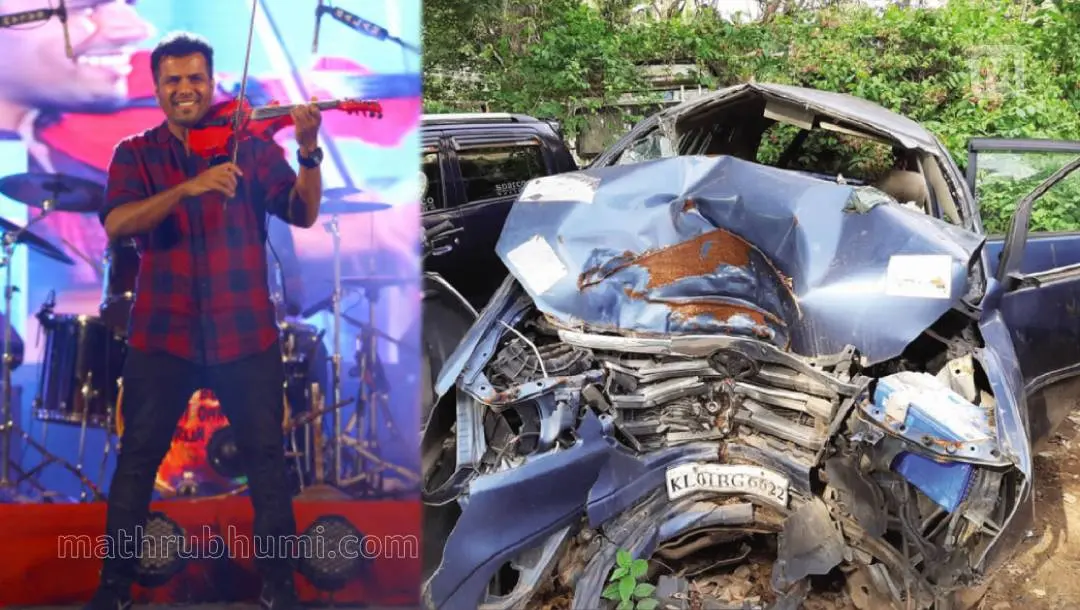
The Kerala High Court on Friday ordered a fresh probe by the Central Bureau of Investigation (CBI) into the 2019 death of renowned violinist Balabhaskar and his daughter. Justice G Girish severely criticised the agency, noting that it had previously handled the case in "a casual and lackadaisical manner".
Balabhaskar and his one-and-a-half-year-old daughter lost their lives following a car crash in 2019. Although local Crime Branch officials initially ruled the tragedy an accident, the musician's parents rejected those findings. Their doubts grew after mimicry artist Kalabhavan Soby George claimed he saw a group involved in gold smuggling attacking Balabhaskar’s vehicle on the day of the incident. Responding to the parents' appeal, the case was transferred to the CBI, where an Additional Superintendent of Police (ASP) also concluded it was a simple accident.
Flawed reinvestigation and 20 suspicious points
Unsatisfied, the parents approached the High Court, which subsequently ordered a further probe and flagged 20 suspicious circumstances for investigators to examine. However, the CBI assigned the re-examination to an Inspector, a rank lower than the ASP who wrote the initial report.
Expressing disappointment, the High Court observed: "It is quite unfortunate to note that the Central Bureau of Investigation (CBI) which was expected to give its serious attention to the aforesaid 20 suspicious circumstances, took the matter in a casual and lackadaisical manner, and deputed an Inspector, lower in rank to the earlier Investigating Officer, to conduct the further investigation".
During his inquiry, the Inspector questioned 117 witnesses — including individuals already interviewed by his superior — before submitting a report that merely endorsed the original accident theory. The High Court noted that the Inspector proceeded in a manner even "more vulnerable than the flawed investigation pointed out by this Court".
Calling out the structural conflict, the bench held: "In fact, what has been done by the Inspector in the subsequent investigation was a damage control exercise to save his superior officer, who conducted the earlier investigation, from the blame of not having been serious on many material suspicious circumstances which were looming large". The court added that the Inspector adopted this perfunctory mode because he could not supersede his superior officer's findings.
Court directs new probe under senior officer
Critiquing the quality of the agency's work, the single bench emphasized that the Inspector made no effort to adopt professional dexterity to uncover the truth. The court stated: "The course of procedure adopted by the Inspector towards arriving at the aforesaid findings cannot be said to be one which behove the status of skill, tactics and expertise which are expected from a premier investigating agency like the CBI". It noted that the officer's methods were applied with the sole objective of showing that nothing was wrong with the initial probe.
Refusing to ignore the family's plea, the court remarked that "... the request of the parents of the deceased musician to embark upon a further investigation by a competent officer, cannot be discarded even though the elapse of much time might have resulted in effacing of evidence".
To ensure justice, the High Court directed the CBI to issue necessary directions within two weeks of receiving the order to hand over the probe to an officer of proven integrity, holding a rank not below that of an ASP.
Mandating a thorough re-examination, the court directed: "The officer so entrusted with the investigation shall conduct the further probe by taking into account all the relevant facts and circumstances of the case and paying serious attention to the pertinent aspects pointed out by the court in its earlier order".