Zoji La Tunnel breakthrough: What it is and why it matters for Kashmir–Ladakh link
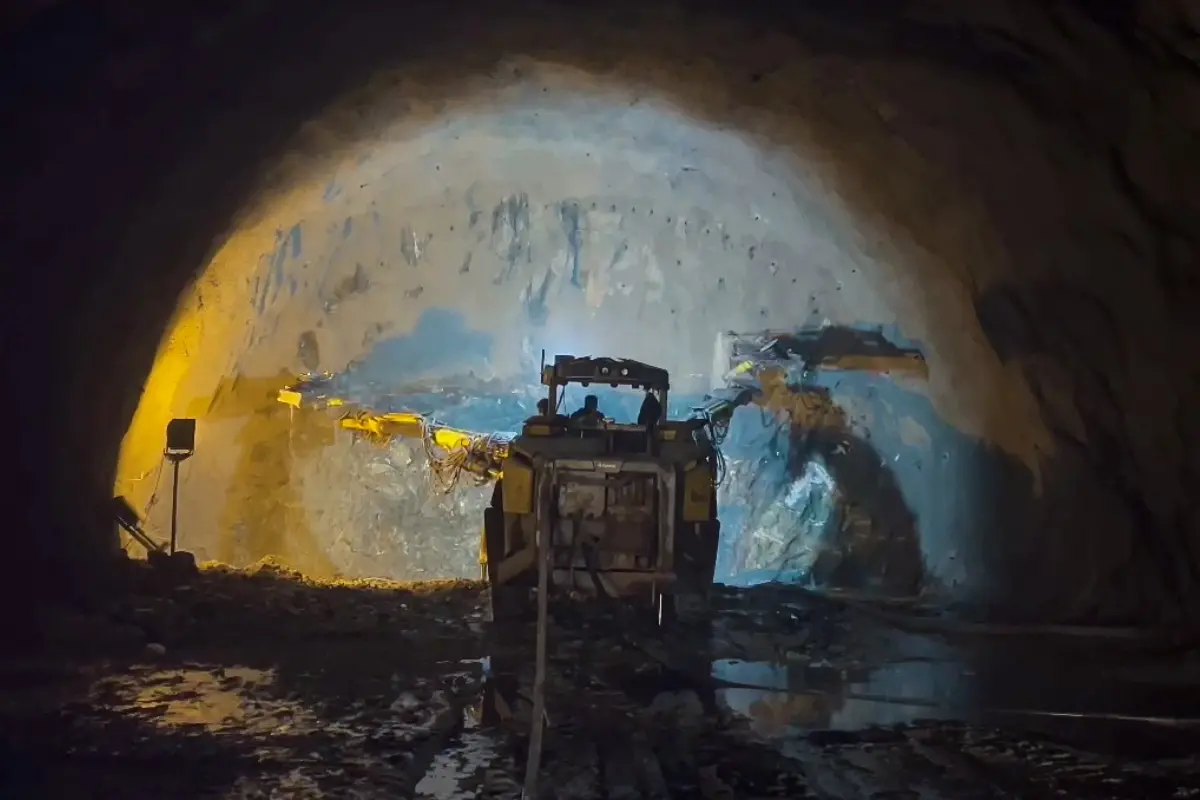
The engineering milestone called Zoji La Tunnel achieved a major breakthrough on June 9, 2026 when engineers successfully breached the final rock wall of the tunnel.
The Zoji La tunnel is one of India’s most strategically important infrastructure projects. The tunnel, once completed and operational, will provide all-weather road connectivity from Kashmir to Ladakh.
What is Zoji La tunnel all about?
Zoji La tunnel in the Himalayas will be one of the world’s longest bi-directional road tunnel located under the Zoji La pass between Sonamarg in Ganderbal district of Jammu and Kashmir and Dras in Kargil district of Ladakh.
The tunnel is a horseshoe-shaped single-tube structure, measuring 9.5 metres in width and 7.57 metres in height. It is designed to accommodate a two-lane roadway and is being constructed at an elevation of about 11,578 feet above the sea level.
Zoji La is designed as a smart tunnel featuring advanced safety systems such as CCTV monitoring, emergency lighting, ventilation facilities and dedicated escape routes making it one of India’s most technologically advanced tunnel projects.
The Zoji La tunnel stretches all way from Baltal in Jammu and Kashmir’s Ganderbal district to Meenamarg near Drass in Ladakh’s Kargil district.
The Baltal entrance, which is located about 15 kilometres from Sonamarg at an altitude of nearly 3,000 metres, is said to be one of the most challenging sections of the mountain highway. The tunnel will have its endpoint near Drass, one of the coldest inhabited places in the world, providing a crucial link between Kashmir and Ladakh.
The entire project is approximately 31 km long that includes the roads and bridges stretching all way from Sonmarg to Minimarg.
Benefits brought by the tunnel
Usually, it takes at least 1.5 hours to 3.5 hours to cross the Zoji La pass. The harsh weather further complicates travel. The Zoji La tunnel will cut the travel time to just 20 minutes making it more reliable for residents, tourists and businesses.
The project is going to strengthen trade, improve the flow of essential supplies and boost the tourism pathway. Another major achievement that can be made through the completion of the project is significantly improving troop mobility and the transportation of equipments in all the seasons.
Considering India’s sensitive frontier with China in Ladakh, the tunnel ensures year-round access for military logistics, thereby boosting operational preparedness.
The location of the tunnel, though, makes it vulnerable for hostile attacks and it was recaptured long back from Pakistan raiders under the Operation Bison in 1948.
Earlier, heavy snowfall used to restrict access to the pass, making transportation, food supply chains and the transfer of military equipment difficult. After the tunnel operationalises, it will become much easier for the Indian Army to supply troops in the Kargil sector and improve connectivity for the people of Ladakh.
The project’s overall budget is estimated to cost over ₹6,800 crore, which will help reduce travel time between Ganderbal and Kargil from about three hours to around 20 minutes, officials reported.
The tunnel includes four culverts, four Nilgrar tunnels, eight cut and cover sections and a vertical ventilation shaft of about 220 metres. The tunnel lies along National Highway 1, with the elevations ranging from 2,700 metres to 3,300 metres and will link Sonamarg in Jammu and Kashmir to Minimarg in Ladakh.
The project is aiming to be completed around February 2028, improving all-weather connectivity, provides protection from hostile threats, enhancing the transportation of food supplies and military equipments, ensuring faster civilian movement and regional trade across Ladakh through the Zoji La tunnel.
(Compiled by S Gowri Nanda)