‘The more educated, the more jobless?’ Report reveals India’s graduate unemployment surge
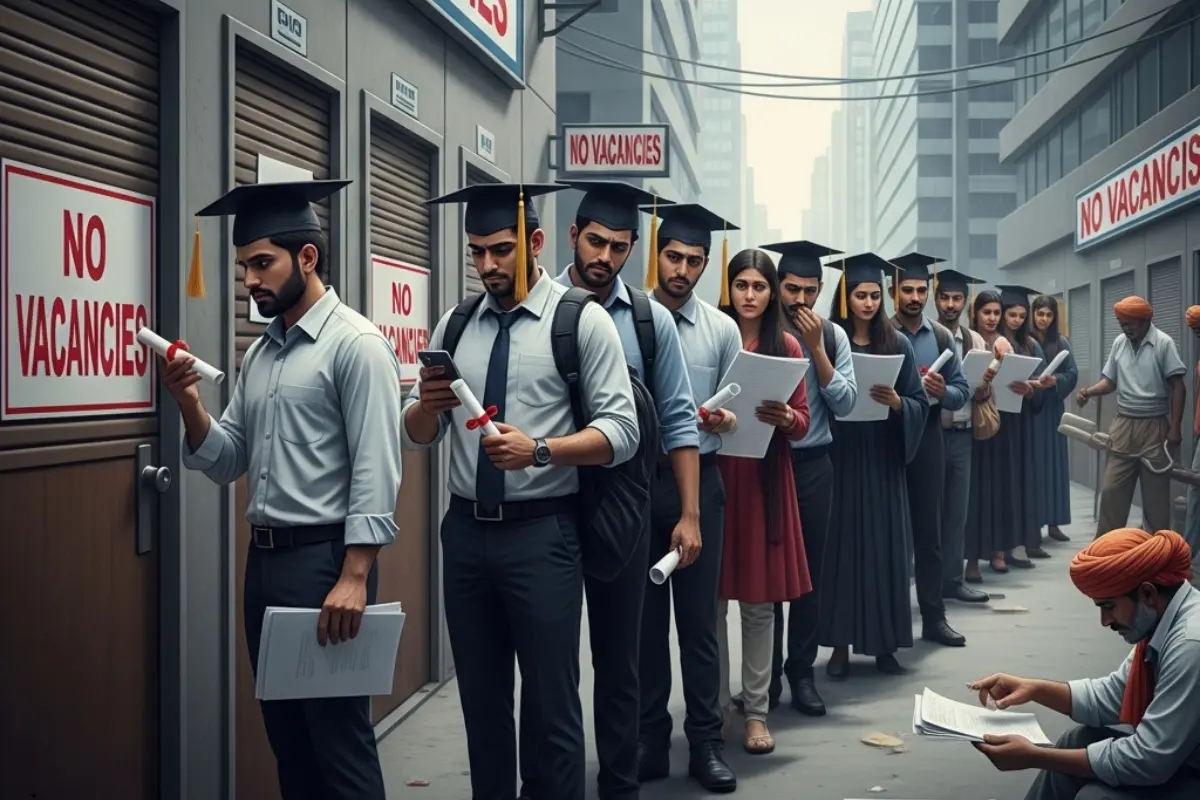
Zerodha has sparked widespread discussion after sharing data-backed insights on social media about India’s unemployment trends, pointing to a paradox where higher education does not necessarily improve job prospects.
The company noted that unemployment among illiterate individuals stands at around 3%, while for graduates aged 15–24, it rises sharply to nearly 40%.
Why graduates face higher unemployment
According to Zerodha, the gap is not due to a lack of value in education, but because education raises expectations that the current job market struggles to meet.
While less-educated individuals are more likely to accept any available work, graduates often wait for better-paying or stable roles, which are limited in number.
Citing projections from World Population Prospects 2024, the company highlighted that India has around 36.7 crore people aged between 15 and 29, forming one of the largest youth populations globally.
This demographic advantage is time-sensitive, as the ratio of working-age individuals to dependents is expected to peak by 2030 before gradually declining.
After excluding those still studying, about 26.3 crore young people are expected to enter the workforce, increasing pressure on job creation.
Also read | Apple transition: Tim Cook to step down as CEO; John Ternus named successor
Structural issues across the system
Zerodha pointed out that challenges exist at multiple levels, from education quality to job matching and employment generation.
The company emphasised that systemic inefficiencies are preventing smooth transitions from education to employment.
The financial burden of higher education is also a concern. Zerodha noted that the median annual cost of an engineering degree is about ₹1.23 lakh, which exceeds the yearly per capita spending of India’s poorest households.
This pushes many students into courses that may not offer strong employment outcomes, deepening inequality.
Job creation lagging behind
Data shared in the post shows that between 2004–05 and 2023, around 50 lakh graduates entered the job market annually, but only about 28 lakh found employment.
Among young male graduates, only half secure jobs within a year of unemployment, and just 7% manage to obtain permanent salaried positions. A very small proportion, around 3.7%, enter white-collar roles.
The viral post has triggered a wider conversation about the need for reforms in education, skill development and job creation.
As India’s young population continues to grow, the challenge of aligning education with employment opportunities remains a critical policy issue.