Why MK Stalin refused Rahul Gandhi's appeal against delimitation Bill despite INDIA bloc outreach
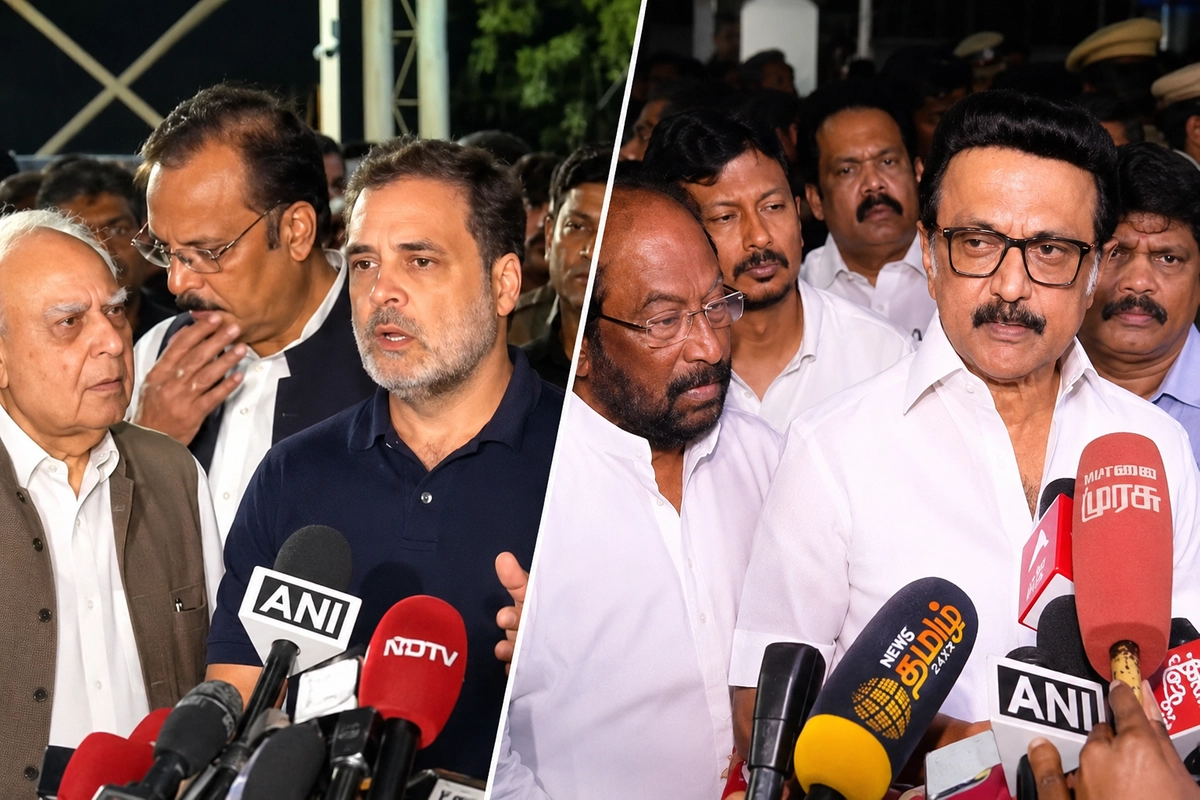
Congress leader Rahul Gandhi's last-minute attempt to persuade DMK president MK Stalin to oppose the Center's proposed delimitation legislation did not change the regional party's position, exposing a significant disagreement within the INDIA bloc ahead of Parliament's special session.
Rahul, accompanied by senior Opposition leaders Sonia Gandhi, Mallikarjun Kharge and others, travelled to Chennai on Sunday to seek the DMK's support against the proposed constitutional amendments.
The Congress leader had personally appealed to Stalin, invoking his political legacy and warning that the proposed expansion of the Lok Sabha to 850 seats could undermine democracy.
However, Stalin remained committed to the DMK's decision to support the revised proposal, maintaining that Tamil Nadu's interests would remain the party's foremost consideration.
The DMK's position was rooted in what it described as two key safeguards secured from the Centre.
These assurances, according to the party, protect Tamil Nadu's existing share of parliamentary representation and prevent its relative representation among states from declining over the next 25 years.
Rahul Gandhi invokes Stalin's political legacy
Ahead of the meeting, Rahul made a direct appeal to Stalin through a post on X, describing the DMK chief as someone who had consistently stood against forces perceived as hostile to Tamil interests.
‘Brother Stalin has always stood like a rock against anti-Tamil forces. In the national interest, in Tamil Nadu's interest and to protect the Constitution, we have to defeat this Bill together,’ Rahul said.
He also warned that expanding the Lok Sabha to 850 seats would give the BJP and RSS an opportunity to redraw India's electoral map to their advantage.
‘An expansion to 850 seats will finish democracy in India,’ he alleged. The Congress leader's appeal aimed to secure a united Opposition position against the proposed legislation before it is taken up in Parliament.
Why Stalin refused to change his stand
The primary reason behind the DMK's decision is its claim that the Centre has accepted two crucial demands concerning Tamil Nadu's representation.
The first demand was that the state's existing 7.18 per cent share of Lok Sabha seats should not decline following the proposed expansion of Parliament.
According to DMK MP A Raja, the state's share would instead marginally increase to 7.21 per cent under the revised arrangement.
The second demand concerned the inter-state proportion of parliamentary representation based on the 1971 Census.
The DMK wanted this arrangement retained for another 25 years, preventing states such as Tamil Nadu from being disadvantaged because of their population-control measures.
The party announced its support for the revised proposal on November 28, following a meeting of its MPs chaired by Stalin.
For the DMK leadership, the revised proposal represented a negotiated safeguard for Tamil Nadu's parliamentary representation.
Consequently, withdrawing support at the Opposition's request would mean abandoning an arrangement the party claims to have secured after sustained political opposition.
Stalin's response to Rahul: 'Kattabommans, not Ettappans'
Responding to Rahul's appeal, Stalin thanked the Congress leader for acknowledging the DMK's historical role in protecting the Constitution and the rights of states.
However, he made it clear that the party would continue making decisions based on Tamil Nadu's interests.
‘We have always made every decision keeping the interests of Tamil Nadu and our Tamil people as the foremost consideration. We will not compromise on this path,’ Stalin said.
He further added that history would judge the DMK as ‘Kattabommans and not Ettappans’.
The reference carried a political message. Veerapandiya Kattabomman is remembered in Tamil history for resisting British rule, while Ettappan is popularly associated with betrayal.
Stalin's remark was therefore a response to the political criticism surrounding the DMK's decision to support the revised delimitation proposal.
A disagreement within the INDIA bloc
The meeting highlighted the differing approaches of Congress and the DMK to the proposed legislation.
While Rahul Gandhi and several INDIA bloc leaders have argued that the delimitation exercise could alter the country's political balance and undermine democratic representation, the DMK has maintained that the revised proposal offers safeguards for Tamil Nadu.
The disagreement also comes against the backdrop of political changes in Tamil Nadu following the 2026 Assembly elections, after which the Congress moved away from its alliance with the DMK and extended support to the government led by Vijay's Tamilaga Vettri Kazhagam.
With Parliament's special session scheduled to begin on November 30, the DMK's decision has emerged as a significant point of difference within the Opposition alliance.
For Rahul Gandhi, the Chennai outreach was an attempt to secure a united front against the delimitation legislation. For Stalin, however, the party's stated safeguards for Tamil Nadu's representation remained central to its decision.