Why are airlines fighting over Mumbai and Navi Mumbai airports?
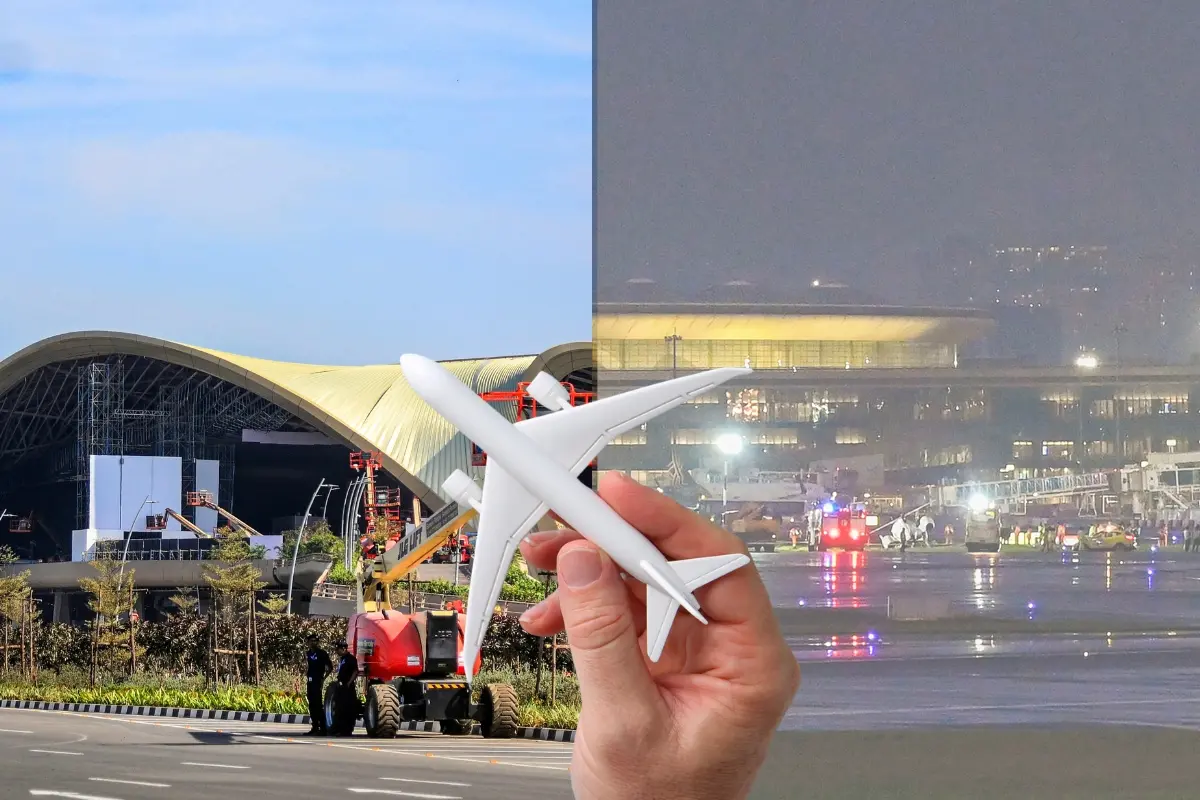
Mumbai’s aviation landscape is entering a major transition, but the proposed shift of international flights from Chhatrapati Shivaji Maharaj International Airport (CSMIA) to Navi Mumbai International Airport (NMIA) has triggered a dispute between airlines and the airport operator.
At the centre of the disagreement is a proposal to temporarily move around 265 of the 770 weekly international departure slots currently operating from Mumbai airport’s Terminal 2 to Navi Mumbai. The move is linked to the redevelopment of Mumbai airport’s Terminal 1, which is scheduled to begin in January 2027.
The Ministry of Civil Aviation (MoCA) has now asked Mumbai International Airport Ltd (MIAL) to defer its current transition plan and bring airlines and other stakeholders together to work out a mutually agreed approach.
For passengers, the issue is bigger than simply deciding which airport an aircraft will use. It involves flight schedules, airport connectivity, fares and fees, baggage and ground services, cargo, maintenance facilities and, ultimately, how smoothly Mumbai’s two airports can function as parts of one larger aviation system.
Why does Mumbai airport need to move flights?
The proposed changes are connected to the redevelopment of Terminal 1 at CSMIA. The airport currently handles around 55 million passengers a year, and Terminal 1 is expected to undergo a major redevelopment beginning in January 2027.
The redevelopment is intended to increase the terminal’s annual capacity from around 15 million passengers to 20 million passengers. The airport operator has argued that some operations will therefore need to be temporarily shifted while the redevelopment takes place.
All international flights at Mumbai airport currently operate from Terminal 2. MIAL had proposed temporarily discontinuing around 265 of the 770 weekly international departure slots from Terminal 2 and shifting those services to Navi Mumbai.
The proposed transition was originally expected to begin around October 25, coinciding with the winter schedule period.
From the airport operator’s perspective, the move is intended to ensure that the redevelopment can proceed while maintaining the overall continuity of Mumbai’s aviation operations.
Adani Airport Holdings Ltd (AAHL), which controls both MIAL and Navi Mumbai International Airport Ltd (NMIAL), has maintained that the shift is temporary and that Navi Mumbai has the infrastructure and capacity to accommodate the additional traffic.
Why are airlines objecting?
Airlines are not opposed to the redevelopment of Terminal 1 itself. Their concerns are primarily about how the transition is being planned and how quickly the changes are expected to take place.
The proposed shift comes at a particularly sensitive time for airlines because the winter schedule runs from the end of October 2026 through March 2027. Airlines have already planned aircraft rotations, crew schedules, connections and passenger bookings around their approved slots.
A sudden change in the airport from which a flight operates can therefore have consequences beyond the airline’s own operations. Passengers may have booked flights based on Mumbai airport’s location and connectivity, and moving those flights to Navi Mumbai could mean longer or different journeys to the airport for some travellers.
The Airline Operators Committee (AOC) has also questioned how MIAL arrived at the figure of 265 weekly international slots, or roughly 33 per cent of international departures from Terminal 2.
Airlines have sought details on whether the calculation was based on terminal capacity, passenger traffic, flight movements or slots, and have asked for the underlying capacity assessment.
The AOC has also sought month-wise capacity utilisation data for Terminals 1 and 2 for 2026, as well as information on the airport’s declared and available passenger-handling capacity.
According to the airlines, such information is important before deciding which flights should be moved and by how much.
What exactly is the 33 per cent issue?
The 33 per cent figure has become one of the biggest points of contention. MIAL has said that around five million domestic passengers a year need to be shifted from Terminal 1 to Terminal 2 during the redevelopment. Since Terminal 2 is already handling international operations, the airport operator has proposed moving around one-third of the international services temporarily to Navi Mumbai to create the required capacity.
Airlines, however, want greater clarity on the methodology behind this calculation.
They have asked whether the 33 per cent reduction is actually required based on passenger numbers and terminal capacity, or whether there are alternative ways of managing the redevelopment with a smaller operational impact.
This is important because a change in slots is not simply a change in numbers on an airport schedule. Each slot can be connected to an airline’s aircraft utilisation, connecting network, crew planning and passenger bookings.
The airlines have also questioned whether the proposed reduction or relocation of established slots has been considered under the relevant IATA Worldwide Airport Slot Guidelines and India’s slot-allocation framework.
Why has the government stepped in?
The disagreement eventually reached the Ministry of Civil Aviation, which held a meeting with MIAL, NMIAL and airlines in Delhi. The ministry has now asked MIAL to defer its current transition plan and convene another meeting involving all stakeholders.
The objective is to arrive at a transition plan that has the agreement of the airlines and other concerned parties before it proceeds through the required regulatory approvals.
The record of the joint stakeholder discussions is also expected to form part of the Major Development Plan approvals for the project. The MDP covers the broader infrastructure and operational development of the airport and requires approval from MoCA.
This changes the nature of the dispute. The question is no longer simply whether flights can technically be handled at Navi Mumbai. It is also about whether the transition has been sufficiently assessed, consulted upon and planned from the perspective of the entire aviation ecosystem.
The next stakeholder meeting is scheduled for October 13, with another meeting proposed for October 20. A revised transition plan is expected to be discussed as the process moves forward.
What does the airport operator say?
AAHL has defended the proposed transition, arguing that passenger safety and the redevelopment of Terminal 1 cannot be delayed indefinitely.
AAHL CEO Arun Bansal has said that extensive consultations with airlines on the future of Terminal 1 have been taking place since 2020. He has also said that the redevelopment proposal was presented to the Airports Economic Regulatory Authority (AERA) and subsequently incorporated into the approved tariff framework.
The airport operator has said that only around five million passengers a year, or about nine per cent of Mumbai airport’s approximately 55 million annual passengers, would be temporarily affected by the deoperationalisation of part of Terminal 1.
AAHL has also said that airlines have the option of temporarily relocating operations to Navi Mumbai and that the new airport has the infrastructure and capacity to handle the additional traffic.
The airlines, however, have challenged the claim that there was sufficient consultation, asking for minutes, consultation records and documented outcomes of meetings held since 2020.
They have also pointed out that the Covid-19 period was included in that timeline and that the Adani group took over the operation of Mumbai airport only in 2021.
Which airlines would be affected?
The proposed shift would affect several airlines, with some of the largest reductions involving domestic and international carriers. Under the earlier proposal, IndiGo faced a reduction of around 74 weekly international slots from Mumbai, while Air India faced around 33 and Akasa Air around 11. Air India Express was also facing a reduction of around seven weekly slots.
Among international carriers, airlines such as Emirates and Etihad Airways were facing reductions of around 10 weekly slots each.
For passengers, however, the impact would depend on the final transition plan. The October 25 proposal is now being deferred, and the government wants the airport operator and airlines to work out a revised plan.
That means passengers should not assume that every flight currently shown as operating from Mumbai will necessarily shift to Navi Mumbai. The final allocation is still part of the ongoing discussions.
Is Navi Mumbai airport ready?
This is another important part of the debate. AAHL has maintained that Navi Mumbai International Airport is a modern, fully equipped facility with sufficient infrastructure and capacity to accommodate the additional passenger traffic.
At a recent stakeholder meeting, AAHL representatives said NMIA could handle up to five million international passengers annually. The operator also highlighted facilities such as passenger connectivity, hotels, lounges and in-flight catering.
Airlines and industry bodies, however, have raised questions about the practical readiness of the new airport to absorb a significant number of international operations at short notice.
IATA has specifically raised concerns about areas including ground handling, aircraft maintenance approvals, catering, cargo facilities, crew accommodation and surface connectivity.
These are important considerations because an airport’s readiness cannot be measured only by terminal size or runway capacity. An international airline needs a complete operating ecosystem around the airport, including engineering and maintenance support, ground services, cargo handling, catering, crew logistics and reliable passenger access.
The connectivity question for passengers
For passengers, perhaps the most visible difference between Mumbai and Navi Mumbai will be the journey to and from the airport.
CSMIA is deeply integrated into Mumbai’s existing transport network and is relatively close to many major business and residential districts. Navi Mumbai International Airport, on the other hand, is located across the harbour and will serve a different part of the Mumbai Metropolitan Region.
For passengers living in Navi Mumbai, Thane and parts of the wider metropolitan region, NMIA could eventually provide a more convenient option. For many passengers from Mumbai, however, the shift could mean additional travel time or a change in their usual airport access. This is why the transition needs to be carefully timed and communicated.
A passenger who books a flight months in advance needs to know not only the flight number and departure time, but also which airport the aircraft will leave from. Any last-minute change could affect airport transfers, connecting flights, hotel bookings and travel plans.
What about the higher airport charges?
Another major point of contention is the User Development Fee, or UDF. The UDF at Navi Mumbai is currently higher than at Mumbai airport. At NMIA, the UDF for a departing international passenger is Rs 1,225, compared with lower charges at CSMIA. The fee is collected from passengers through their airline tickets and subsequently passed on to the airport operator.
AAHL has proposed using incentives to encourage international airlines to shift operations to Navi Mumbai. These include a 100 per cent discount on landing fees for new international flights and cash vouchers intended to offset the difference in UDF between the two airports.
The airline industry, however, has made it clear that incentives are not its immediate concern.
The AOC has said airlines first want transparency around the Terminal 1 redevelopment plan, capacity calculations, timelines and the proposed operational transition.
The final decision on UDF is also still pending with the Ministry of Civil Aviation.
IATA backs redevelopment but wants consultation
The International Air Transport Association has welcomed MoCA’s intervention and said it supports both the redevelopment of Mumbai airport’s Terminal 1 and the development of Navi Mumbai International Airport.
The global airline body, however, has stressed that any significant reduction in airport capacity or change affecting airline operations should follow a transparent assessment of demand and capacity, meaningful consultation with affected airlines and sufficient time to develop workable transition arrangements.
IATA’s position is significant because it shifts the conversation away from whether Mumbai needs two airports. There is broad recognition that the Mumbai Metropolitan Region needs additional airport capacity as aviation demand grows.
The more difficult question is how the two airports should be integrated.
Mumbai needs the additional capacity that Navi Mumbai can provide. At the same time, the transition cannot undermine the reliability of existing airline operations or create unnecessary disruption for passengers.
The bigger question is two airports, one aviation system
The Mumbai-Navi Mumbai dispute highlights a larger challenge facing fast-growing aviation markets. Building a second airport is only the first step. The real test is how effectively two airports operate together as a single metropolitan aviation system.
Navi Mumbai can provide much-needed additional capacity and create room for Mumbai’s aviation growth. The redevelopment of Terminal 1 at CSMIA is equally important if the existing airport is to continue serving the region efficiently.
But the transition between the two cannot be treated simply as an exercise in moving flight slots from one airport to another.
It requires coordination between airport operators, airlines, regulators, ground handlers, cargo companies, maintenance providers, passenger-service companies and other stakeholders. It also requires enough time for airlines to adjust aircraft, crew, schedules and passenger communication.
For passengers, the priority is simple, a flight should leave from the airport they expect, at the time they have booked, with adequate services and connectivity around it.
The government’s intervention provides an opportunity to reset the process. Instead of a rushed transition, the stakeholders can now work towards a phased and data-backed plan that balances the redevelopment needs of Mumbai airport with the operational realities of airlines and the convenience of passengers.
The long-term objective should not be to choose between Mumbai and Navi Mumbai. It should be to make both airports work together efficiently. If that transition is planned well, Navi Mumbai can become more than a pressure-release valve for Mumbai airport. It can become an important second hub for the metropolitan region, while the redevelopment of CSMIA strengthens the capacity and capability of the existing airport.
The immediate dispute over 265 weekly international flights, therefore, is really part of a much bigger question, how does one of India’s most important aviation markets prepare for its next phase of growth without making passengers and airlines pay the price of a poorly managed transition?