When Prakash Karat went underground during Emergency, took shelter at AIIMS hostel
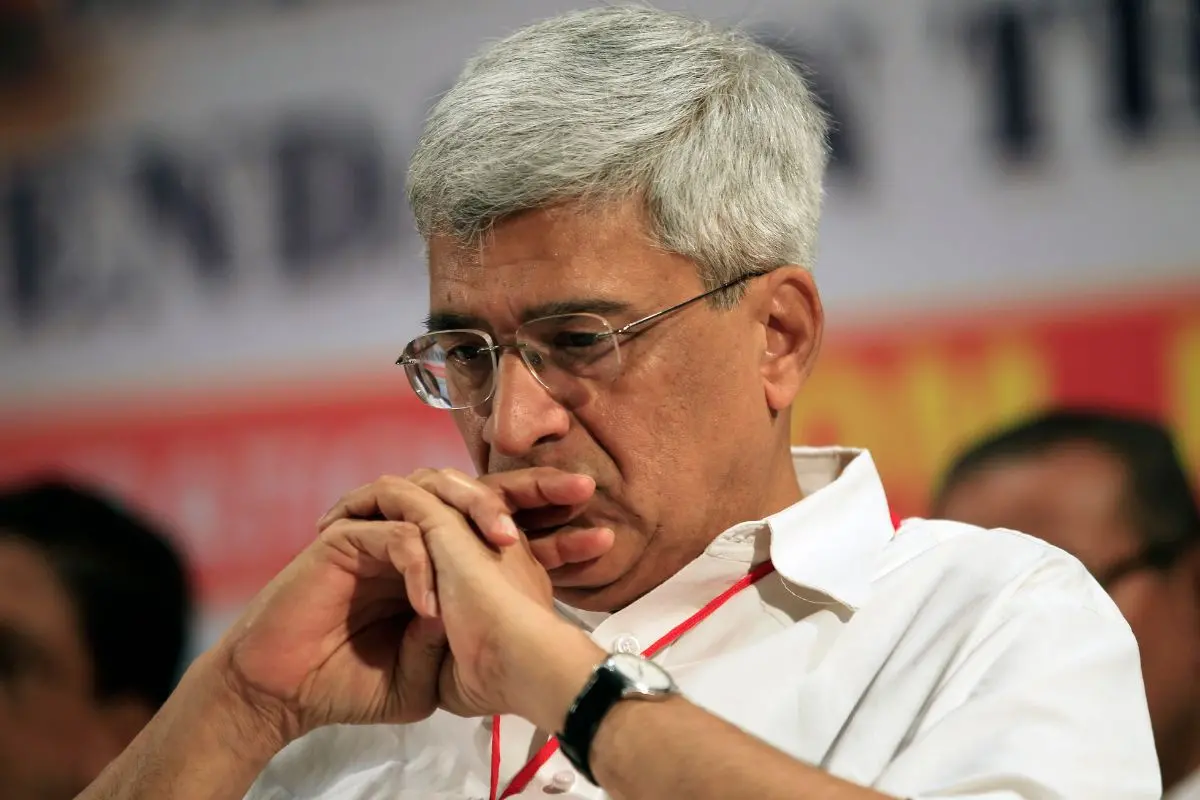
New Delhi: As Indira Gandhi declared the Emergency in 1975, Opposition leaders across the country were arrested, and fresh as well as dormant cases were used to target dissent. Among those who vanished from public view was Prakash Karat, then a young CPM activist and the national president of the Students’ Federation of India (SFI). For the next 18 months, Karat remained underground—initially finding refuge in an unlikely location: the hostel of the All India Institute of Medical Sciences (AIIMS).
Now a veteran of Indian Left politics, Karat—who led the CPM as general secretary from 2005 to 2015 and currently serves as interim coordinator after the passing of Sitaram Yechury last year—recalled those turbulent days in an interview with PTI.
He described the Emergency as a “knee-jerk reaction” by Indira Gandhi and warned that today's political climate features a form of authoritarianism that is far more “institutionalised”.
At the time, Karat was pursuing a PhD at Jawaharlal Nehru University (JNU). He remembered being in Kolkata when Emergency was declared. Soon after, Delhi saw a sweep of arrests—particularly at the Vitthal Bhai Patel House, a hostel on Rafi Marg that housed several political leaders.
"I used to stay in the Vitthal Bhai Patel House at Rafi Marg. At least half a dozen people residents there were arrested because many political party leaders were staying there, including the CPM state secretary of Delhi at that time, Major Jaipal Singh," he recounted.
Following instructions from the party, Karat went underground, assuming the alias 'Sudhir’. He noted that during the Emergency, old cases were revived and individuals were booked under harsh laws like the 'Defence of India Rules' and the 'Maintenance of Internal Security Act' (MISA).
So what did life underground look like?
"In the first few weeks, I realised that as long as I stayed away from JNU, the CPM party office and my flat in VP House, I would be comparatively safe, as the police were not actively looking for me. So, the only place I could find to stay was with some friends who were postgraduate medical students," he said.
"AIIMS, back in those days, was a much more relaxed place, not so crowded and frenetic as it is now," Karat added.
However, he couldn’t ignore what was happening at JNU, which quickly became a hotspot for resistance. "There was a concerted attack on JNU students and the students' union. Just a little over a week after the Emergency was declared, hundreds of policemen raided the hostels on campus, rounding up scores of students and taking them to police stations for interrogation."
He also recalled how police arrested Prabir Purkayastha, a founding member of the Delhi Science Forum and the news website NewsClick, mistaking him for JNU Students’ Union president DP Tripathi—who was also later held under MISA.
Despite the constant threat of arrest, Karat, as SFI president, remained active underground, printing and distributing pamphlets and organising student campaigns.
He pointed to two particularly major aspects of the Emergency that galvanised rural opposition: the demolition of slums in the name of beautification and the forced sterilisation drive.
"At the Turkman Gate, for example, there was this eviction, demolition of all the tenements. There was a general campaign, but it was not possible to organise any big protests in the area. But there were efforts to try to mobilise public opinion," he said.
Asked whether he sees similarities between the Emergency and the current political scenario, Karat offered a nuanced view.
"People tend to compare the present situation to this 21-month Emergency of 1975-77. I think that is not appropriate. Indira Gandhi was fighting for survival to be in power and she took this desperate measure of imposing the Emergency, which was there in the Constitution. It was a knee-jerk reaction.
"That was an authoritarian attack on democracy, no doubt, but what we have today is an authoritarianism which is much more institutionalised, being implemented as part of a political agenda."
Reflecting on the legacy of the Emergency, Karat noted that it shaped a generation of political leaders. When asked why many of the parties that opposed the Emergency are now in alliance with the Congress under the INDIA bloc, he said the threat to democratic institutions today is far more severe.
"The danger to democracy today is much higher, and the form of authoritarianism is much more comprehensive and insidious. So, I think that is what has brought all these opposition parties together because they all realise that what is at stake is the very democratic system that we have had under the Constitution," he said.