What is Article 143, the law President Murmu used to seek clarity from Supreme Court on its powers?
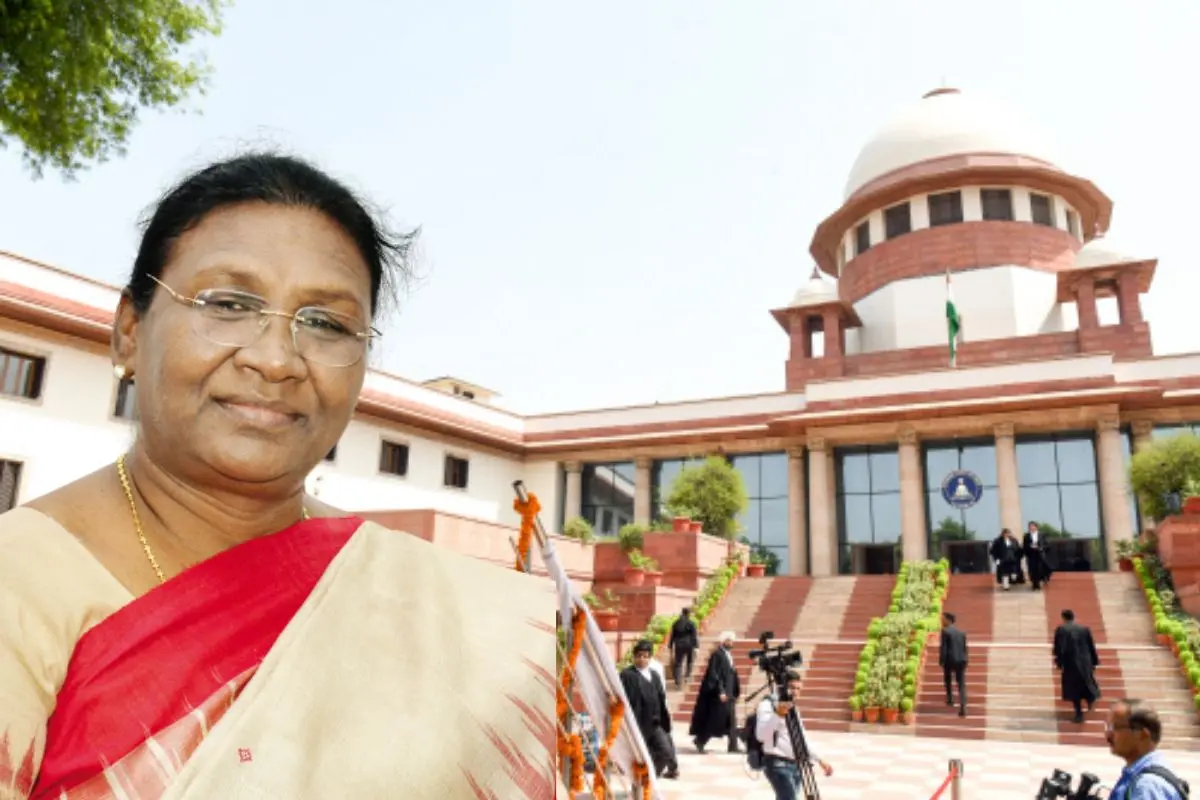
President Droupadi Murmu has invoked Article 143(1) to refer a set of 14 critical legal questions to the Supreme Court of India. This follows the Court’s April 8 judgment that imposed timelines on Governors and the President in granting assent to state legislation—particularly in the Tamil Nadu government vs Governor case.
The President’s referral challenges the idea of judicially imposed deadlines, arguing that Articles 200 and 201 of the Constitution, which govern the assent process for state Bills, do not prescribe any such time frames.
By invoking Article 143, the President seeks authoritative clarity on the limits of judicial review, executive discretion, and the constitutional interplay between the legislature, executive, and judiciary.
What Is Article 143?
Article 143 of the Indian Constitution confers advisory jurisdiction upon the Supreme Court of India. This unique provision empowers the President to seek the opinion of the apex court on matters of law or fact that are of public importance, either existing or likely to arise in the future.
How does it work?
Under Article 143(1), if the President believes a matter of legal or factual significance has arisen or may arise, and it is beneficial to obtain the Supreme Court's opinion, he may refer it to the Court. The Court, after hearing the matter, may report its opinion to the President.
Article 143(2) goes a step further: in cases of inter-state disputes that fall under the proviso of Article 131, the President shall refer the matter to the Court, and the Supreme Court shall report its opinion after due hearing.
Is the Supreme Court bound to answer the President?
Under Article 143(1), the Supreme Court retains discretion and may decline to answer the reference if the questions are too vague, politically sensitive, or incapable of legal analysis. However, under Article 143(2), the language is mandatory—though even then, the Court has held in Special Courts Bill (1978) that it can return the reference unanswered for valid reasons.
Is the Supreme Court’s Opinion binding?
This is where it gets nuanced. Article 143 opinions are not binding like regular court judgments under Article 141. This was clarified in cases like:
Ahmedabad St. Xavier’s College v. State of Gujarat (1974) – where the Court held such opinions aren’t binding on itself or other courts.
Cauvery Water Disputes Tribunal Case (1993) – where the Court noted that while not binding, such opinions are entitled to great respect and are normally followed.
Chief Justice Y.V. Chandrachud once noted that it would be “strange” if Supreme Court judgments between private parties are binding, but its advisory opinions are not. Yet, technically, these opinions lack enforceability since they’re neither decrees nor orders.
What role does the Council of Ministers play?
Although Article 143 allows the President to seek the Court’s advice, under Article 74(1), the President must act on the aid and advice of the Council of Ministers. Thus, in practice, it is the government of the day that initiates the reference. Article 74(2) bars the court from inquiring into whether the reference was truly made on such advice.
If the President were to bypass the Council of Ministers while making such a reference, it could amount to a constitutional violation, potentially triggering impeachment proceedings.
What kinds of questions can be referred?
While most references deal with questions of law, in Special Reference No. 1 of 1993 (Ram Janma Bhumi-Babri Masjid case), the President referred a question of fact to the Court, asking whether a Hindu temple existed at the disputed site before the Babri Masjid was built. This remains a unique instance of a factual reference under Article 143(1).
Landmark references made under Article 143
Some of the most important issues in India’s constitutional and political history have been referred to the Supreme Court under Article 143. These include:
- Delhi Laws Act, 1951
- Kerala Education Bill, 1957
- Berubari Union case, 1960 (on the transfer of Indian territory to Pakistan)
- Special Courts Bill, 1978
- Cauvery Water Disputes Tribunal, 1993
- Ram Janma Bhumi-Babri Masjid, 1993
- Gujarat Assembly Election Reference, 2002
- Natural Resources Allocation Reference, 2012
- Punjab Termination of Agreements Act, 2004 Reference, 2017
Each of these reflects the scope and significance of Article 143 in shaping legal and constitutional discourse.
Article 143 is a rarely used but powerful tool in the Indian constitutional framework. While it enables the executive to seek clarity on critical legal questions, its non-binding nature and judicial discretion ensure that the Court remains the final arbiter of its own jurisdiction. The provision acts as a bridge between the executive and judiciary—but with enough safeguards to prevent its misuse.