New Delhi Railway station stampede: What went wrong and how it happened
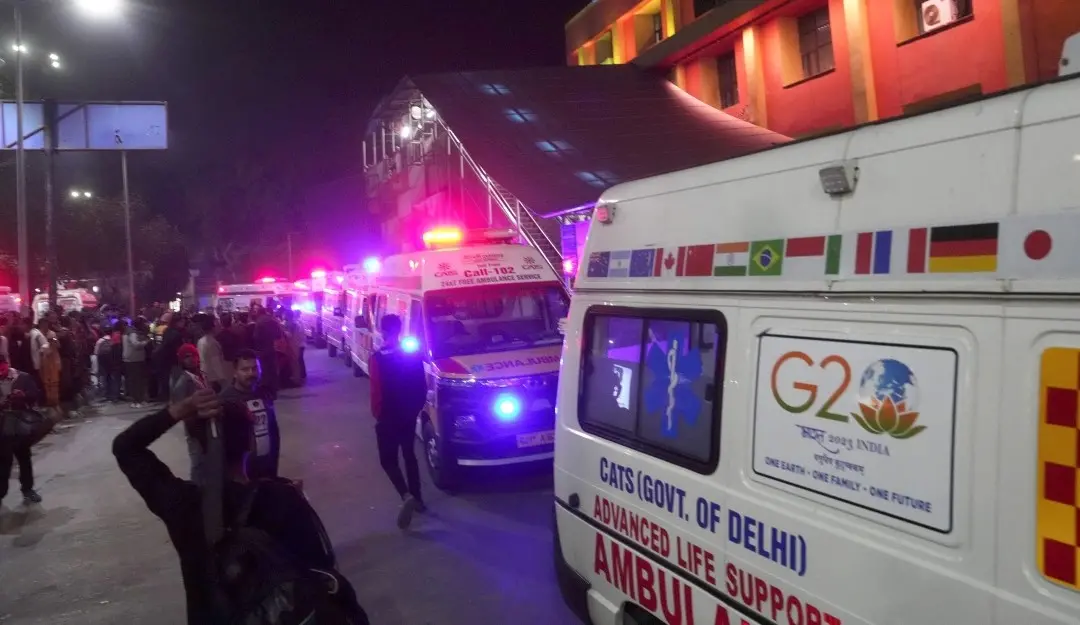
New Delhi: A devastating stampede at New Delhi Railway Station late Saturday night claimed at least 18 lives and left more than a dozen others injured, authorities confirmed. The incident occurred as a massive crowd of passengers, many of whom were heading to Prayagraj for the ongoing Maha Kumbh, surged uncontrollably on platforms 14 and 15.
What happened at Delhi railway station:
It all started with the swelling number of passengers at the station, many of whom were on their way to Prayagraj for the Maha Kumbh festival. Thousands of people had gathered on platforms 14 and 15, eagerly waiting to board trains, including the Prayagraj Express, which was scheduled to depart late at night.
During religious festivals and pilgrimages, railway stations like New Delhi Railway Station experience an intense surge in passengers. However, the situation on this particular night was exacerbated by a few key factors that spiralled out of control.
Train schedule confusion:
The first major turning point occurred when the train schedules were disrupted. A train, initially assigned to depart from platform number 12, was abruptly moved to platform 16. Passengers who had been waiting for hours at platform 12 were caught off guard, and the confusion set off a chain reaction.
Without clear guidance or enough time to adjust, passengers from Platform 12 rushed to Platform 16, while those already waiting on Platform 16 tried to make their way to the train. With the crowd trying to squeeze through narrow spaces and corridors, tension began to mount.
As passengers from both platforms collided, the bottleneck became unbearable. The narrow, confined space at the escalator became a major problem, as people began to fall on top of each other.
Eyewitnesses described the scene as chaotic, with people being pushed, shoved, and trampled in the surge of bodies.
Eyewitness account:
With the situation spiralling out of control, railway staff, police, and RPF (Railway Protection Force) personnel rushed to the scene. However, despite their best efforts, the stampede-like situation continued to worsen due to the volume of people involved.
A shopkeeper at the station explained, “The crowd was massive. When the train was moved, it confused me. People from both platforms tried to reach platform 16, but no one was there to control the flow. There was just no way to manage the sheer number of passengers.”
One of the porters, who has worked at the station for decades, recalled, “people started colliding and fell on the escalator and stairs. Several collies gathered there to stop the crowd. We took at least 15 bodies and loaded them in an Ambulance. There were only shoes and clothes on the platform..”
The fatal outcome and compensation announced:
As the crowd grew more violent, the stampede resulted in 18 deaths, with many passengers trampled and crushed underfoot. More than a dozen others were injured, some of whom were rushed to nearby hospitals in critical condition.
The stampede was confirmed around 9:55 pm, with the police and emergency responders arriving shortly afterwards to assist the injured and begin evacuation. Ambulances were seen speeding through the station to transport the victims to LNJP Hospital, where the injured received medical attention.
Indian Railways announced Rs 10 lakh compensation to the families of the deceased who lost their lives in the New Delhi Railway Station stampede. Rs 2.5 lakh compensation to the seriously injured and Rs 1 lakh to the minor injured.
Railway administration's response:
The railway authorities initially denied reports of a stampede, calling it a “rumour.” However, after the scale of the tragedy became apparent, they acknowledged the severity of the incident. Measures were taken to control the crowd, including the deployment of four special trains to evacuate the waiting passengers.
The aftermath: special trains and ongoing investigation
In the wake of the tragedy, the railway administration launched efforts to bring the situation under control. Special trains were quickly arranged to evacuate the crowd, and additional security was deployed to ensure that passengers could leave the station in an orderly manner.
An investigation is now underway to understand the full sequence of events and identify what went wrong in terms of crowd management and response. Authorities are examining whether the shifting of train platforms, last-minute cancellations, and lack of clear communication contributed to the chaos.