West Bengal Assembly Polls 2026: SIR voter roll revision triggers unrest in BJP’s Matua stronghold
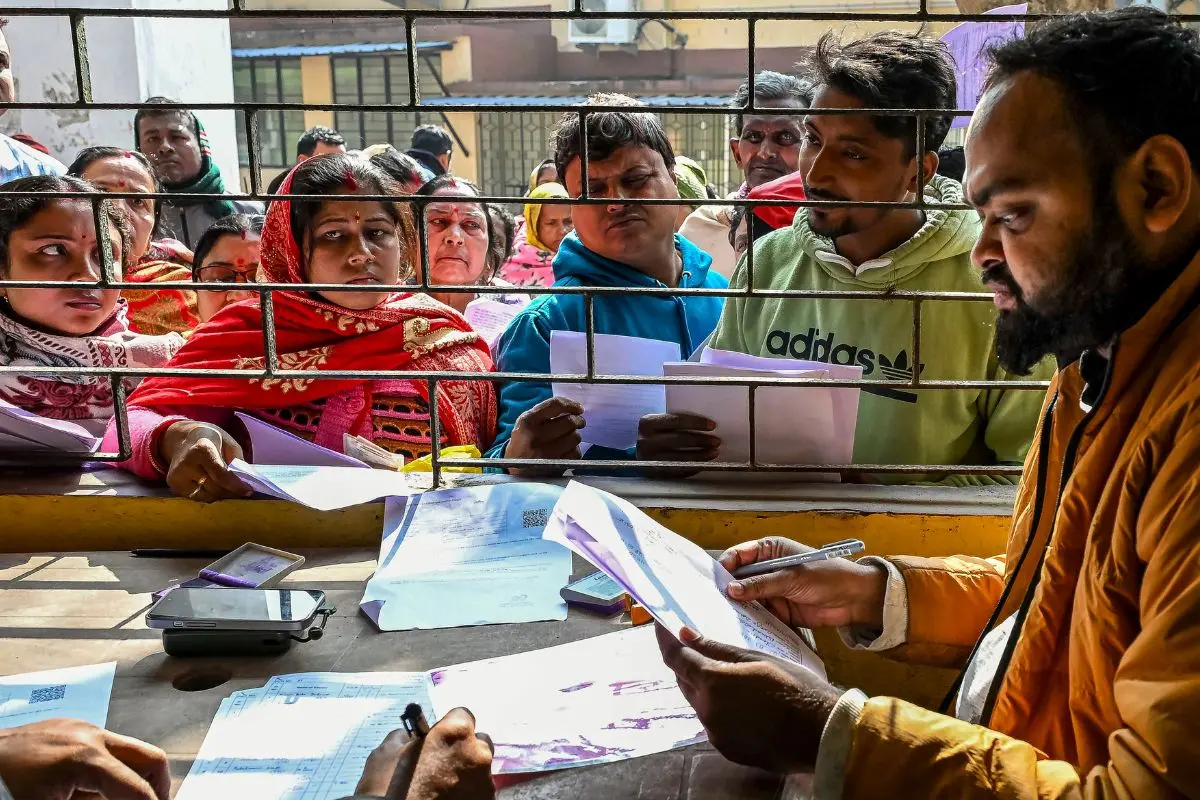
Kolkata: Panic, anger and uncertainty are sweeping through West Bengal’s Matua heartland following large-scale deletions under the Election Commission’s Special Intensive Revision (SIR) of electoral rolls, turning the border districts into a key political flashpoint ahead of the Assembly elections.
The revision exercise, the first intensive electoral roll update since 2002, has triggered fresh anxieties among the Matua community, a Scheduled Caste Hindu refugee group with decisive influence in more than 50 Assembly constituencies across North 24 Parganas, Nadia and parts of north Bengal.
SIR exercise reopens identity concerns
Under the Special Intensive Revision framework, voters whose names did not appear in the 2002 electoral rolls were required to submit eligibility documents. For lakhs of Matuas who migrated from Bangladesh over decades, often without formal documentation, the scrutiny has resulted in widespread deletions, raising fears of disenfranchisement.
According to official figures, the scale of deletions is significant. In the second phase alone, Dabgram-Fulbari recorded 16,491 deletions, Bagda 15,303 and Kalyani 9,037 — all Matua-dominated seats.
Bagda had earlier reported 24,927 deletions in the first phase. Gaighata saw 16,718 names removed, Bangaon-Uttar 26,183 and Bangaon-Dakshin 18,562. With fresh deletions added, total removals now stand at 40,230 in Bagda, 34,109 in Bangaon-Uttar, 25,464 in Bangaon-Dakshin and 23,488 in Gaighata. Around 15,000 names have been deleted in Swarupnagar.
In several segments, thousands more voters have been placed in the ‘under adjudication’ category, potentially reshaping electoral arithmetic in the Matua belt.
Overall, 63.66 lakh names — about 8.3 per cent of the electorate — have been deleted statewide since November, reducing West Bengal’s voter base from 7.66 crore to 7.04 crore. Another 60 lakh voters remain under adjudication.
Also Read| West Bengal elections 2026: What the deletion of 63.33 lakh voters means for TMC and BJP
Political impact in the key BJP stronghold
While the Election Commission maintains that the revision aims to remove duplicate, deceased and ineligible voters, the exercise has become politically sensitive in refugee-dominated constituencies.
The Matuas, followers of a 19th-century reformist movement that challenged caste hierarchies, began migrating from East Pakistan in the 1950s. Today, they constitute nearly 17 per cent of West Bengal’s population and are regarded as the state’s largest Scheduled Caste group.
Seen as a pivotal refugee vote bank, the community was once aligned with the Left Front, later with the Trinamool Congress (TMC), and shifted significantly towards the Bharatiya Janata Party (BJP) after 2019, when the BJP foregrounded the Citizenship Amendment Act (CAA).
Of the roughly 50 Assembly seats where Matuas are considered decisive, a majority were won by the BJP in 2021. Party sources indicate that refugee-dominated areas accounted for more than half of the BJP’s 77-seat tally in the last Assembly polls. The support base largely held during the 2024 Lok Sabha elections.
‘Confusion and anxiety’ in the Matua heartland
In Thakurnagar, the spiritual headquarters of the Matua sect, residents say many possess Aadhaar, ration and voter identity cards but fear that documentation gaps linked to the 2002 rolls may render them vulnerable.
Mahitosh Baidya, general secretary of the Matua Mahasangha, described the mood as one of “confusion and anxiety”.
“More than 50 per cent of the Matuas have been omitted from the voter list. We really do not have answers as to what to do next,” he said.
He added that citizenship certificates issued so far remain “minuscule” compared to an estimated one crore eligible applicants.
Also Read|Supreme Court allows Madhyamik admit cards as supplementary ID for West Bengal SIR
BJP reassures; TMC sees opportunity
Union Minister and Bongaon MP Shantanu Thakur sought to reassure the community, stating that refugee Matuas would receive Indian citizenship under the CAA.
“There is no need to worry if the names of refugee Matuas are deleted. Those who entered India till December 31, 2024, have nothing to worry about,” he said.
However, local BJP leaders have acknowledged signs of unease among sections of the electorate.
“People are asking why their names were deleted. We are telling them this is roll purification and that CAA will protect genuine refugees,” a BJP leader in Bangaon said.
TMC MP Mamatabala Thakur alleged that those who migrated after 2002 and lack formal documentation have been disproportionately affected.
“The names of Matuas have been deleted as those who came after 2002 lack documents and may lose voting rights. We had warned that the community would suffer because of the BJP’s citizenship promises,” she said.
High-stakes electoral calculus
With less than two months before the Assembly elections, the Matua belt has emerged as one of the sharpest fault lines in West Bengal politics.
For the BJP, the electoral roll deletions pose a strategic dilemma — reinforce the CAA narrative and promise restoration of voting rights, or risk alienating a refugee constituency central to its rise since 2019.
For the TMC, the churn presents an opportunity to reclaim ground among Matua voters, even as it faces the challenge of addressing anxiety in border districts where identity, documentation and belonging remain deeply intertwined with politics.
PTI