West Bengal bypolls: Who will win Nandigram and Rejinagar?
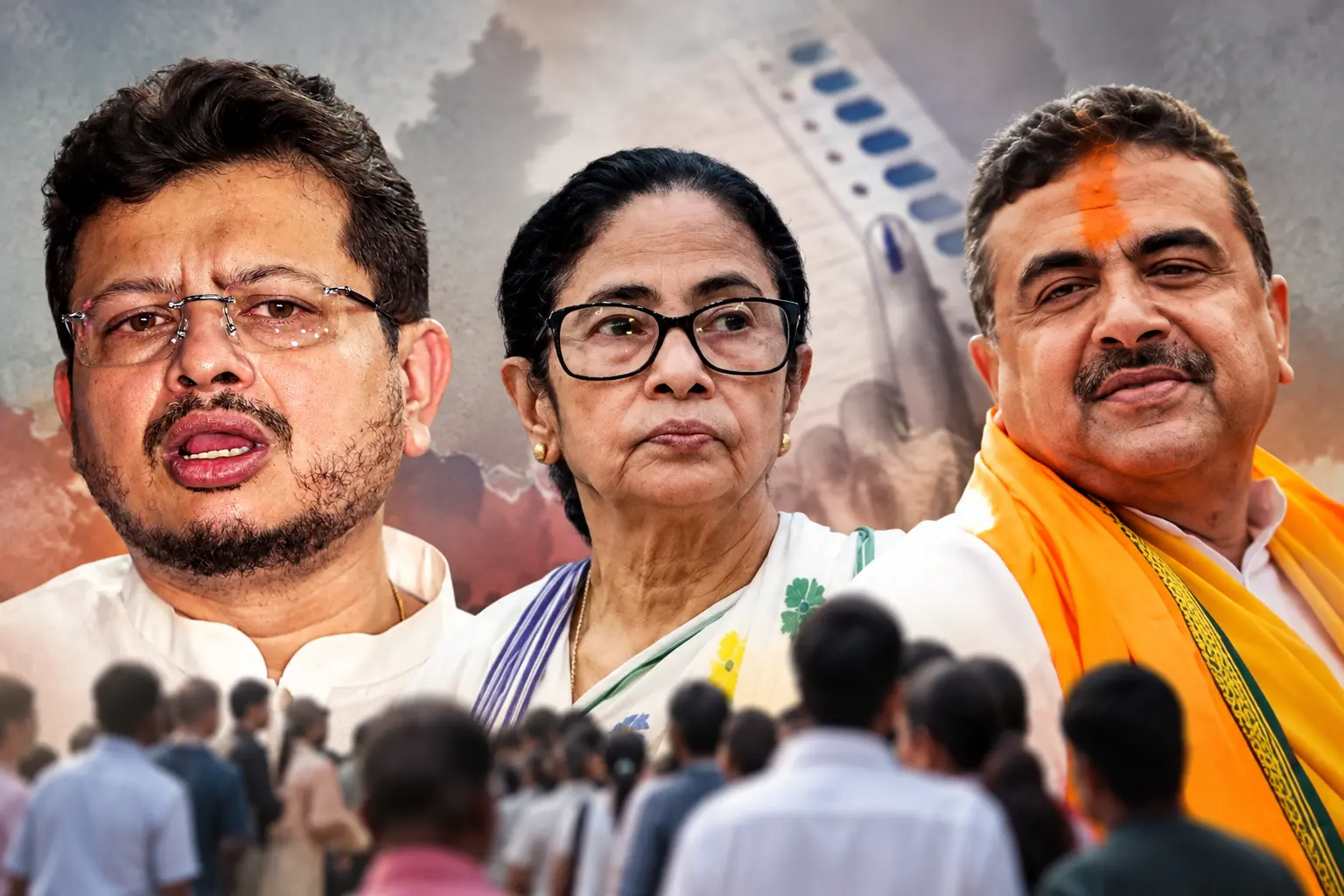
West Bengal will vote on October 6 in two closely watched Assembly by-elections, with Nandigram and Rejinagar serving as contrasting tests for the Bharatiya Janata Party (BJP), the Trinamool Congress (TMC), and a fragmented Opposition.
With 16 candidates in Nandigram and 21 in Rejinagar, the contests are crowded, but the political equations in the two constituencies are markedly different.
The bypolls are also the first major electoral test after the BJP's sweeping performance in the 2026 West Bengal Assembly elections, when it won 208 of the State's 294 seats and formed the government for the first time.
The TMC finished second with 80 seats. The results therefore carry significance beyond the two constituencies, particularly as the TMC returns to the electoral battlefield with a new name and symbol after the Election Commission recognized rival factions.
Nandigram: BJP has the 2026 result, but Opposition equations have changed
Nandigram is perhaps the more politically charged of the two contests.
The BJP is seeking to retain the seat after Adhikari won it in the 2026 Assembly election, and the party is also looking to retain Bhabanipur. Adhikari had polled around 1.27 lakh votes against TMC candidate Pabitra Kar's nearly 1.17 lakh, underlining how closely fought the constituency was even amid the BJP's wider statewide victory.
The BJP has fielded Hasirani Rath, mother of Adhikari's slain personal assistant Chandranath Rath.
The candidate choice gives the BJP campaign a strong local and emotional component, while the party is also seeking to consolidate the support it received in the Assembly election.
The Opposition, however, enters the contest in a considerably different configuration.
The Mamata Banerjee faction initially fielded Sanchita Pradhan (Dey), but she withdrew after meeting Chief Minister Adhikari.
The faction subsequently extended support to Congress candidate Milan Pradhan.
The situation became more dramatic after authorities arrested Pradhan in connection with a 17-year-old case linked to the Nandigram land agitation. The Calcutta High Court later granted him interim bail.
The withdrawal of the Mamata-backed candidate means the anti-BJP vote has a different channel this time, with Congress emerging as the principal Opposition-backed candidate.
Meanwhile, Democratic TMC candidate Eteshamul Haque, CPI's Shanti Gopal Giri, Jatiya Unnayan Party's SK Hasibul, and the All India Secular Front's Ali Md Sabe Miraj Khan are in the fray.
Nandigram's recent history makes the contest especially significant. TMC's Phiroja Bibi won the seat in 2011, while Adhikari won it for TMC in 2016.
In 2021, after moving to the BJP, Adhikari defeated Mamata Banerjee by just 1,956 votes. The 2026 result again favored Adhikari, though by a much larger margin.
The key question, therefore, is whether the BJP can convert its 2026 advantage into another victory despite the Opposition's altered strategy, and whether the fragmented field changes the distribution of votes.
Rejinagar: A much more fragmented contest
Rejinagar presents a different electoral picture. The Aam Janata Unnayan Party founder, Humayun Kabir, won the constituency in the 2026 Assembly election, securing around 1.23 lakh votes.
His decision to vacate Rejinagar has triggered the bypoll.
The BJP has fielded Shankharavh Sarkar, while the Mamata All India Trinamool Congresshas retained Rabiul Alam Chowdhury, a two-time former MLA from the constituency.
CPI's Md Sayeed, Democratic Trinamool Congress candidate Safiuzzaman Saikh and Congress candidate Abdullahil Kafi are also contesting.
The past electoral record gives Rabiul Alam Chowdhury a significant political footprint. He won Rejinagar in 2016 with nearly 79,770 votes and retained the seat in 2021 with around 1.18 lakh votes.
In 2026, however, Humayun Kabir's Aam Janata Unnayan Party (AJUP) won with about 1.23 lakh votes, while the BJP candidate secured 64,660 votes.
That result makes the transferability of Humayun Kabir's support one of the biggest factors to watch.
With his party now represented in the bypoll and his son contesting, the extent to which the 2026 AJUP vote remains intact could significantly affect the result.
At the same time, Rabiul Alam Chowdhury brings an established electoral base, while the BJP is attempting to expand its support in a constituency where its 2026 vote remained substantially below the winning figure.
The multi-cornered contest further complicates any straightforward assessment. Unlike a direct BJP-TMC battle, votes are divided among several established political formations and independents.
What will decide the two bypolls?
Nandigram:
- The BJP enters with the advantage of its 2026 victory and the Adhikari family's strong political association with the constituency.
- The Mamata faction's withdrawal and subsequent support for Congress have altered the Opposition's strategy.
- Milan Pradhan's arrest and subsequent interim bail have become major campaign issues.
Rejinagar
- Rabiul Alam Chowdhury's previous victories give the TMC faction an established local political base.
- Humayun Kabir's 2026 victory makes the transfer of the AJUP vote crucial.
- The presence of BJP, TMC, AJUP-linked forces, Congress, CPI and the Democratic Trinamool Congress makes vote division particularly important.
Both seats: Turnout, minority-vote consolidation, and the performance of smaller parties and independents could significantly affect the final margins.
Bottom line: Nandigram's contest is shaped largely by the BJP's established 2026 advantage and a changed Opposition arrangement, while Rejinagar has a more fragmented and difficult-to-assess electoral equation.
The by-elections will therefore provide an early indication of whether the BJP can reproduce its Assembly-election momentum in these two constituencies, while also testing whether the TMC and other Opposition forces can rebuild their local electoral bases after the dramatic changes in West Bengal's political landscape.
The final answer, however, will depend on how voters consolidate behind the competing candidates when the votes are counted.