West Bengal polls phase 1 on April 23: BJP vs TMC battle preview
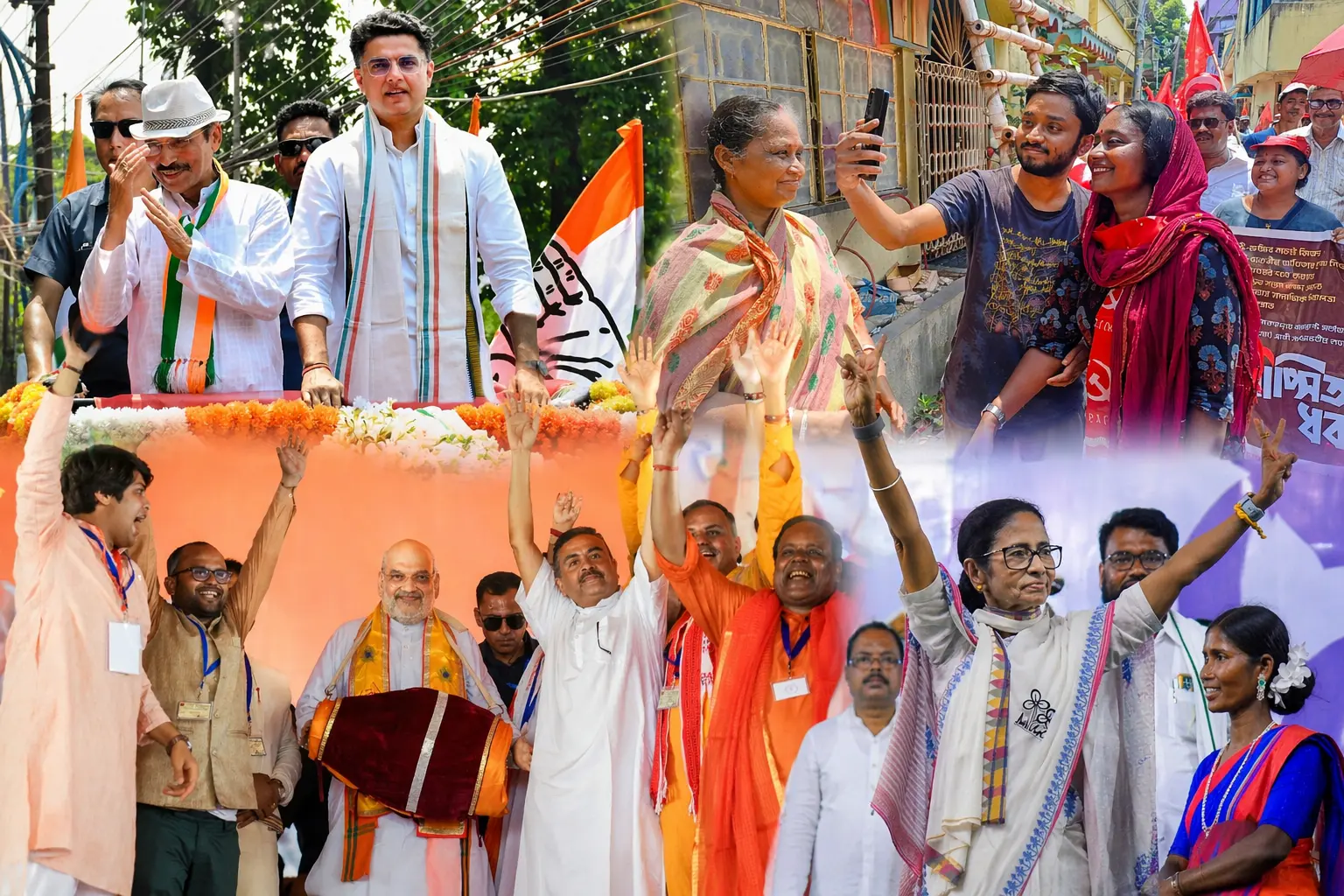
Kolkata (West Bengal): West Bengal heads into the first phase of its Assembly elections on April 23, setting the stage for a high-stakes contest between the Bharatiya Janata Party (BJP) and the ruling Trinamool Congress (TMC).
The opening round, covering 152 of the state’s 294 seats, is not just numerically crucial but politically decisive, as it spans regions that could shape the trajectory of the entire election.
A high-stakes opening across half the state
The first phase includes all 54 seats in north Bengal’s eight districts, along with constituencies in Murshidabad, Nadia, Birbhum, and Hooghly.
More than 3.60 crore voters, including nearly 1.75 crore women, are eligible to vote.
Security deployment is unprecedented, with 2,450 companies of central forces on the ground and over 8,000 polling stations marked as highly sensitive, reflecting both the scale and the tension surrounding the polls.
This phase alone accounts for over half the state’s seats, making it a decisive battleground where early momentum could tilt the overall contest.
North Bengal: BJP’s gateway vs TMC’s comeback bid
For the BJP, the first phase is virtually synonymous with north Bengal, a region that powered its rise in the 2019 Lok Sabha elections and helped it emerge as the principal challenger in 2021.
In the last Assembly election, the BJP secured 59 of these 152 seats, while the TMC won 93. Retaining dominance here is critical for the saffron party to counterbalance the TMC’s entrenched strength in south Bengal.
However, the political landscape appears less certain this time. The BJP is grappling with local dissidence, dissatisfaction over ticket distribution, and pockets of anti-incumbency.
The TMC, on the other hand, believes it has regained lost ground by rebuilding its organisation and reconnecting with tea garden workers, Rajbanshis, and sections of the hill electorate.
Identity politics takes centre stage
While corruption, unemployment, and welfare schemes were expected to dominate the campaign, the discourse has shifted sharply towards identity and citizenship.
At the heart of this shift is the Special Intensive Revision (SIR) of electoral rolls, which saw more than 91 lakh names deleted, reducing the electorate by nearly 12 per cent.
The scale of deletions varies across districts:
- Murshidabad: Over 7.48 lakh names removed
- Nadia: More than 4.85 lakh
- Malda: 4.59 lakh
- Uttar Dinajpur: 3.63 lakh
- Cooch Behar: Over 2.42 lakh
The BJP has framed the exercise as a crackdown on “infiltrators” and “bogus voters,” turning it into a referendum on citizenship.
The TMC has countered by alleging that genuine voters, particularly minorities, migrant workers, the poor, are being disenfranchised.
As polling day approaches, the central anxiety is no longer just governance, but whether long-time voters will find their names on the rolls.
Region-specific fault lines shape the contest
The diversity of the constituencies in this phase has led to varied local issues influencing voter behaviour.
In Darjeeling and Kalimpong, the unresolved Gorkha question has resurfaced, with promises of a political solution becoming a key campaign plank.
In Jalpaiguri and Alipurduar, tea garden wages, unemployment, and economic distress dominate discussions. The Rajbanshi identity continues to influence voting patterns in Cooch Behar and surrounding areas.
Border districts like Malda and Uttar Dinajpur have seen intense campaigning around infiltration and citizenship, while the TMC has tried to steer the narrative back to welfare delivery and rural infrastructure.
In several pockets of Murshidabad and Nadia, the controversy over deleted names has overshadowed nearly every other issue, triggering protests and heightened political mobilisation.
Prestige battles to watch
The first phase also features several high-profile contests that could carry symbolic and strategic significance.
In Nandigram, Leader of Opposition Suvendu Adhikari is seeking to retain the seat that defined his political ascent after defeating Mamata Banerjee in 2021. He now faces Pabitra Kar, a former aide who has crossed over to the TMC, setting up a contest layered with personal and political history.
Berhampore sees Congress veteran Adhir Ranjan Chowdhury returning to Assembly politics after over three decades, in a contest against BJP’s Subrata Maitra that reflects the Congress’s struggle for relevance in Murshidabad.
In Mathabhanga, former Union minister Nisith Pramanik is attempting to consolidate the BJP’s hold over the Rajbanshi belt after shifting from Dinhata. Meanwhile, in Dinhata, TMC’s Udayan Guha is battling to retain the seat.
Momentum builder for the rest of the election
With half the state voting in this phase, the stakes extend far beyond immediate seat tallies.
A strong performance in north Bengal could keep the BJP firmly in contention, while a TMC recovery here could blunt the opposition’s challenge before the campaign shifts to its southern stronghold.
As voters head to the polls, the first phase is set to answer a defining question: Will North Bengal once again propel the BJP’s ambitions, or has the TMC done enough to reclaim its lost ground?