Vegetarian diktat for Durga Puja? VHP breaks silence on what was actually discussed
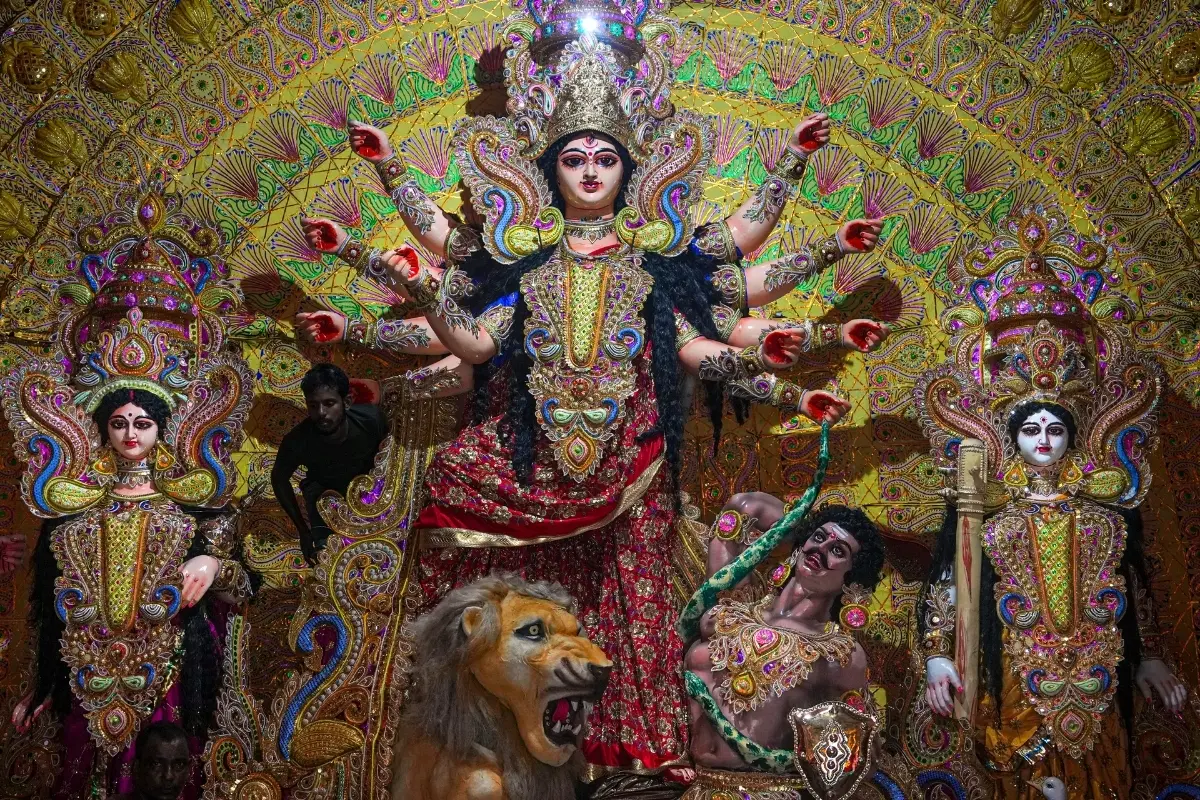
Did the Vishwa Hindu Parishad (VHP) ask Bengalis to give up non-vegetarian food during Durga Puja?
The organisation has now said no, denying reports that it sought to impose a satvik vegetarian diet during the festival and insisting that no such directive was issued at its August 26 meeting with Puja organisers.
The clarification comes after the alleged dietary advice triggered a heated debate on social media, with questions being raised over whether an organisation outside the formal political system was attempting to influence how Bengal celebrates its biggest festival.
Amiya Sarkar, secretary of the VHP's eastern region, said a section of the media and social media had been spreading misinformation about the meeting over the past two or three days.
According to him, the discussion was about following satvik rituals and maintaining cleanliness at Puja venues, not about imposing dietary restrictions.
'The VHP wants to make it clear that it is not against theme-based Durga Puja. Neither did we discuss this (food) issue during that meeting,' Sarkar said.
'We wish to clarify that we have issued no such directive. The Vishwa Hindu Parishad does not issue fatwas,' he added.
The VHP also reiterated that it is not seeking a ban on either vegetarian or non-vegetarian food habits. So, what did the VHP actually ask Durga Puja organisers to do?
According to Sarkar and the VHP's stated position, the focus was on the manner in which the festival and its venues are organised. The key suggestions included:
- Follow traditional, 'satvik' rituals: The VHP said traditional religious customs and rituals associated with Durga Puja should be observed properly.
- Keep Puja premises and surroundings clean: The organisation said the areas in and around Durga Puja pandals should be maintained with particular attention to cleanliness.
- Ensure cleanliness at food stalls: Food stalls operating around Puja venues were specifically asked to maintain hygiene.
- Be mindful of Puja themes: The VHP said themes selected for pandals should not be contrary to Indian culture, spirituality or what it described as 'national morale'.
- Avoid hurting religious sentiments: The organisation said pandal themes and depictions should not offend religious sentiments.
- Maintain the sanctity of religious imagery: The VHP had also stressed that images used during Puja should not be distorted and should be appropriately depicted and clad.
- Keep religious practices at the centre: The organisation has argued for greater adherence to traditional customs and rituals, including recognition of proper religious observances.
The controversy, however, goes beyond food. At its meeting with the Forum for Durgotsav, which represents around 500 major Pujas in Kolkata, and other organisers, the VHP had also raised the issue of who should participate in organising Durga Puja.
It said the festival should be organised and conducted by 'Sanatani Hindus', while people from other religions could visit the pandals.
That position has prompted criticism because sarbojanin Durga Puja has traditionally been rooted in community participation, with people from different religious backgrounds contributing to the organisation and celebration of the festival.
The VHP's intervention has consequently opened up a larger debate over the character of Durga Puja in Bengal, whether the festival should remain an evolving, community-led cultural celebration or whether greater emphasis should be placed on religious conformity and traditional practices.
For decades, Bengal's Durga Puja has brought together religion, art, food and popular culture.
Theme-based pandals, elaborate lighting and installations have become an integral part of the festival, while people across communities participate as organisers, artists, workers, visitors and patrons.
The festival's inclusive character is also reflected in its recognition by UNESCO on its Representative List of the Intangible Cultural Heritage of Humanity.
On the political front, Union Minister and former West Bengal BJP chief Sukanta Majumdar said the VHP was an independent organisation and should provide its own clarification.
He acknowledged that theme-based Durga Puja has been a long-standing tradition in Bengal and said efforts to ensure that rituals are properly conducted have also existed for years.
Congress leader Adhir Ranjan Chowdhury, meanwhile, invoked Bengal's food culture while criticising any attempt to restrict non-vegetarian practices.
He said Durga Puja was central to Bengal's identity and pointed to the state's long-standing tradition of eating non-vegetarian food, including mutton.
Chowdhury also recalled an interaction in Delhi when a colleague asked him whether he was vegetarian or non-vegetarian.
His response, 'I am everything', was a playful reference to a food culture in which vegetables and fish are both staples.
Trinamool Congress leader Kunal Ghosh urged caution while commenting on the festival, describing Durga Puja as a sensitive issue and stressing its inclusive character.
He also pointed out that eating non-vegetarian food inside Puja pandals is not traditionally practised.
For now, the VHP's position on the specific vegetarian controversy is clear: it says there is no directive asking Bengalis to give up non-vegetarian food during Durga Puja.
Its stated intervention is instead focused on rituals, cleanliness, religious imagery and the themes of Puja pandals.
However, the wider question raised by its suggestions remains: How much should an organisation such as the VHP influence the way Bengal's famously sarbojanin Durga Puja is organised and celebrated?