Kedartal tragedy: From a weather warning to deadly avalanches, how the trek unfolded
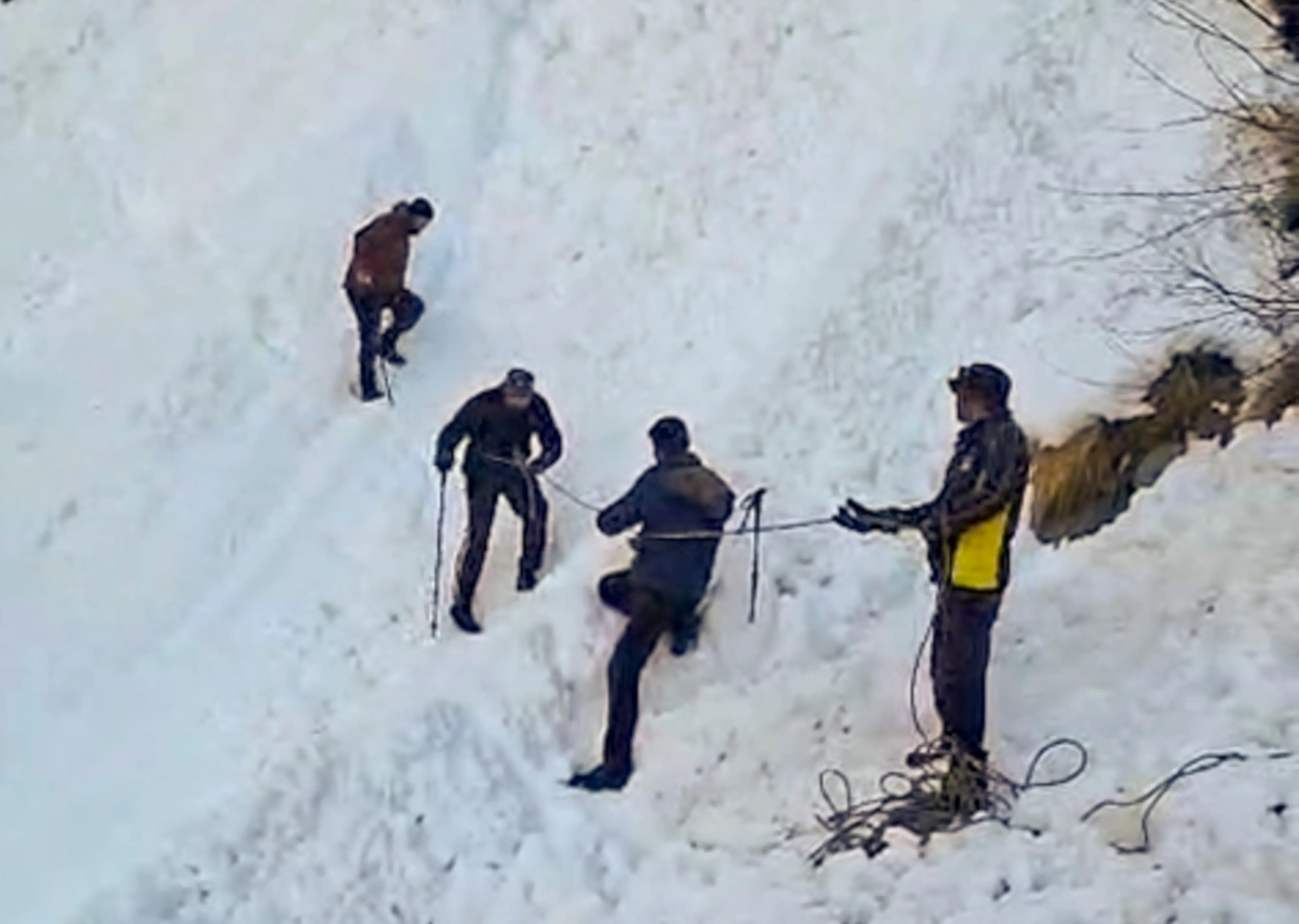
Dehradun: Four bodies have been recovered from the Kedartal trekking route in Uttarakhand's Uttarkashi district, while rescue teams continue searching for four people still missing after an avalanche and heavy snowfall struck the region on October 29. The tragedy has raised questions about weather warnings, trekking arrangements and the challenges of conducting rescue operations in high-altitude terrain.
The Kedartal trekking expedition turned into a major rescue operation after heavy snowfall and multiple avalanches struck the route in Uttarkashi district on October 29. The group, which had set out from Gangotri, was expected to return the same day but became stranded when adverse weather conditions blocked sections of the trail.
Rescue teams have recovered four bodies so far, including those of two men and two women. The bodies were recovered during joint operations involving the State Disaster Response Force (SDRF) and the Nehru Institute of Mountaineering (NIM), and were airlifted to the Matli helipad in Uttarkashi.
Family members have identified two of the deceased as sisters Vartika Verma, 28, and Deepika Verma, 29, from Vikasnagar in Lucknow. Their brother, Atul Verma, travelled to Uttarkashi after learning about the missing trekkers through a social media post by the trekking agency.
How did the tragedy unfold?
The trekking group set out from Gangotri on October 27 after obtaining permission from the Forest Department. The expedition was scheduled to last three days, with the members expected to return by October 29.
However, authorities received a weather alert on October 27, warning of adverse conditions expected two days later. Mayank Garg, Deputy Director of Gangotri National Park, told The Indian Express that the alert arrived around 10.30 am to 11 am, by which time the group had already entered the trekking route.
The Forest Department was unable to communicate the warning to the expedition because it could not establish contact with the group.
On October 30, authorities received information that the trekkers had been caught in heavy snowfall and avalanches while returning from Kedartal. According to information provided by the Forest Department, avalanches had occurred at around 10 to 12 locations along the route.
ALSO READ | Uttarakhand helicopter crash: Multi-agency probe launched; operator's entire fleet grounded
Four rescued, four bodies recovered and four still missing
Four members of the expedition, including three porters and a cook, were rescued near Kachchi Dhang on October 31 and brought safely to Gangotri.
The remaining eight people, comprising trekkers and a local guide, could not initially be traced. Rescue teams later spotted tents, bags and other belongings near the Kedarkharak area on November 2, but found no immediate trace of the missing members.
Two bodies were recovered on November 3 near Kedar Kharak, at an altitude of approximately 4,000 metres. Two more were subsequently recovered, taking the total to four.
The search continues for the remaining four missing members. Teams from the SDRF, National Disaster Response Force (NDRF), Uttarakhand Police, Forest Department, district administration and NIM are involved in the operation.
Why is the rescue operation difficult?
The Kedartal route is known for its steep slopes, rocky stretches, narrow passages and high-altitude terrain. The glacial lake is situated at approximately 4,700 metres above sea level and is accessed through a demanding trekking route from Gangotri.
Rescue teams are facing heavy snow accumulation and difficult terrain. Personnel have had to manually dig through the snow to search for the missing people, while deploying snow-removal equipment has proved challenging.
The remote location and multiple avalanche-hit stretches have further complicated efforts to reach the affected areas.
Family alleges negligence by trekking agency
The tragedy has also raised concerns about the arrangements made by the trekking agency. Atul Verma, brother of the deceased sisters, alleged that the agency failed to contact the emergency numbers provided by family members and did not ensure that all members of the expedition returned safely.
He also questioned the experience of the guide accompanying the group and alleged that the trek should not have proceeded in view of the adverse weather advisory.
These are allegations made by a family member and have not been established as official findings. The circumstances surrounding the expedition and the agency's response remain important questions following the incident.
How did a weather warning fail to prevent the tragedy?
The timeline raises questions about the communication of weather alerts during high-altitude expeditions. Although the Forest Department reportedly received an adverse weather warning on October 27, the trekking group had already entered the route and officials could not establish contact with its members.
The incident highlights the risks of trekking in remote mountain regions where mobile connectivity is limited and weather conditions can change rapidly. A weather alert alone may not be sufficient if there is no reliable system to communicate warnings to groups already on the trail.
The tragedy also brings attention to the need for stronger coordination between trekking agencies, forest authorities and rescue teams. Emergency contact procedures, experienced guides, regular location updates and clear protocols for suspending expeditions during dangerous weather conditions are important safeguards.
However, determining whether negligence or procedural lapses contributed to the incident will require an official assessment of the circumstances.
Why the Kedartal route is particularly challenging
Kedartal is a high-altitude glacial lake in the Gangotri region of Uttarakhand. Situated at around 4,700 metres, it is surrounded by mountain peaks and accessed through a demanding route from Gangotri.
Unlike the more frequently visited Gomukh trail, the Kedartal route attracts fewer trekkers and receives comparatively less monitoring. The trail passes through rocky terrain, high-altitude meadows and unstable moraine fields.
At such elevations, heavy snowfall and avalanches can quickly make routes inaccessible. Even experienced rescue personnel face difficulties because of limited access, unstable snow and the absence of suitable space for heavy equipment.
The incident underlines the importance of treating weather advisories as critical safety instructions rather than routine updates. It also raises broader questions about how trekking permissions, emergency communication and safety monitoring are managed in remote Himalayan destinations.