‘Appeasing bullies never pays’: Congress hits out at PM Modi over US Green Card ban on Indian IT firms
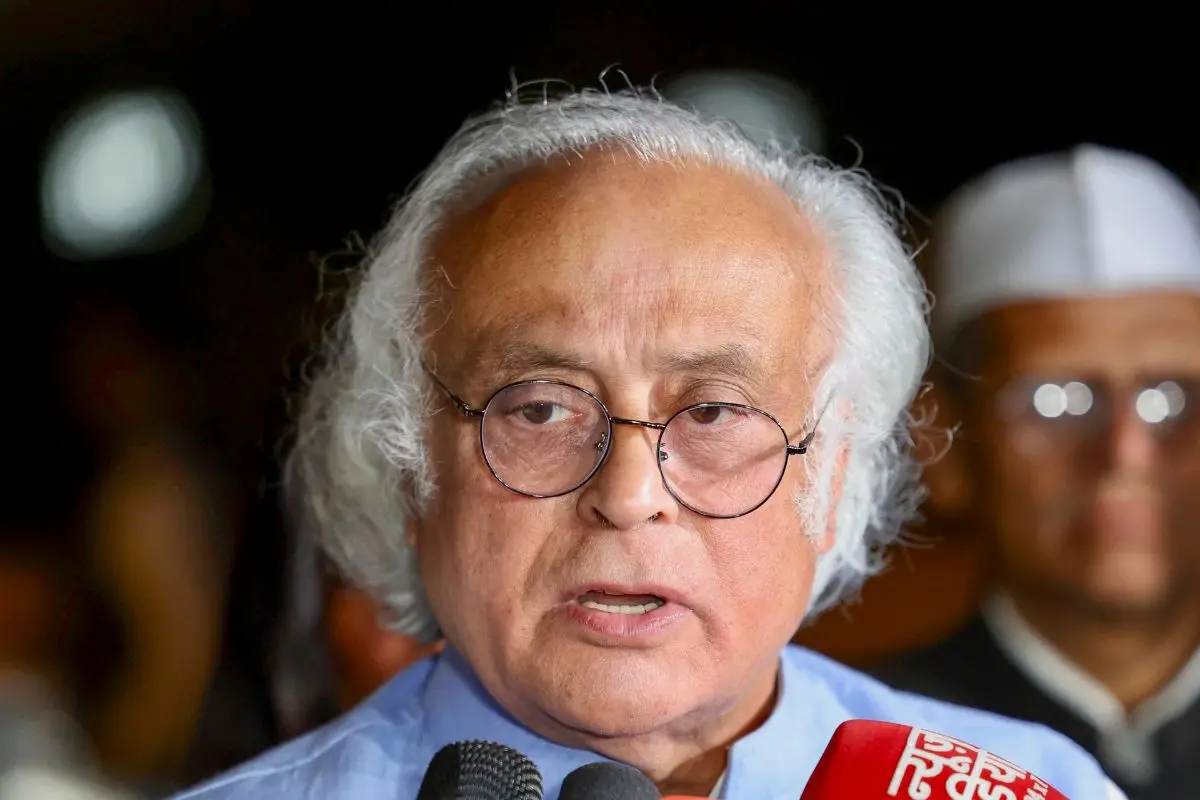
New Delhi: Congress Rajya Sabha MP Jairam Ramesh criticised the Union Government on Friday following the United States' decision to bar several major IT firms from its Green Card programme, alleging that Prime Minister Narendra Modi's approach towards US President Donald Trump had failed to protect the interests of Indian technology professionals.
Writing on X, Ramesh argued that the US Department of Labour's actions demonstrated that appeasing foreign leadership does not secure positive outcomes. He linked the development to the Centre's decision regarding UPI Merchant Discount Rate (MDR) charges, claiming the policy change directly favoured American corporations.
"That appeasing of bullies never pays is once again proven by the US Govt’s actions yesterday, targeted directly against Indian IT professionals. This has come shortly after the Modi Govt went out of its way to please President Trump by imposing UPI MDR charges that will clearly and directly benefit American companies," Ramesh posted on X.
ALSO READ: US suspends Infosys, Infosys, TCS, Wipro in green-card move
Ramesh asserted that India possesses legal mechanisms to respond under existing parliamentary legislation, such as the Digital Personal Data Protection Act, 2023, and its associated regulations. However, taking aim at the Prime Minister, he alleged that the administration would refrain from taking firm action against Washington.
"India has a number of options to retaliate under laws already passed by Parliament like the Digital Personal Data Protection Act, 2023 and its Rules. But a thoroughly compromised PM now under siege on GyaneshGate will not do so,” Ramesh wrote.
Concurrently, Karnataka Minister for IT Priyank Kharge observed that the temporary suspension of the Permanent Labour Certification (PERM) programme for prominent IT outsourcing companies could yield complex, far-reaching consequences for India, potentially creating new opportunities for the domestic technology landscape.
In a social media statement, Kharge noted that while the restrictions present hurdles for traditional outsourcing models, including inflated operational costs in the US, employee retention challenges, and reduced flexibility in deploying personnel on-site, they could accelerate domestic tech development.
ALSO READ: US green card suspension: How Trump's move could hit IT firms
"The US government’s suspension of the Permanent Labour Certification Programme for major IT outsourcing companies, a critical step through which foreign workers, including H-1B visa holders, pursue employment-based green cards, could have consequences for India that are both complex and potentially far-reaching," Kharge stated on X.
Responding to the US administrative freeze, the National Association of Software and Service Companies (Nasscom) emphasised that immigration pathways and skilled talent mobility represent two distinct issues that should not be evaluated through the same lens.
In an official release, Nasscom pointed out that while the decision halts a specific permanent residency route, Indian technology enterprises have steadily reduced their reliance on H-1B visas in recent years by expanding local recruitment within the United States.
"The U.S. Department of Labor has today announced the temporary suspension of certain IT companies, including Indian technology companies operating in the U.S., from filing new applications under the Permanent Labor Certification (PERM) programme. While the decision affects a specific immigration pathway, Nasscom has consistently maintained that immigration and skilled talent mobility are two distinct issues and should not be viewed through the same lens," the industry body stated.
"The H-1B visa programme has historically played an important role in addressing short-term skill gaps in the US and it will continue to be used to address short term talent gaps. However, over a number of years, Indian technology companies have significantly reduced their dependence on H-1B visas, while steadily expanding local hiring and building a strong domestic workforce in the U.S," Nasscom added.
ALSO READ: '80% were extensions, not new hires': Microsoft responds to US visa crackdown
The association highlighted that Indian IT firms collaborate with a majority of Fortune 500 enterprises in the US, fostering innovation while generating local employment, and noted that the volume of employees transitioning from H-1B status to permanent residency via PERM is relatively small. Nasscom added that Indian tech firms operate in over 80 nations and remain committed to regulatory compliance. "We are confident that they will continue to adhere to applicable regulations in the US as well," the statement concluded.
The developments follow an announcement by US Labour Secretary Keith Sonderling confirming that the US administration is suspending several leading global IT outsourcing firms—including Cognizant, Infosys, Tata Consultancy Services, Wipro, HCLTech, and Capgemini—from the PERM programme, alongside US technology giants Microsoft and Adobe, citing multiple active federal investigations.
Sonderling confirmed that the US Labour Department would cease processing existing applications or accepting new filings involving the named companies. "We will not accept any new or process any pending permanent labor certification applications involving these companies," Sonderling stated.
According to Sonderling, the cited firms had collectively requested millions of foreign personnel and received hundreds of thousands of H-1B visa approvals and permanent labour certifications since 2009. "Since 2009, just these companies alone have requested almost 3 million foreign workers. They received over 230,000 H1B Visa approvals and over 100,000 permanent labor certifications that's hundred and thousands of jobs that were taken from a American workers," he stated.
The suspension aligns with a recent proposal by the US Department of Homeland Security to introduce new fees for F-1 international students applying for Optional Practical Training (OPT), framed as a measure to protect American labour and reinforce immigration oversight.
ANI