‘That undying spirit cannot be destroyed’: John Brittas shares Kerala PSC question on Jantar Mantar
Thiruvananthapuram, Kerala: A question about the student protests held at Jantar Mantar in New Delhi earlier this year has appeared in a Kerala Public Service Commission (PSC) examination, drawing attention amid the controversy over the Centre’s decision to remove the historic site from the list of designated protest venues.
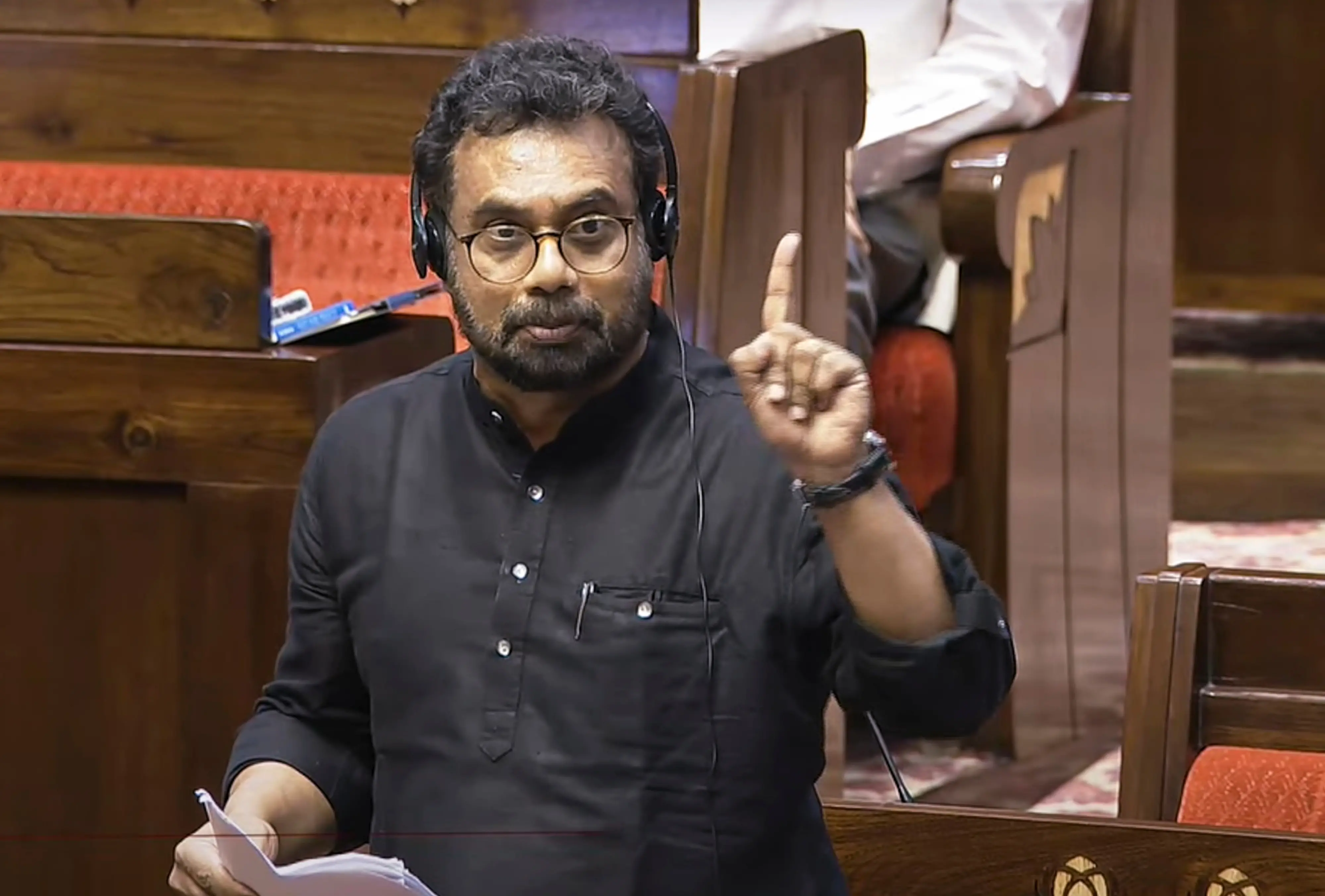
Rajya Sabha MP John Brittas highlighted the question in a post on X, pointing out the irony of the protest featuring in a competitive examination just two days after the Centre issued an order denotifying Jantar Mantar as a protest venue.
Sharing a photograph of the question paper, Brittas said the development demonstrated how Jantar Mantar continued to occupy a place in public discourse despite attempts to restrict demonstrations at the site.
“Here is a question asked in today’s Keralam PSC exam regarding the last July’s iconic protest at Jantar Mantar. Ironically, this question appeared just two days after the Central Government issued an order denotifying Jantar Mantar as a protest venue! While the central government tries to crush it on one end, Jantar Mantar keeps popping up in various forms. That undying spirit cannot be destroyed by a GO,” John Brittas, MP, wrote on X, along with a photo of the question paper.
The PSC question referred to the student demonstrations organised at Jantar Mantar during June and July 2026, which centred on allegations of irregularities and question paper leaks in national-level examinations.
Candidates were asked to identify the correct statements from four assertions concerning the protests.
The first statement said the demonstrations were primarily triggered by concerns over alleged irregularities and paper leaks in national-level examinations. The second stated that the protests had attracted support from several student organisations and civil society groups. The third claimed that the protesters had demanded the abolition of all national-level entrance examinations in India. The fourth referred to the demand for accountability from the Union Ministry of Education.
The question required candidates to determine which of these statements were correct.
The examination reference comes against the backdrop of renewed controversy over the status of Jantar Mantar, which has long served as a prominent venue for demonstrations by students, farmers, political organisations and civil society groups.
The latest dispute followed restrictions imposed in the national capital ahead of protests organised by the Cockroach Janata Party (CJP) against Chief Election Commissioner Gyanesh Kumar.
The CJP had called for demonstrations at Jantar Mantar over alleged irregularities in the Special Intensive Revision of electoral rolls, demanding the resignation of the Chief Election Commissioner.
Delhi Police imposed restrictions on public gatherings under Section 163 of the Bharatiya Nagarik Suraksha Sanhita, citing concerns over law and order.
The restrictions were accompanied by a substantial deployment of police and paramilitary personnel across central Delhi, particularly around Jantar Mantar and Connaught Place.
Several protesters and activists were detained as attempts to hold demonstrations continued despite the restrictions.
The controversy intensified after an order identified alternative locations for public demonstrations, including Ramlila Maidan, Burari Ground and CBD Ground, while removing Jantar Mantar from the list of designated protest sites.
The decision has drawn criticism from activists and opposition leaders, who argue that Jantar Mantar holds symbolic importance in India’s history of democratic protest.