Cars that communicate, AI that predicts danger: Can technology reduce road deaths?
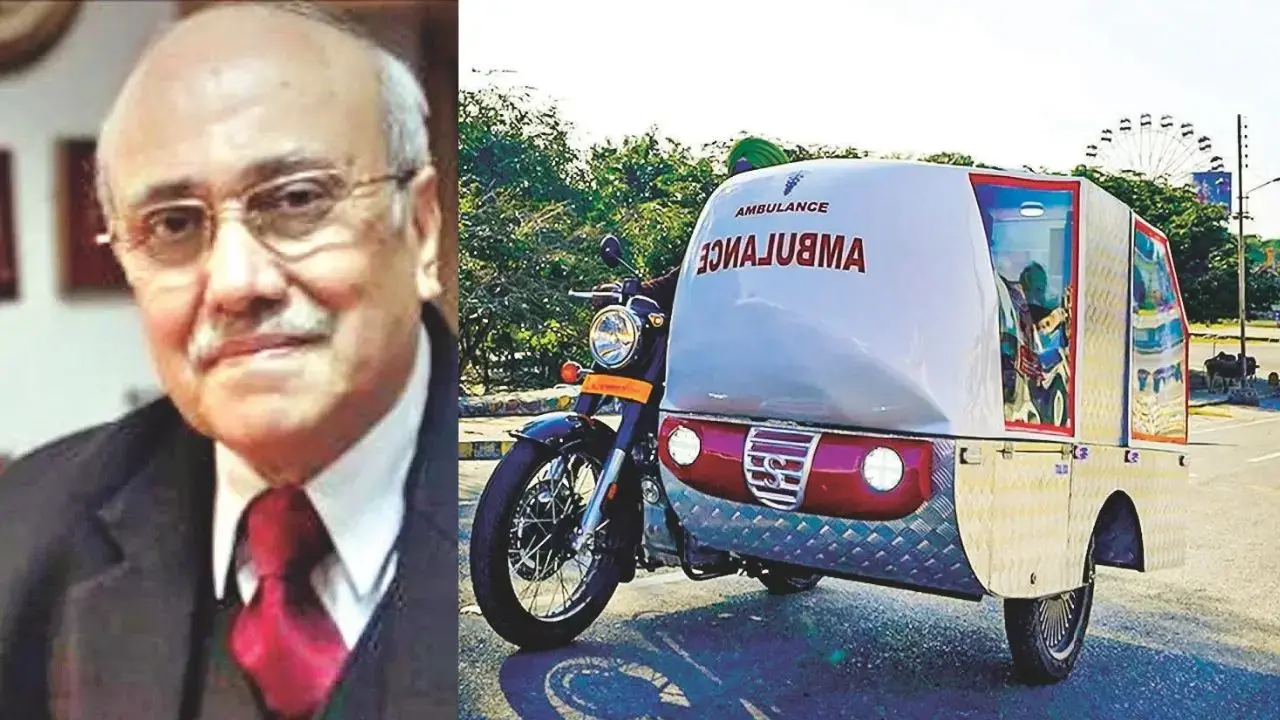
Kochi: From vehicles that communicate with one another to bike ambulances designed to reach accident victims through narrow roads, emerging technologies could change how India prevents road accidents and responds to emergencies. Road safety expert K K Kapila says technology must focus not only on improving vehicles but also on protecting human lives.
Vehicles that warn each other about sudden braking, artificial intelligence that identifies accident-prone stretches and bike ambulances that can navigate narrow roads could become important parts of India's road safety system.
K K Kapila, president emeritus of the International Road Federation's India Chapter, highlighted these developments while speaking at the International Traffic Safety Conference held at the SCMS campus in Kalamassery, Kochi.
Kapila said technological advancement in automobiles must go beyond performance and convenience to address road safety. He emphasised the need for safer roads, public awareness, effective enforcement of traffic laws and faster emergency medical assistance.
Vehicles that communicate with each other
One of the emerging technologies discussed by Kapila is vehicle-to-vehicle (V2V) communication. The system allows vehicles to exchange information with nearby vehicles, helping drivers receive warnings about potential hazards.
According to the information shared at the conference, India aims to make V2V communication systems mandatory for certain categories of vehicles manufactured in the country from October 1, 2028.
The technology could provide alerts about sudden braking, possible collisions and other road hazards, giving drivers more time to react.
Kapila also highlighted the potential of artificial intelligence in identifying accident-prone road corridors. Such information could help authorities identify dangerous stretches and take preventive measures.
However, he stressed that technology alone cannot ensure road safety. Road infrastructure, public awareness and proper implementation of traffic laws remain equally important.
Bike ambulances to reach accident victims faster
Kapila has also designed a bike ambulance intended to reach accident victims in locations that conventional ambulances may find difficult to access.
The vehicle can navigate narrow roads and side streets, potentially helping emergency responders reach injured people more quickly.
According to Kapila, the bike ambulance has received a global patent and was manufactured by a company based in Ghaziabad. Its reported cost is Rs 10.5 lakh.
He has suggested deploying these vehicles along highways to improve emergency response after road accidents.
The proposal addresses a major challenge in road safety: reaching accident victims quickly enough to provide medical assistance. Kapila said delays in treatment contribute to the number of deaths following road accidents.
Road accidents claim 1.19 million lives every year
Citing World Health Organization statistics, Kapila said approximately 1.19 million people die in road accidents worldwide every year, equivalent to around 3,200 deaths daily.
He underlined the importance of emergency medical care in reducing fatalities, arguing that preventing accidents must go hand in hand with improving post-crash response.
Sweden's Vision Zero model
Kapila identified Sweden as an important example of a country prioritising road safety. In 1997, Sweden introduced its Vision Zero approach, which aims to eliminate deaths and serious injuries caused by road accidents.
The approach places responsibility on road transport systems to minimise the consequences of human errors. It focuses on safer road design, vehicle safety, speed management and better protection for road users.
Kapila said India could draw lessons from international road safety initiatives while adapting them to its own road conditions and challenges.
Can technology make Indian roads safer?
India's road safety challenge requires more than stricter traffic rules or improvements in vehicle technology. It needs a coordinated approach covering accident prevention, road infrastructure, enforcement and emergency healthcare.
V2V communication could help drivers respond to hazards before collisions occur. AI-based analysis could help authorities identify accident-prone corridors and prioritise safety improvements. Meanwhile, bike ambulances could address accessibility problems in areas where larger emergency vehicles struggle to reach victims.
However, the effectiveness of these technologies will depend on implementation. V2V systems will require compatible vehicles and reliable communication infrastructure. AI-based safety tools will need accurate data, while bike ambulances will require trained personnel, suitable medical equipment and an effective emergency dispatch system.
Sweden's Vision Zero model also offers an important lesson: road safety cannot depend entirely on individual drivers behaving responsibly. Roads, vehicles, speed limits and emergency services must be designed to reduce the risk of fatal consequences when mistakes happen.
For India, the challenge will be to translate technological possibilities into accessible, reliable and enforceable road safety measures.