2020 Delhi riots case: Supreme Court refuses bail to Umar Khalid, Sharjeel; clears 5 others
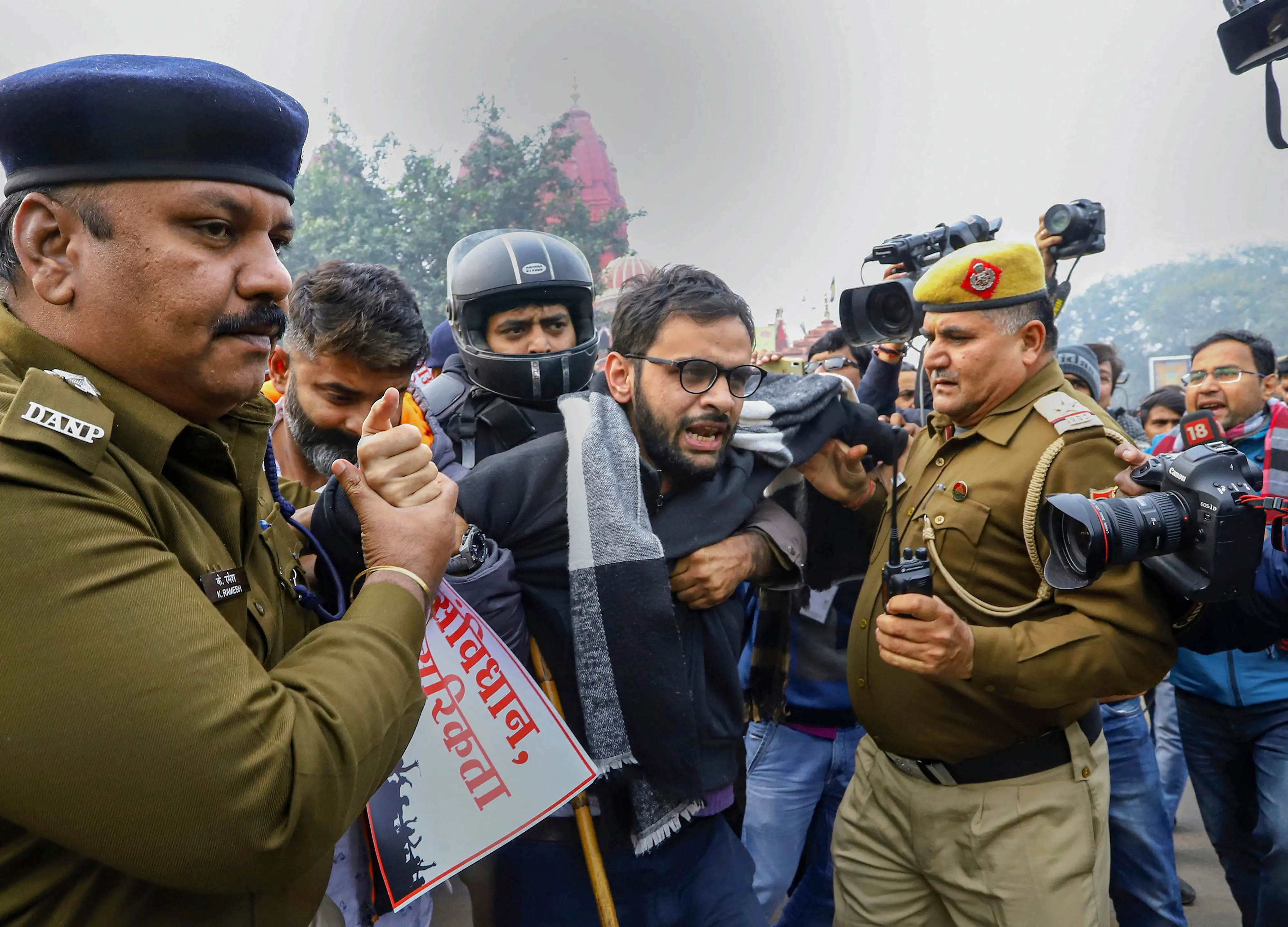
New Delhi: The Supreme Court on Monday refused to grant bail to activists Umar Khalid and Sharjeel Imam in the larger conspiracy behind the 2020 Delhi riots, while granting bail to five other accused in the case.
A bench of Justices Aravind Kumar and NV Anjaria held that the prosecution material disclosed a prima facie case against Khalid and Imam, attracting the statutory bar on bail under the Unlawful Activities (Prevention) Act (UAPA). The court said the present stage of the proceedings did not justify their release on bail.
At the same time, the apex court allowed the bail pleas of Gulfisha Fatima, Meeran Haider, Shifa Ur Rehman, Mohd Saleem Khan and Shadab Ahmad, stressing that each accused must be assessed individually and that all appellants did not stand on the same footing in terms of alleged culpability.
What did the Supreme Court say?
Reading out key portions of the judgment, Justice Kumar outlined the scope and applicability of Section 15 of the UAPA, which defines a “terrorist act”, noting that courts must examine whether the allegations prima facie fall within the statutory framework of the law at the bail stage.
The bench observed that while Article 21 occupies a central place in the constitutional scheme and pre-trial incarceration cannot be treated as punishment, the UAPA represents a legislative determination on the conditions under which bail may be granted at the pre-trial stage. It clarified that deprivation of liberty must not be arbitrary, but delay in trial alone cannot automatically result in the grant of bail.
The bench emphasised that bail proceedings are not meant to test the defence in detail and that judicial restraint does not amount to abdication of duty. Courts are required to conduct a structured inquiry to assess whether the material on record discloses a prima facie offence and whether the accused’s role has a reasonable nexus with the alleged crime.
Individual assessment of accused
The Supreme Court underlined that each bail plea must be examined independently, observing that all the appellants did not stand on equal footing in terms of alleged culpability. It said the hierarchy of participation required courts to assess the role of each accused separately, while reiterating that Article 21 places an obligation on the state to justify prolonged pre-trial custody.
However, the bench clarified that such an exercise does not dismantle the prosecution’s case of conspiracy at this stage.
Importantly, the court noted that Umar Khalid and Sharjeel Imam stood on a qualitatively different footing compared to the other accused, based on the prosecution material placed before it, and that the statutory threshold under the UAPA stood attracted in their cases.
High Court order and case background
The verdict came on appeals challenging a September 2 order of the Delhi High Court, which had denied bail to Khalid, Imam and other accused, holding that their alleged roles in the conspiracy were “grave” and that their speeches were prima facie aimed at communal mobilisation.
The case relates to the February 2020 violence in north-east Delhi, which erupted amid protests against the Citizenship (Amendment) Act (CAA) and the National Register of Citizens (NRC), leaving 53 people dead and more than 700 injured, and leading to the registration of 753 FIRs across Delhi.