Verdict reserved: Supreme Court to decide on stray dog crisis
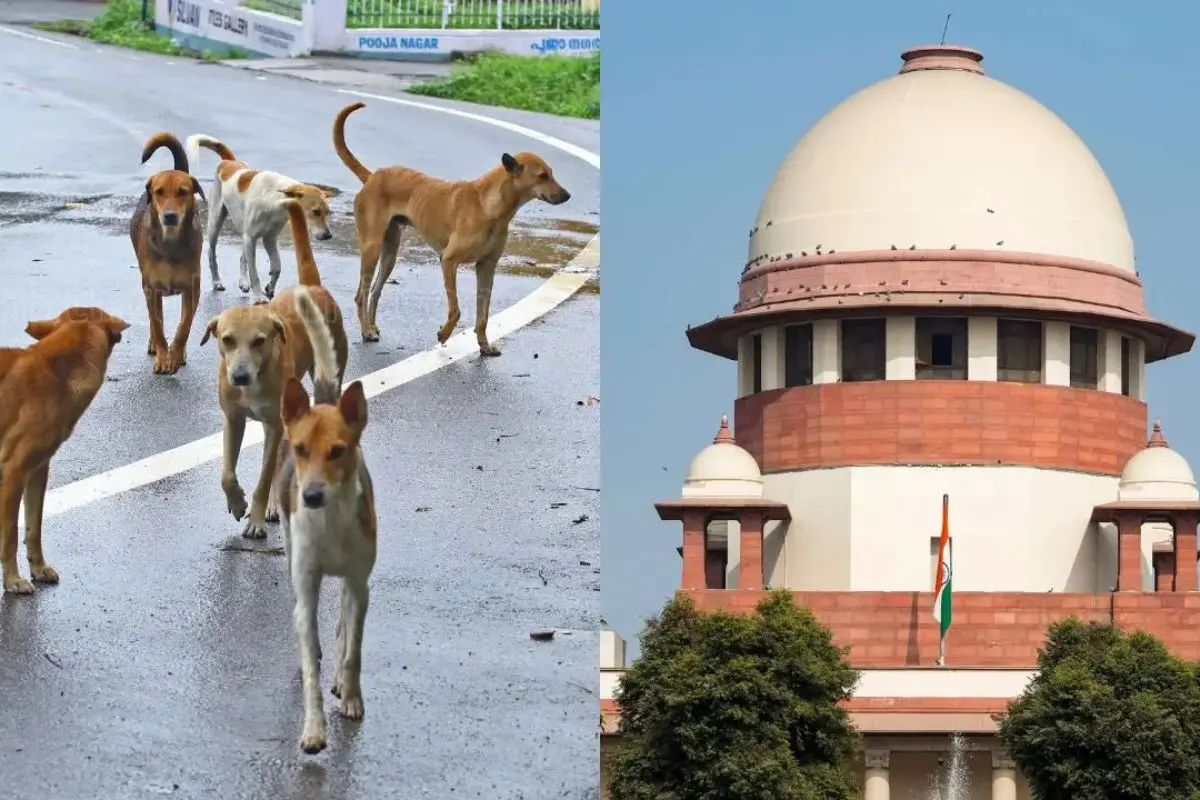
New Delhi: The Supreme Court on Thursday reserved its verdict on a series of petitions seeking to modify previous judicial orders regarding India’s stray dog population, concluding a high-stakes hearing that balanced public safety against animal welfare.
A three-judge bench, comprising Justices Vikram Nath, Sandeep Mehta, and N.V. Anjaria, closed the proceedings after hearing final arguments from all stakeholders, including the National Highways Authority of India (NHAI) and various state governments. The court has directed all parties to submit their written arguments within one week.
The bench focused heavily on the compliance of a November 7, 2025, directive that mandated the immediate removal of stray animals from institutional areas, such as schools, hospitals, and railway stations, and the fencing of national highways to prevent accidents.
Accountability and Compensation
The court reiterated its intent to hold local authorities and individuals accountable for the rising number of dog-bite incidents. On January 13, the bench indicated it would require state governments to pay "heavy compensation" for injuries or deaths caused by strays, citing a persistent failure to implement sterilisation norms over the last five years.
The judges also addressed the role of community feeders, suggesting that responsibility for attacks could extend to those who feed dogs in public spaces.
"For every dog bite, for every death, we are likely to fix heavy compensation to be paid by States... and we will also fix liability on dog feeders," the bench remarked during earlier sessions. "If you love these animals so much, then why don't you take them to your house? Why should these dogs loiter around, bite and scare people?"
Institutional Failures
During the hearing, the court expressed sharp dissatisfaction with the state's progress on animal birth control (ABC) programs. Justice Nath observed that many states were merely "building castles in the air" rather than expanding their sterilisation and sheltering capacities.
The bench specifically directed the Animal Welfare Board of India (AWBI) to clear a massive backlog of applications from NGOs wishing to open animal shelters or birth control facilities.
"Either you accept it or reject the applications, but do it expeditiously," the court told the AWBI counsel, who noted a surge in requests following the court’s November mandate.
Highway Safety
The NHAI provided updates on its efforts to clear cattle and other stray animals from high-speed corridors. The court emphasised that the responsibility for patrolling and securing highways must remain with the federal authority rather than being passed to state governments.
The current legal battle began as a suo motu case in July 2025 following a tragic incident in the national capital where a child died from rabies after a dog attack. While the court’s November order prohibited the release of dogs back into institutional areas after sterilisation, animal rights groups have challenged the move as a violation of existing statutory rules that typically require dogs to be returned to their original territories.
With inputs from PTI