Article 142 mandate: SC directs reinstatement of former IAF officer widowed by MiG-21 crash
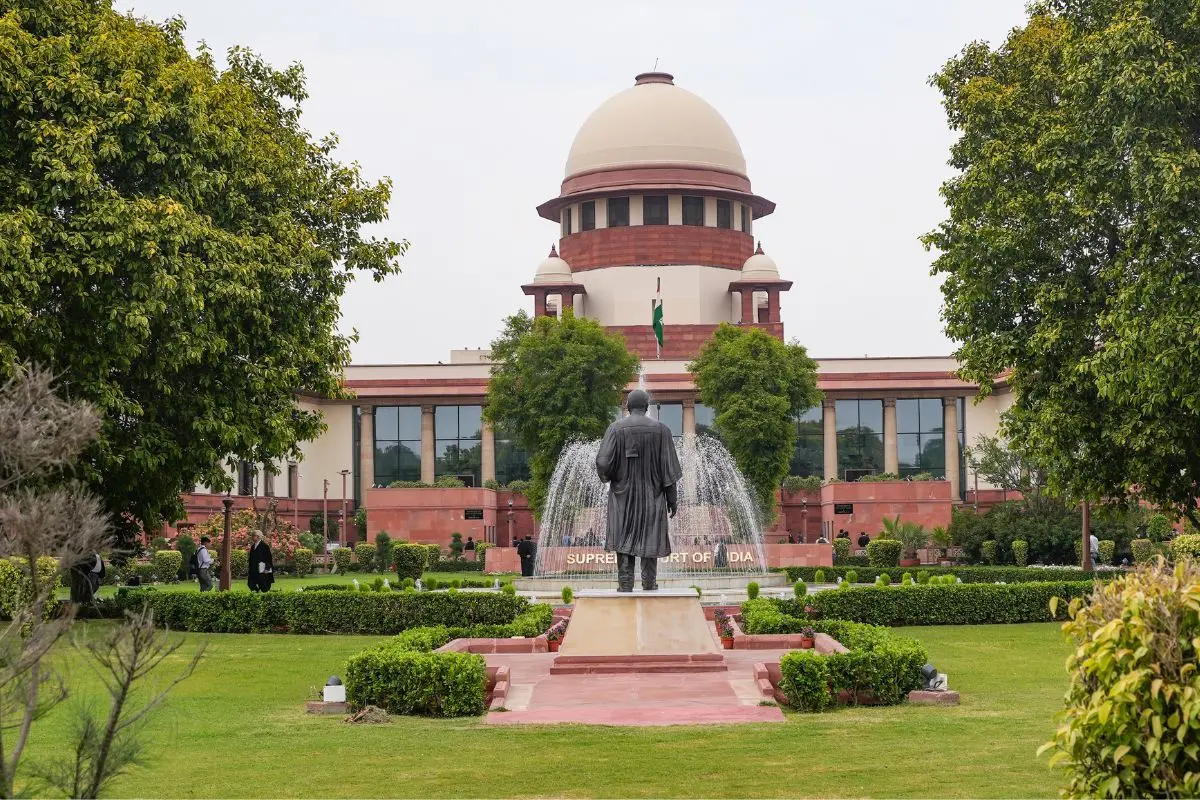
New Delhi: Exercising its special powers under Article 142 of the Constitution, the Supreme Court has ordered the reinstatement of a former Indian Air Force Short Service Commissioned woman officer who retired in 2013 and subsequently became a war widow following her husband's death in a 2021 MiG-21 fighter jet crash.
A Supreme Court bench led by Chief Justice of India Surya Kant on Saturday allowed the appeal brought by former IAF officer Squadron Leader Priyanka Saxena against 2024 orders of the Armed Forces Tribunal's Principal Bench in New Delhi. The apex court directed that the case be treated as a single, isolated instance without establishing a legal precedent, describing the circumstances as "very peculiar".
Article 142 empowers the Supreme Court to issue any decree or order necessary for doing complete justice in a matter pending before it.
Squadron Leader Saxena was commissioned into the service in 2003 and originally declined an extension or permanent commission owing to family commitments to support her husband, a fighter pilot, and raise their child. She relinquished her commission after completing her 10-year SSC tenure in December 2013.
Her husband, attached to the 51 Squadron in Srinagar, was killed when his MiG-21 Bison aircraft crashed near Jaisalmer airfield on 24 December 2021.
Following his death, Saxena submitted multiple requests for reinstatement, highlighting her decade of prior service within the Logistics Branch. The Indian Air Force rejected her applications citing existing government regulations, prompting her to petition the Armed Forces Tribunal to quash the rejection decisions.
She maintained that as a former woman officer who had subsequently been widowed by the death of defence personnel, she was entitled to age relaxation, arguing that the lack of an explicit policy framework for such cases should not bar her re-entry.
The central government contested the plea, contending that she had willingly relinquished her claim to continue in service in 2013, thereby terminating her service rights. The government further argued that she exceeded the maximum age limit of 35 years set by a November 30, 2017 policy letter governing the induction of armed forces widows.
The Armed Forces Tribunal closed the compliance proceedings on 2 July 2024.
Upon hearing the appeal, the Supreme Court observed that the case presented a "very peculiar" set of facts unaddressed by current policy. The bench noted that the underlying intent of the war widow rehabilitation scheme had inadvertently omitted a category of individuals like the appellant, stressing that her previous decade of service should have received appropriate weightage.
Highlighting that she is both a former Air Force officer and the war widow of an Air Force officer caring for two school-going minor daughters, the court stated that her case warranted compassionate consideration, adding that she should not be required to undergo fresh pre-commission training required of widows entering on academic credentials alone.
In granting the appeal, the court instructed that the officer complete a one-year refresher training course starting with the next intake, during which she will be subject to trainee regulations and medical standards.
The Supreme Court further ordered that upon concluding her training, she will be reinstated as a Squadron Leader in her 11th year of service, accounting for her past service tenure, and will continue as an SSC officer under a four-year policy extension.
The apex court added that her inter-se seniority will be aligned with her new peer group and that she will be considered for a permanent commission and subsequent promotions in line with prevailing rules.
Reacting to the ruling, the officer's legal representative, retired Major Sudhanshu Shekhar Pandey, stated, "It is not the service which alone was important for the War Widow. She wanted her two small daughters' life should not be affected and they should live life the way it would have been had her husband not sacrificed life for the call of duty."
Pandey added that the Ministry of Defence should have formulated a policy accommodating such officers through exemptions and relaxations aligned with the wider objective of rehabilitation schemes.
"We are greatly indebted to the Hon'ble Supreme Court for using the extraordinary power to do complete justice rather than accepting technicalities. We hope Air Force considers her case for permanent commission in due course with all fairness which she deserves," Pandey said.
ANI