How much ethanol is in your petrol? SC rejects plea seeking answers
New Delhi: The Supreme Court on August 31 refused to entertain a public interest litigation seeking directions to the Centre to make the labelling of ethanol content in petrol mandatory and uniform at fuel stations across India.
A bench of Justices MM Sundresh and PB Varale said it would not entertain the plea under Article 32 of the Constitution, which allows individuals to directly approach the Supreme Court for enforcement of fundamental rights. The bench directed petitioner Narendra Kumar Goswami, who appeared in person, to approach the appropriate High Court.
During the hearing, Justice Sundresh asked Goswami about his identity. Goswami said he was appearing as the petitioner in person and argued that he had raised a valid issue concerning consumers' right to know the composition of the fuel they purchase.
Goswami told the court that the information should be made available not only to him but to citizens at large.
What did the petitioner seek?
The PIL sought directions to the Centre and other authorities to ensure that the exact percentage of ethanol blended into petrol is prominently displayed on every dispensing nozzle at petrol pumps within a specified time frame.
It also sought a requirement for fuel invoices to clearly mention the percentage of ethanol in the petrol sold to consumers.
Another key demand was for the government to create and publish a vehicle-wise ethanol compatibility database. The database was proposed to be searchable by manufacturer, model, engine type and year of manufacture, and would indicate whether particular vehicles were compatible with different ethanol blends.
Demand for independent expert committee
The petition also sought the formation of an independent expert committee comprising representatives from the Ministry of Petroleum and Natural Gas, Ministry of Road Transport and Highways, Bureau of Indian Standards and other relevant bodies, along with independent automobile engineers.
According to the plea, the committee should examine the real-world compatibility of E20 fuel with vehicles currently on Indian roads.
It also sought a public report examining the potential impact of E20 on fuel efficiency, engine longevity and maintenance costs, as well as warranty and insurance-related issues.
The petition further raised questions about the environmental impact of ethanol production, including tail-pipe emissions and water consumption, along with concerns related to food security and the diversion of agricultural feedstocks towards ethanol production.
Centre opposes the plea
Attorney General R Venkataramani, appearing for the Centre, opposed the petition and submitted that it amounted to proxy litigation, noting that the Supreme Court had already dismissed petitions concerning similar issues and the government's ethanol-blending policy.
He also argued that the petitioner was seeking to make the Government of India answerable to him on the issue.
The petitioner, however, maintained that consumers have a right to know the composition of the fuel being dispensed to them.
The bench ultimately declined to entertain the PIL and asked Goswami to raise his concerns before the jurisdictional High Court.
E20 fuel and ethanol blending programme
The case comes amid continued discussion over India's ethanol-blending programme and the use of E20 petrol, which contains up to 20 per cent ethanol blended with petrol.
The Centre has previously rejected concerns that the use of E20 could invalidate vehicle insurance policies. The Ministry of Petroleum and Natural Gas has maintained that claims linking E20 fuel use to insurance invalidation were incorrect and that the issue had been clarified with relevant stakeholders.
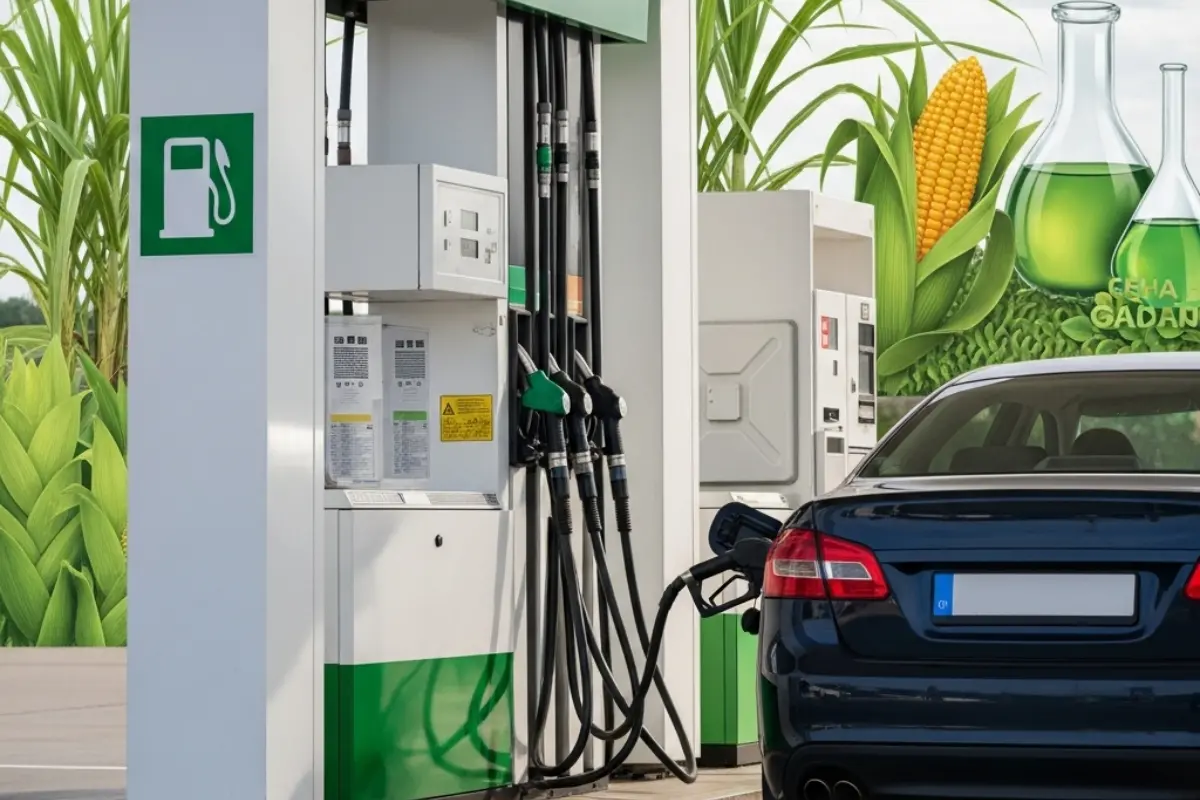
Ethanol used for blending can be produced from feedstocks including sugarcane juice, molasses, broken rice and maize. These materials undergo processes such as fermentation before being converted into ethanol.
Analysis
The Supreme Court's decision was not a ruling on whether petrol pumps must disclose ethanol content. The bench declined to entertain this particular petition under Article 32 and directed the petitioner to seek relief from the jurisdictional High Court.
The plea nevertheless highlights broader questions around India's E20 transition, particularly consumer information, vehicle compatibility and the availability of transparent fuel specifications. Its proposed vehicle-wise database would have addressed one of the practical issues raised by consumers and vehicle owners as ethanol blending increases.
The Centre's ethanol-blending programme is aimed at increasing the share of domestically produced ethanol in petrol. The debate has also expanded beyond fuel composition to questions about mileage, vehicle compatibility, maintenance, warranties, insurance and the environmental and agricultural implications of ethanol production.
The Supreme Court's order therefore leaves those wider policy questions open while directing the petitioner to pursue his demands before the appropriate High Court.